Lilongwe Water Board (LWB) has rolled out its K4 billion water bottling plant, describing the milestone as a major step in its reform journey and a sign that efficiency gains are beginning to deliver results.
Speaking during the launch of the plant as well as its bottled water called Dzalanyama Springs in Lilongwe on Thursday, Ministry of Water and Sanitation Principal Secretary Elias Chimulambe hailed the initiative as a milestone in public service reforms.
He said: “Our mandate is to provide safe water and sanitation services and Lilongwe Water Board has now added another product that increases access to safe water for the public.
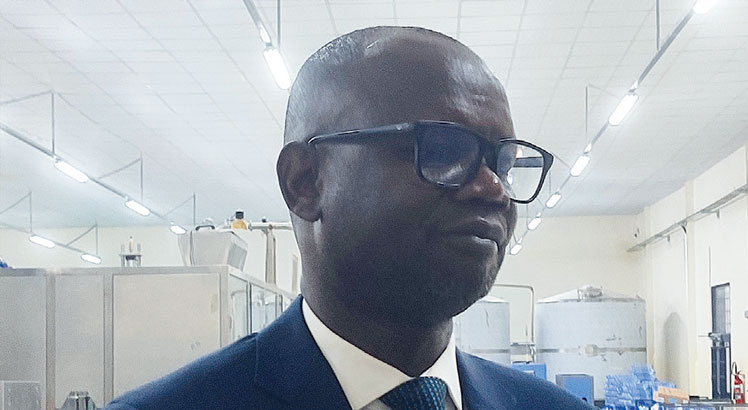
safe water. | Eric Mtemang’ombe
“What we have seen today is water that meets quality standards. Previously, there were challenges in some areas, but with this product, residents now have access to safe drinking water, helping to prevent diseases such as cholera.”
In his remarks, LWB board chairperson Inkosi ya Makosi M’mbelwa V said the project was a product of internal savings and operational reforms undertaken since 2020.
“This project has been done with our own money literally and will provide another revenue stream to support our core business of water supply,” he said.
M’mbelwa said the facility was financed entirely from internally-generated resources and is expected to boost the utility’s revenues, enabling reinvestment into network upgrades and service delivery improvements.
“Some of the bottled water on the market is substandard, but LWB is coming in to give Malawians the best product,” he said.
M’belwa said that the launch marked the start of a new phase of diversification, with plans to invest in solar power to cut energy costs, expand sewerage services and explore gas and fertiliser projects.
On his part, Comptroller of Statutory Corporations Peter Simbani said the utility’s investment reflects a wider sector transformation, noting that other water boards are also preparing to launch similar plants.
“This shows a broader reform trend across the sector. Clean water reduces disease incidence, saving government resources on treatment and improving productivity as people stay healthy and able to work,” he said.
The launch of the water bottling plant builds on a strong financial performance in 2023/24 when LWB posted a profit after-tax of K9.8 billion, a 27 percent rise from the previous year’s K2.6 billion, according to the Malawi Government Annual Economic Report 2025.
The improvement was credited to non-revenue water reduction from 40 percent to 35.5 percent, performance-based incentives and improved leak detection and billing systems.
The Ministry of Finance and Economic Affairs’ latest State-owned Enterprises Report attributed the improved performance to a suite of efficiency measures, including strict adherence to emergency response standards, isolating bursts within an hour and repairing them within 10 hours, and replacing faulty valves across the network.
The utility also conducted detailed district metered area consumption analyses to reconcile billing volumes and implemented a new faults reporting and management system to improve service response times.