The International Institute for Environment and Development (IED) has called for the need to intensify climate financing projects in least developed countries (LDCs), including Malawi, as they only access 18 percent of the global climate change financing.
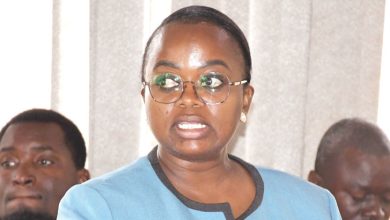
IED director Bethany Donthorn said this last week after visiting the institute’s projects in Malawi and Uganda.

She said LCDs access only 18 percent of climate financing while the actual councils that implement various climate resilient programmes only access 10 percent, which means that despite climate finance being promoted globally, funds accessibility remains an issue.
Donthorn , who is also head of learning and knowledge management at the Least Developed Countries Initiative for Effective Adaptation and Resilience (Life AR), said: “From Malawi team, they have just finalised designing the framework for climate finance and they are also learning from Uganda on how their counterparts approach the climate financing.
“Eighteen percent of climate finance globally comes to least developed countries and the initiatives like Life AR want to turn these percentages to ensure that climate finance improves across all countries.”
Commenting on the progress of Life AR projects in Malawibeing implemented in Mangochi, Salima and Rumphi districts by the Ministry of Natural Resources, Energy and Mining, Donthorn said they are progressing well as one of the early adopters alongside Uganda, Ethiopia and Burkina Faso.
Life AR focal point for Uganda Harriet Kyomuhendo said her country sent a delegation to Malawi for learning and knowledge sharing purpose to ensure that the project, which is being piloted in selected 10 countries to build climate resilience and sustainable agriculture, is a success.
“We are here to share knowledge with our Malawi counterparts because Malawi is one of the frontrunner countries as is Uganda,” she said.
Meanwhile, Environmental Affairs Department principal environmental officer for climate change Yamikani Idriss said the engagements between implementing countries of Life AR programme is critical for knowledge sharing.
The Life AR programme has been touted as key to boost the country’s carbon credit market through reforestation projects.
Life AR programme is taking Shape in Mangochi, Salima and Rumphi districts.
Among others, the $6.5 million (K11.3 billion) Life AR programme, whose projects include reforestation, boosting agriculture, among others, could enable the communities to benefit from their forests through carbon credit trading following the launch of the framework, according to experts.
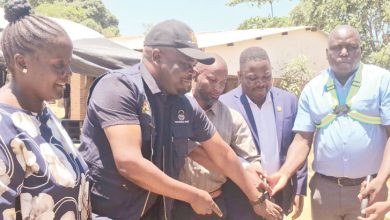
Speaking after touring the projects in Monkey Bay, Mangochi, Khombedza in Salima and Chitimba in Rumphi, Mangochi District forestry officer Takondwa Ganeti said through the project, a forest will be established in group village Sumbi to deal with floods that affect agricultural activities at Ng’ona Irrigation Scheme.
She said: “Through this project, farmers have started planting trees while preserving the already existing trees to ensure a forest is established to act as a barrier for flooding water which affect their agricultural activities.
“Most importantly, with the coming of the carbon market framework, we are optimistic that the communities could also benefit from carbon credit.”
ActionAid said African nations paid $60 billion in debt repayments in 2024 while rich nations should be providing $1.4 trillion annually in climate finance.
ActionAid data show that looking at emission from 1992, Malawi is owed $750 billion (about K1.3 trillion) by rich countries based on historic and projected atmospheric appropriation.