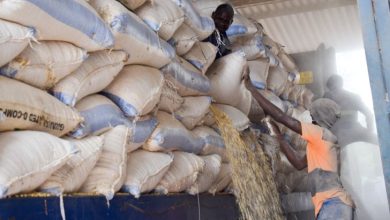
Malawi’s produce exports have remained subdued with Malawi Investment and Trade Centre (Mitc) figures showing huge unrealised export potential of the most commonly grown legumes and oilseeds.
The Mitc Export Map posted on its website www.mitc.mw, show that soya beans, legumes, groundnuts and macadamia nuts, among others, have significant unrealised export potential of up to 70 percent in some instances, a development that continues to undermine the country’ exports growth.

The map further shows that out of $103 million (about K180 billion) export potential for soya oilseed cake, its realised exports are 28 percent or $33 million (about K58 billion) with up to $74 million (about K130 billion) unrealised export potential.
Similarly, out of the $99 million (about K173 billion) legumes export potential, the crops only achieved 49 percent exports with the unrealised potential pegged at $50 million (about K88 billion) while macadamia utilises 72 percent of its $22 million (about K39 billion) export potential at $19 million (about K33 billion).
Reads the report: “The markets with greatest potential for Malawi’s exports of macadamia nuts are the United States, South Africa and China.
“China shows the largest absolute difference between potential and actual exports in value terms, leaving room to realise additional exports worth $1.6 million [about K2.8 billion].”
In an interview on Friday, Grain Traders Association of Malawi president Grace Mijiga Mhango attributed the high unrealised export potential to policy-related issues, saying some commodities face export bans at a time exporters already signed export contracts.
“We believe this has remained the case because of policy-related issues. For instance, at some point the most demanded product out there was soya, but before we supply we found out there was an export ban,” she said.
Common Market for Eastern and Southern Africa (Comesa) Business Council president James Chimwaza said in an interview on Friday that what affects most southern African countries, including Malawi, is lack of first level value addition.
He said: “There is need for public private dialogue that prioritises technology and enhances value addition.
“Again to meet the demanded volumes and standards, there is need for Comesa member States to come together and aggregate the commodities.”
On his part, economist Paul Kwengwere said the World Bank-funded Agricultural Commercialisation Project is targeting to promote production and “we expect the situation to change in the near future”.
The former Mitc chief executive officer said country’s export potential has remained higher than the actual exports because of production deficiencies and lack of value addition, adding that Malawi has always received orders of agricultural commodities, but fails to meet the demand because of production capacity constraints.
Malawi’s products with huge export potential include cane sugar, raw legumes, dried and shelled groundnuts and soya bean oil, according to Mitc
Malawi launched National Export Strategy II in 2021 to achieve export competitiveness focusing on increasing made in Malawi products in regional markets and ensuring import substitution.
But the country’s cumulative trade deficit in the 11 months to November this year jumped by 20 percent to $2.4 billion (about K4.2 trillion) compared to $2 billion (about K3.5 trillion) during the same period last year, according to the Reserve Bank of Malawi data.
During the review period, imports recorded at $3.27 billion (about K5.7 trillion) from $2.91 billion (about K5 trillion) in 2024 while exports dropped to $875.4 million from $882.8 million in 2024.