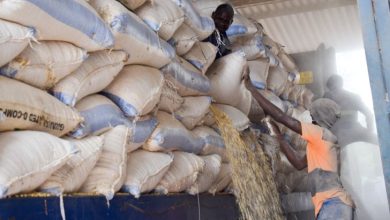
As Malawi braces for the lean season, a heated debate has erupted over the viability of the country’s mega farms—flagship investments meant to boost food security—amid plans to import 200 000 metric tonnes of maize.
The Agricultural Development and Marketing Corporation (Admarc) and the National Food Reserve Agency (NFRA) are both preparing to import maize, citing a national deficit of 600 000 metric tonnes. This follows a harvest of just 2.9 million tonnes in the 2024/2025 season, far short of the required 3.6 million tonnes.
Admarc spokesperson Theresa Chapulapula confirmed the imports would be financed by the Treasury under bilateral agreements, though she declined to disclose the total cost. Estimates suggest the exercise could cost Malawi around K300 billion.
In an interview, she said the maize will be imported from Tanzania and Zambia under existing bilateral arrangements with financing from Treasury.
She did not disclose the total cost of the imports, but estimates indicate the country would require about K300 billion for the exercise.
But the maize imports are not confined to Admarc alone as NFRA is also doing the same from Tanzania.
NFRA chief executive officer (CEO) George Macheka said the agency is importing maize at K943 per kilogramme under a government-to-government deal with Tanzania.
He said so far the agency has procured over 43 700 metric tonnes locally, sourced from smallholder farmers and a few contracted mega farmers.
“We are buying this from smallholder farmers across the country and few mega farmers that we signed contracts with,” said Macheka, adding that NFRA received K60 billion from government to support maize procurement.
Meanwhile, the initiative has raised questions about the performance of Malawi’s mega farms, once hailed as a transformative solution to food insecurity.
In the 2024/2025 farming season, 1 038 farmers were contracted under the Mega Farms Unit, with each mandated to cultivate a minimum of 20 hectares. Of these, 855 farmers grew maize, backed by a K62 billion investment from the Mega Farm Support Unit in partnership with the Malawi Agriculture and Industrial Corporation (Maiic).
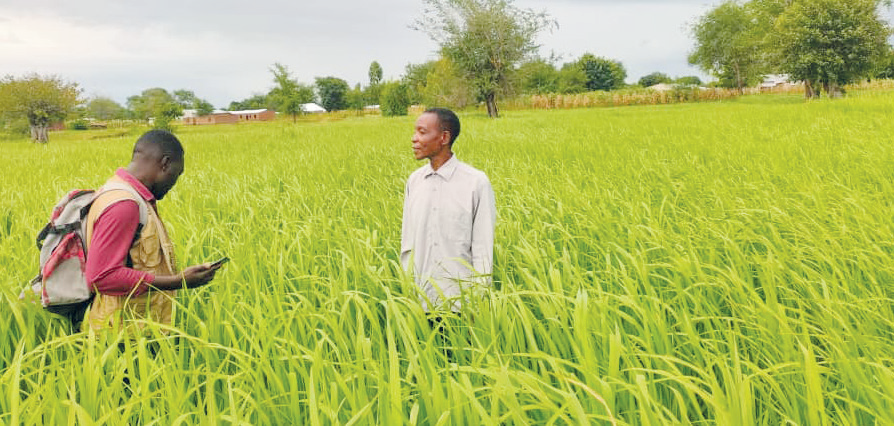
rice garden and
On its part, the National Economic Empowerment Fund (Neef) also disbursed K70 billion, with K16 billion earmarked for mega farmers.
Despite this, only 150 000 metric tonnes of maize were realized—100 000 tonnes short of the projected 250 000. According to the Ministry of Agriculture, this contributed to the national harvest of 2.8 million tonnes.
When asked about the availability of maize from mega farms, Mega Farms Unit director Henry Msatilomo declined to comment.
Harisson Mkango, a mega farmer from Chipoka EPA, said many farmers are withholding their maize due to unattractive prices offered by Admarc and NFRA.
“I harvested 500 bags from my 20 hectares, but I’ve struggled to sell. Sometimes I’m told the agencies don’t have money,” he said. “Now they want to import maize while ours sits unsold. It doesn’t make sense.”
But Macheka clarified that NFRA only signed 64 mega farmers this year and some have already sold their maize. Among them is the Greenbelt Authority, which delivered 750 metric tonnes from 200 hectares following a K500 million irrigation investment.
Greenbelt production manager Isaiah Moleni said they invested about K500 million to realise such yield through irrigation.
Meanwhile, Grain Traders Association of Malawi president Grace Mijiga Mhango said mega farms have not helped the country in ensuring food security.
She said considering the trend and heavy investment, the country could have beaten the 600 000 metric tonnes maize deficit.
“Farmers might be hoarding maize, but whatever they are keeping is within 2.8 million metric tonnes that we harvested as a country. The deficit is huge and looking at the impact of mega farms, they have not contributed to the country’s food security. Last year, mega farms contributed a meagre 10 000 metric tonnes or slightly above. And even this year, they have not been able to fill the deficit” said Mijiga.
Agriculture think-tank, Mwapata Institute suggests reforms in the way mega farms are run so they contribute to the country’s food security.
Mwapata Institute executive director William Chadza said for example some farmers contracted under this arrangement received inputs late and never used them.
He suggests that in future, there should be contracts that are binding both parties.
Mega farms were set up to enhance productivity and commercialisation of maize for economic transformation and food security.
Under the scheme, the farmers were expected to grow crops for selected priority value chains to boost agriculture output in the country.