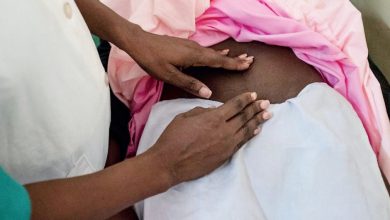
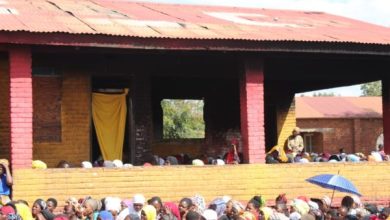
By the time Mercy Nyasulu Ng’onamo decided to leave the hospital ward for the field, she already understood one painful truth: hunger cannot be cured with medicine alone.
At 32, Nyasulu is a co-founder and Director of Business at the Agwenda Women Input Loan Initiative (AWILI), a woman-led agribusiness and microfinance model that
has quietly transformed the lives of thousands of rural women and young farmers. But before AGWENDA, she was a nurse; her days framed by white hospital walls and the weight of specialised care.
What stayed with her long after each shift were not infections or injuries, but children whose illness had nothing to do with germs. Mothers would arrive carrying babies
with hollow eyes and swollen bellies, the unmistakable signs of marasmus and kwashiorkor. Nyasulu would treat them, stabilise them, send them home. And then, weeks later, they would return. “It wasn’t a disease,” she recalls. “It was hunger. And hunger came from empty granaries.”
She began talking to the mothers, not as patients, but as women. She discovered a reality that statistics often miss: women were responsible for feeding households, yet
had the least control over the means of production. They were farming, but locked out of the systems that provided fertiliser, improved seeds and credit.
“I realised I could treat a child and send them back home,” she says, “but if I sent them back to a farm that was failing, I was only waiting for them to get sick again.” That frustration became the seed of AGWENDA. Nyasulu’s defining moment did not come from policy workshops or donor
conferences. It came from standing in agro-dealer shops and watching who walked through the door and who did not.
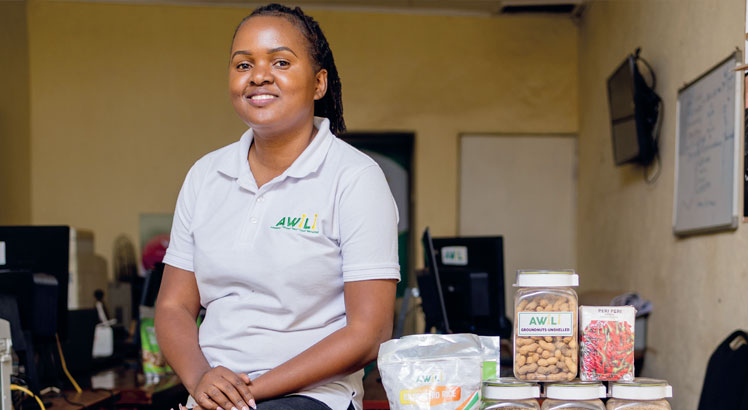
As planting season approached, men lined up to buy certified seeds and fertiliser. Women, despite being the backbone of agricultural labour, were conspicuously
absent. When she asked why, the answers were brutally consistent: women lacked cash, collateral and access to formal loans. Many feared informal lenders whose predatory interest rates could cost them livestock, household assets or dignity if the rains failed.
The result was a quiet exclusion with devastating consequences. While men planted improved seeds, women resorted to recycled seeds from previous harvests; genetically exhausted, low-yielding and unreliable.
“That’s when I understood the system was not neutral,” Nyasulu says. “It was actively locking women out.”
Recycled seeds meant low yields. Low yields meant no surplus. No surplus meant hunger, unpaid school fees and no capital for the next season. It was a vicious cycle, one that trapped families for generations.
In 2017, Nyasulu made a radical decision: she would stop asking women for money they did not have and start trusting the work they were already doing. Together with her co-founders, she launched the Agwenda Women Input Loan
Initiative (AWILI) with just 42 women. Instead of cash loans, AGWENDA provided
certified seeds, fertiliser and later improved local chickens on credit. Repayment
would come not in kwacha, but in harvest — bags of maize, groundnuts or crates of
eggs. No monthly instalments. No interest charged in cash. Repayment aligned with the rhythm of the rains.
“Most financial models assume people earn money every month,” she explains. “But
rural life doesn’t work like that. Income grows in the field.” The impact was immediate. Women no longer panicked during the lean months
trying to service loans. They focused on productivity, knowing repayment would come after harvest.
“We stopped being debt collectors,” Nyasulu says. “We became partners.” Those first 42 women became proof that the label unbankable was not only inaccurate, but unjust.
“What I saw in them was ambition,” she says. “Farmers want to thrive. They want to get rich. The problem is the models we give them.” The name Agwenda has no literal meaning — and that is intentional. In rural Malawi, an Agwenda is like any trusted lead farmer in the community: someone people run to
for advice, seeds and solutions. That philosophy shaped the company’s structure. AGWENDA’s agro-dealer shops are strategically located in rural areas of central
Malawi, bringing certified inputs closer to farmers who would otherwise travel long distances. The shops are especially critical for irrigation farmers, supplying popular inputs such as kanyani and mzati.
Behind AWILI is Agwenda Investment Limited, established in 2012 and operating in
Lilongwe and Nkhotakota. The company also runs poultry value chains, from quails,
indigenous and dual-purpose chickens which are managed through out-grower schemes where farmers receive chicks and repay in eggs. Those eggs are
incubated, hatched and passed on to new farmers, creating a self-reinforcing cycle.
In a 24-month project supported by CASA, AGWENDA worked with over 1,600 poultry out-growers, mostly women and youth, and introduced Black Soldier Fly maggots as a low-cost protein source for feed — laying the groundwork for local feed processing.
Today, AGWENDA works with over 9,600 women and youth farmers across multiple districts, supported by a lean but committed structure: five senior managers, eight extension officers and 34 lead farmers. Farmers are organised into cooperatives and smaller clubs of ten — a form of social collateral that replaces land titles.
Partnerships with organisations such as AGRA, through MAIIC, marked a turning point, helping professionalise systems, lower the cost of capital and demonstrate that a cashless, harvest-based model could work at scale. AGWENDA is now registered
with the Reserve Bank of Malawi as a Microfinance Institution. But for Nyasulu, numbers tell only part of the story. “The real impact,” she says, “is when a mother no longer brings her child to hospital because there is food at home.”
AGWENDA began with women because Nyasulu saw them as the most powerful lever for change. When women succeed, families follow. “When a woman controls the granary,” she says, “she controls nutrition, education and health.”
Later, youth were intentionally brought into the model. Agriculture, Nyasulu believes, cannot survive as a retirement plan. “Young people are leaving rural areas because farming looks like poverty,” she says. “We want them to see it as business.”
She envisions a future where Malawian youth apply technology, data and climate- smart practices to agriculture, turning fields into enterprises. “I see young billionaire farmers,” she says, smiling. “Not survival farmers.” The work unfolds amid mounting challenges: delayed rains, shortened seasons,
rising input costs, limited irrigation and chronic funding gaps. Some women harvest as little as 21 kilograms of groundnuts from two acres in bad seasons, devastating when loans are repaid in kind.
“There are days it hurts,” Nyasulu admits. “Demand keeps growing, but resources do not.” As a woman leading an agricultural enterprise, she has also faced resistance, from
male subordinates uncomfortable with female authority, and from systems that underestimate the burden of caregiving. “There are times you have to work twice as hard to be taken seriously,” she says.
What sustains her is conviction, and the women she serves. Nyasulu’s long-term vision is to make AGWENDA the premier agribusiness platform for rural women and youth in Malawi, integrating agro-dealerships, micro-finance,
extension services and climate-smart agriculture. Her message to a young woman in a rural village is simple and urgent: “Agriculture is not backward,” she says. “It is power. It is independence. It is freedom.”
Once, Mercy Nyasulu Ng’onamo treated hunger in hospital wards. Today, she treats its root causes — one woman, one seed, one harvest at a time.