Every morning Emmanuel Ziyenda leaves his home in Dzenza, Area 25, and boards a bus to the Kanengo Industrial Site in Lilongwe with a single calculation in his head: how many days this month will his K130 000 salary cover after transport and rent?
Last week, he spent K5 000 a day on return fares K100 000 in seven days, leaving almost nothing for food, utilities or debt. “Life is extremely hard,” he says.
“My salary disappears before the month begins.”
Ziyenda’s story is not an outlier. Shopkeeper Andrew Mbesa, who earns K126 000, says most of his pay goes on commuting.
Both workers say they were promised a minimum‑wage review after unions and employers met the government, but weeks on the decision remains pending.
Meanwhile, the national Survival Minimum Expenditure Basket (SMEB) stood at K232 200 in January 2026, and the Centre for Social Concern (CfSC) estimates a household of four now needs about K1.1 million a month to cover basic needs.
With fuel and VAT hikes eroding purchasing power, unions are calling for a 95 percent increase to restore living standards; employers propose 25 percent.
For workers such as Ziyenda and Mbesa, however, the debate is not abstract: it is a daily struggle to afford a loaf of bread, pay rent and keep a job.
The delay in announcing a new wage floor risks turning temporary hardship into long‑term impoverishment and strengthens the case for an urgent, meaningful review.
The Malawi Congress of Trade Unions (MCTU) has expressed frustration over the government’s delay in announcing the revised minimum wage despite promises to intervene after a standoff between workers and employers.
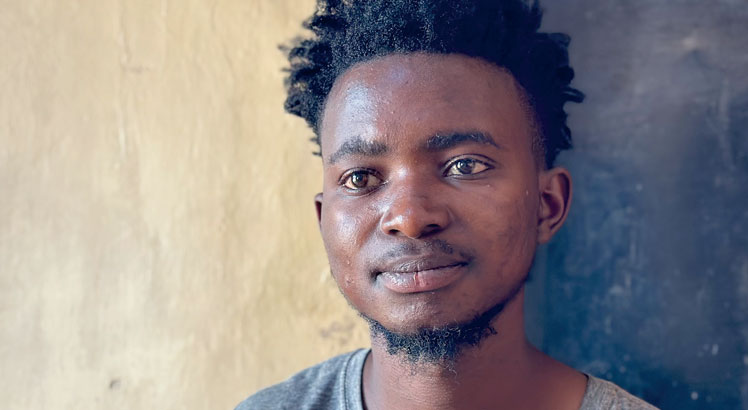
MCTU president Charles Kumchenga said in an interview on Thursday that the union presented its proposal at a recent tripartite meeting held in response to recent economic developments, including increases in value‑added tax (VAT) and fuel prices.
Kumchenga said the economic environment has eroded workers’ purchasing power, necessitating a substantial adjustment to the wage floor.
He said MCTU demanded a 95 percent increment because of rising costs across most commodities and remains firm on that demand, but frustration is growing.
“Government asked the parties to find a compromise, so we settled for 95 per cent considering the prevailing economic situation. The cost of living is unbearable for workers, with fuel, transport and other basic needs becoming more expensive.
“After our standoff, the promise was that they would announce it on Labour Day but, to date, that information is still under wraps. It’s really frustrating,” Kumchenga said.
Employers Consultative Association of Malawi (Ecam) executive director George Khaki said employers are proposing a 25 percent increase for most categories, five percent for the agriculture and commercial sectors, and 10 percent for micro and small enterprises.
Khaki said employers understand the challenges workers face following the recent fuel hike and other economic pressures. He warned that any wage revision beyond their proposed 25 percent would require restarting the process, which would delay implementation further.
“In our earlier discussions, the employees’ side and employers did not find common ground. We left the issue with government. It is now up to the government to consider the submissions made. We reminded them last week and there was a commitment that they would issue it very soon,” Khaki said.
CfSC economic governance officer Agnes Nyirongo said rising food prices continue to affect salaried workers. She added that the recent fuel price hike has compounded the situation, justifying the need for a minimum‑wage adjustment.
“There is a big gap between the current minimum wage and the cost of living, and workers are struggling to survive. We have seen that prices of food have gone down but, on the other hand, prices of electricity, water and other non‑food items have gone up. Workers are really struggling and a revision of the minimum wage would help low earners,” Nyirongo said.
Minister of Labour Joel Chigona confirmed that the government has been mediating between workers and employers on the minimum‑wage revision.
Without disclosing the agreed percentage, Chigona said the issue is nearing conclusion and the final proposition is now awaiting President Peter Mutharika’s approval.
“We concluded our discussion on minimum‑wage revision. For now, I cannot disclose the agreed amount. What I can tell you is that the issue is with the President for a final decision, and we hope that in the coming week the minimum wage will be announced. We understand the challenges workers are facing, hence our facilitation of the minimum‑wage review,” Chigona said.
The minimum wage was last revised in June 2025 and now stands at K126 000 per month for formal‑sector employees and K72 800 for domestic workers.
Under the MCTU proposal of a 95 percent increase, the minimum wage would rise to about K245 000 per month, roughly K13 000 higher than the SMEB.
Under the employers’ proposal, the minimum wage would increase to K157 000 per month, about K75 000 below the SMEB.