The Public Affairs Committee (PAC) has entered its second-year with Monsignor Patrick Thawale as chair of the executive committee, despite its mandate expiring in December 2022.
The development has been criticised by some governance experts as a sign of poor governance.
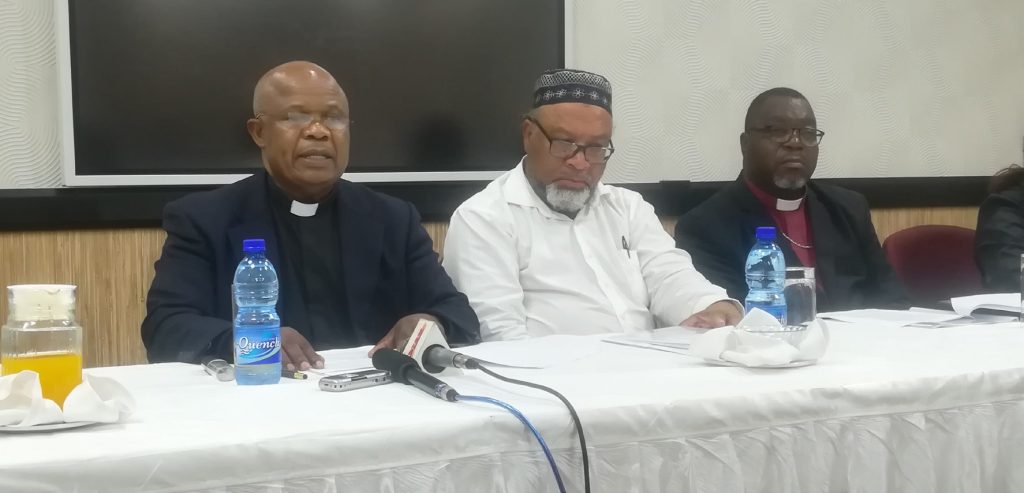
The quasi-religious group’s executive was elected in December 2019 for a three-year term.
In January last year, PAC Board of Trustees chairperson Reverend Fanuel Emmanuel Magangani told Weekend Nation that the board, as the legal owners, had renewed the executive’s mandate.
This extension was intended to allow the committee to finalise a revised PAC constitution, which was to be presented at the annual general meeting (AGM) for adoption.
Magangani also expressed the board’s desire for the current committee to organise an All-Inclusive Stakeholders’ Conference before the AGM.
These events were expected to take place in the first-quarter of 2024, other factors remaining constant.
However, a year later, neither the AGM nor the All-Inclusive Stakeholders’ Conference has taken place, and PAC has not provided updates.
PAC executive secretary Robert Phiri, in response to a questionnaire sent in November last year, said: “You may contact Bishop Magangani because he is chair of the trustees’ board. I have information on the status of the All- Inclusive Stakeholders Conference. But this will further be discussed by the Executive Committee next week. Until they approve our plans, I cannot comment. That will be the day the AGM, as proposed by trustees, will be discussed.”
When contacted, Magangani said the publicity secretary is the mouthpiece of the group and that trustees work in the background.
Weighing in on the matter, Centre for Social Accountability and Transparency (Csat) executive director Willy Kambwandira said, as a governance and accountability body, PAC should lead by example before holding others to account.
He described the continued delays in holding an elective conference as a sign of bad governance.
Said Kambwandira: “As the country is degenerating into crises, Malawians expect PAC to rise above the occasion and speak for the voiceless. Their silence, obviously, does not instil confidence in Malawians. It is important for PAC to remain consistent and speak up where necessary to avoid raising speculation of selective pursuit of matters of national interest and conflict of interest.”
Governance expert Mavuto Bamusi, in an earlier interview, described the situation as a violation of the institution’s internal governance and a demonstration of PAC’s failure to practice what it preaches.
“PAC rebukes political parties when they do not practice democratic principles of leadership succession. Clearly, PAC has lost the moral ground and it has to elect new office bearers urgently without further excuses,” said Bamusi.
Magangani explained that the board used Article 15.4 of the PAC constitution to renew the mandate, which states: “In the event that a new Executive Committee is not in place, the existing committee shall continue to transact business for the sake of PAC’s continuity.”
He added: “Trustees may use their power to do all such other lawful things as are necessary for the achievement of PAC objects.”
The current PAC executive committee includes Osman Karim, who was re-elected vice-chairperson; Reverend Father Mark Mkandawire, who retained the position of board secretary; Bishop Gilford Matonga as publicity secretary; and Reverend Davidson Chifungo as treasurer. Executive members are Reverend Matilda Matabwa, Agnes Kamoto, Sheikh Jaffar Kawinga and Reverend Maureen Tinenenji.
In November 2023, PAC issued a statement after meeting President Lazarus Chakwera, urging him to be decisive and sensitive in finding solutions to ease the suffering of Malawians.
In the statement, PAC said Chakwera’s indecisiveness and slowness to act on crucial issues “remains a great enemy” to his leadership legacy.
PAC was formed in 1992 by several religious groups to facilitate dialogue with president Hastings Kamuzu Banda during the transition from one-party to plural politics, through the Presidential Committee on Dialogue.
PAC foundi ng member – organisations include the Anglican Diocese of Upper Shire, Anglican Diocese of Southern Malawi, CCAP Blantyre Synod, Muslim Association of Malawi, CCAP General Synod, CCAP Livingstonia Synod, Episcopal Conference of Malawi, Malawi Council of Churches and Malawi Law Society.
Others were African Methodist Episcopal Church of Malawi and all respective dioceses of the Catholic Church, Africa Evangelical Church, Anglican Diocese of Northern Malawi, CCAP Nkhoma Synod, Central African Confederation of Seventh Day Baptist Church, Evangelical Association of Malawi, and Evangelical Lutheran Church of Malawi.
Providence Industrial Mission, Quadria Muslim Association of Malawi, United Evangelical Church of Malawi, United Methodist Church, Zambezi Evangelical Church and Baptist Convention.