Public Affairs Committee (PAC) is considering reviewing the 19 issues that presidential candidates commit to for the enhancement of transformative leadership in Malawi ahead of the September 16 General Election.
Among the issues that PAC wants the presidential candidates to work on when voted into power include reducing the size of the Cabinet, decisively dealing with corruption cases, improving the treatment of the Office of the Vice-President, trimming of presidential powers and depoliticisation of development projects.
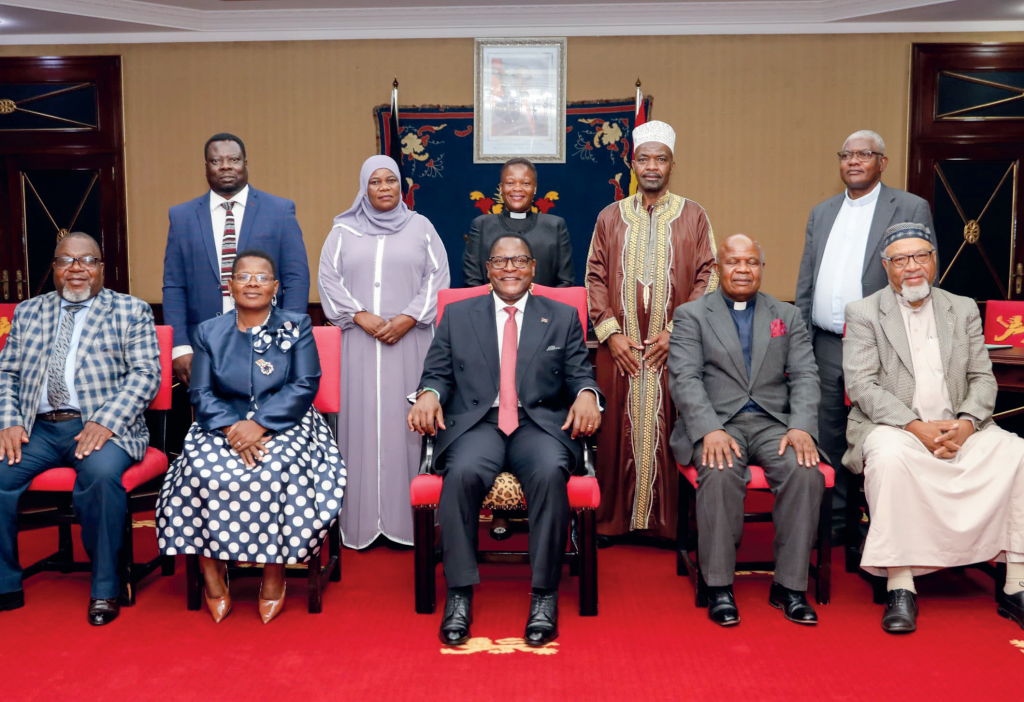
The quasi-religious grouping engages presidential candidates ahead of every general election to share the aspirations of Malawians on how the government should be run and to get their commitments to adhere to the 19 issues.
PAC spokesperson Bishop Gilford Matonga said in an interview yesterday that the organisation is expected to start engaging all the presidential candidates after the Malawi Electoral Commission (MEC) completes receiving nomination papers for the next election.
He said the quasi-religious grouping will first review the current 19 issues before meeting the presidential candidates.
Said Matonga: “We are going to revisit the 19 issues and then we are going to see whether we can drop and include some, looking at what has transpired in the past 10 years or so.”
He further observed that the previous meetings with presidential candidates have borne fruit as the commitments are also used as presidential assessment tools.
Commenting on PAC’s move to review its benchmarks, political analyst Ernest Thindwa and governance scholar Andrew Kaponya noted that committee’s engagements with presidential candidates have not yielded desired results.
Thindwa said PAC has no executive authority to enforce the commitments that presidential candidates make.
“PAC is trying its best with what it can, but the bigger part remains with citizens. We need a general public that is proactive, and certainly, PAC will continue to play its role, but the general public needs to improve on citizen activism that can bring an effect on presidential candidates and the government of the day,” he said.
On his part, Kaponya, who is also a developmental studies lecturer at the Malawi University of Business and Applied Sciences (Mubas), noted that PAC’s engagement with presidential candidates is a waste of time as most candidates sign the commitments just to appease PAC officials.
“PAC has to revisit and see what they can do on the way forward. Otherwise, we do not have a proper mechanism for Malawians to bring the presidential candidates and question them about why they have not fulfilled the commitments,” he said.