National Football Coaches Association (NFCA) association has called for a vetting system for players in diaspora before they are granted Malawian citizenship to play for the Flames.
This follows Flames coach Kallisto Pasuwa’s announcement that he will continue to search for players in diaspora to play for the Flames, without explaining the criteria he is using.
The Zimbabwean tactician has made a surprise inclusion of Ivory Coast–born striker Kouadio Yann Kouakou in the Flames squad for the upcoming international friendlies against Lesotho on November 15 and 18 in South Africa.
Kouakou, 26, born in Treichville, Ivory Coast is a holder of French citizenship but will now represent the Flames.
The Europa Point FC forward joins Mayele Malango and Babatunde Adepoju as part of a growing list of naturalised or diaspora-based players Pasuwa has included in his squad.

However, the NFCA has warned that the continued recruitment of diaspora players without proper scouting, could harm the national team’s long-term development.
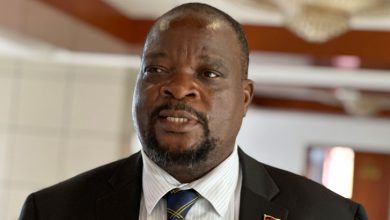
NFCA chairperson Aubrey Nankhuni warned that some of the players brought in from abroad may not possess the quality required for international football.
He said: “We are not opposed to naturalised or diaspora players representing Malawi, but there must be a clear and transparent process in identifying them. The national team should not become a gateway for acquiring a Malawian passport.”
Nankhuni has since proposed the creation of a vetting committee, chaired by Pasuwa himself, with members drawn from the coaches’ association, football analysts and the media, to evaluate diaspora players before they are considered for national team duty.
He said: “This will help the coach to avoid bringing players who add no value to the team, only to discard them later. We have had situations before where players were given Malawi citizenship, trained briefly with the national team, but vanished from the setup. That approach does not help in building a consistent and sustainable national team.”
Football analyst Dyson Musa said the reliance on naturalised or dual citizenship players is not a lasting solution to Malawi’s football challenges.
He said: “Diaspora is not the solution. What Malawi needs is to strengthen the TNM Super League so that it becomes highly competitive and capable of producing quality players ready for the international stage.
“The decision to divert from using local players can somehow be considered as a way of accepting failure to improve the standards of our local league, hence opting for the players in diaspora.
Musa said Malawi should draw lessons from South Africa, whose national team recently qualified for the Fifa World Cup finals with a squad of home-based players.
“South Africa’s success is built on strong local structures. Their national team now relies heavily on players from Mamelodi Sundowns, Kaizer Chiefs and Orlando Pirates, despite having many professionals abroad. That’s the model Malawi should emulate,” he said.
Musa also backed the introduction of a committee to vet diaspora players.
He said: “The committee will help scrutinise the quality of the players. It will also enhance transparency.
“Some players may only be interested in using the Flames in obtaining the citizenship and, as well as pathway of marketing their services in top leagues.”
Another football analyst Kelvin Moyo also called for proper scouting process for the diaspora players.
He said not all players in diaspora may be fit for the Flames.
But when announcing his squad, Pasuwa defended his strategy, saying the recruitment of diaspora players is part of a broader plan to widen the Flames’ talent pool while continuing to nurture local players.
He said: “We are still calling for more Malawians, including those in the diaspora, to come out and get the chance to play for their country.
“We had also called up 20-year-old Luciano Rados from America, whose young brother, Ellie, was part of the Under-17 team, but unfortunately he failed to come because of an injury sustained last week.”
Pasuwa also insisted that his approach balances both the domestic and international talent pipelines.
Kouakou’s inclusion has also sparked debate among football circles, considering that he is playing in Gibraltar ranked 200th by Fifa while Malawi is 126th.
While some view the move as progressive, others fear it could repeat past mistakes where naturalised players failed to make lasting contributions.
Pasuwa wants to use the international friendly against Lesotho to prepare for the 2027 CAF Africa Cup of Nations qualifiers.
Pasuwa said winning the friendly matches will also help improve Malawi’s Fifa rankings.