Political influence has emerged as one of the key factors choking the efficient operation of local government authorities (LGAs) as Capital Hill is clinging to ceded revenue and reluctant to gazette relevant by-laws.
The Nation analysis of 19 out of the 35 LGA nationwide established that while the councils have own inefficiencies, political influence, Capital Hill clinging to ceded revenue, reluctance to gazette by-laws and revenue leakages were behind the poor revenue performance.
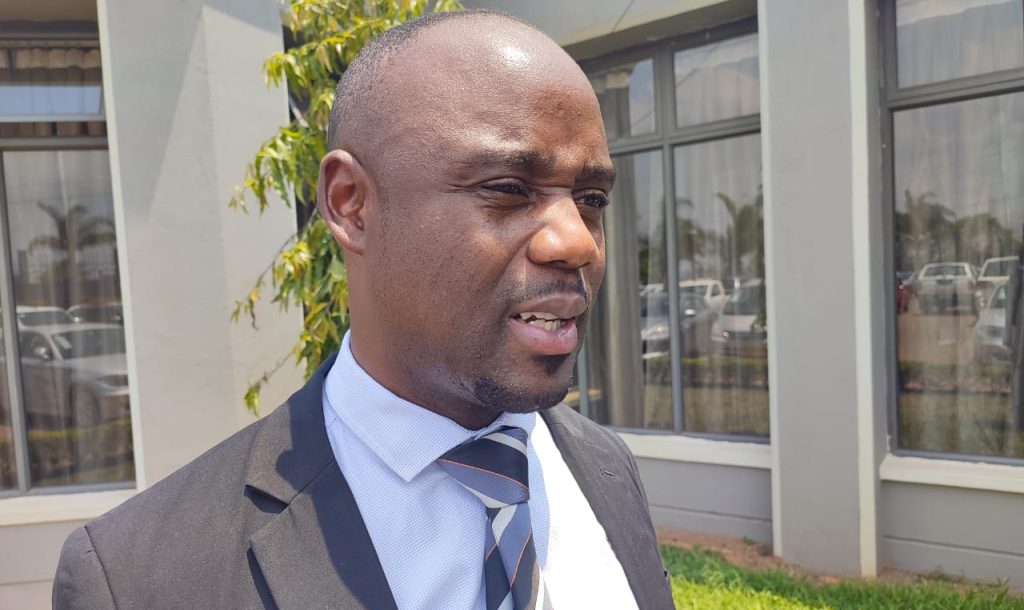
such strategies. | Nation
The situation has pushed LGAs into huge debts when locally generated revenue (LGR) would help the situation.
In the analysis, The Nation found that the LGAs have hidden potential which is underexploited for the councils to generate significant amounts of revenue with high possibility of being self-sustaining. The analysis also established that Capital Hill’s reluctance to implement full fiscal devolution is choking council operations.
The 19 sampled councils showed signs of improvement for the past three fiscal years in the ranges of a minimum of K130 million to at least K1.4 billion every year.
In the 2025/26 fiscal year ending on March 31, the total budget for the LGAs was pegged at K234 billion and comprised K179 billion from Central Government Transfers (CGTs) and K56 billion from LGR.
A look into the CGTs to LGAs showed that in the past three quarters of the fiscal year from April to December 2025, out of the expected K148.324 billion, the councils received K93.931 billion, representing 63 percent.
Records show that Lilongwe District Council topped the list with K1.4 billion by December 2025 followed by Kasungu Municipality Council at K800 million, Mangochi District Council at K674 million, Chikwawa District Council at K659 million, M’mbelwa District Council in Mzimba at K660 million, Dowa recived K563 million while Karonga and Ntcheu district councils collected K377 million and K357 million, respectively.
Kasungu District Council got K331 million, Rumphi K172 million, Ntchisi K122 million, Balaka 331 million, Thyolo K309 million, Chiradzulu K130 million, Zomba Didtrict Council K252 million while Mwanza and Luchenza got K172 million each.
In an interview last week, Malawi Local Government Association (Malga) executive director Hardrod Zeru Mkandawire said collection of LGRs is proving a great challenge because of the adverse macroeconomic environment where local businesses have failed to thrive.
He said: “Although most LGAs have developed Local Revenue Strategic Plans, but it has been difficult to implement such strategies to collect more revenue as it appears like milking a thin cow.
“Therefore, with current low levels of locally generated revenues, there is even higher obligation on the part of government to provide adequate resources necessary for the proper exercise of local government functions.”
Serious bottlenecks
Ntchisi District Council director of finance (DoF) Federick Muyaba, whose council targets to collect K194.7 million in the coming year, identified low compliance and revenue leakages as serious issues, largely due to lack of proper enforcement mechanisms.
“The council is also challenged with the matters of forestry and construction-related revenues. These are mostly the revenues collected by the central government agencies, other than the district council,” he said.
Kasungu District DoF Solomon Mkundika added that vehicle and fuel shortages affect monitoring and supervision of revenue collection.
“We also face lengthy processes involved in developing and approving council by-laws, as well as challenges in gazetting approved by-laws, results in councils operating without updated legal instruments and exposes them to potential legal risks,” he said.
In a separate interview, Karonga district commissioner (DC) Willard Mwambo agreed, saying some rates payers question the legality of the council in mobilising local revenue when Capital Hill is yet to gazette the same.
“Most of rural markets face traditional and political leadership interference. This hinders mobilisation. Use of manual local revenue mobilisation system poses a serious threat to both efficiency and effectiveness of local revenue mobilisation,” he said.
Thyolo District Council DoF Andrew Jaffar said they are faced with shortage of cleaning materials to enhance proper sanitation in the markets, resulting in vendors refusing to pay taxes.
On the other hand, Chikwawa DC Frank Mkandawire provided unique challenges.
He said poor road network during the rainy season and encroachment of market areas by some communities make it difficult for the council to collect rates or fees from the same people who deem themselves as landlords.
For Mwanza DC January Mvula, his council is also affected by short marketing seasons, high vacancy rates among revenue collectors, exacerbated by the national recruitment freeze, pilferage by some revenue officers and lack of political will to increase revenue prices.
Meanwhile, Centre for Social Transparency and Accountability executive director Willy Kambwandira has said the analysis only confirms revenue streams and fiscal decisions remain tightly controlled at Capital Hill.
He said it is evident that the central government is not ready to devolve resources to councils.
“This creates a contradiction where councils are blamed for poor service while being denied the financial authority necessary to perform their mandates,” said Kambwandira.
Meanwhile, Budget and Finance Committee minutes for Chiradzulu District Council show that 47 percent of the LGR goes towards salaries and gratuities followed by collection costs at 20 percent, eight percent for chiefs, assembly and functions and 25 percent on capital projects.
In Karonga, Mwambo said over 50 percent of local revenue mobilised per year was being allocated towards salaries for direct employees.