Post-abortion care guidelines absence clips nurses’ wings

In the course of duty, nurse Lilian (not her real name) was approached by a 15-year-old girl seeking to procure a safe abortion.
The girl had been defiled.
“The Gender [Equality] Act says we can provide the service, but there was no secular around that could enable us to provide the service,” she said, while sharing her experience.
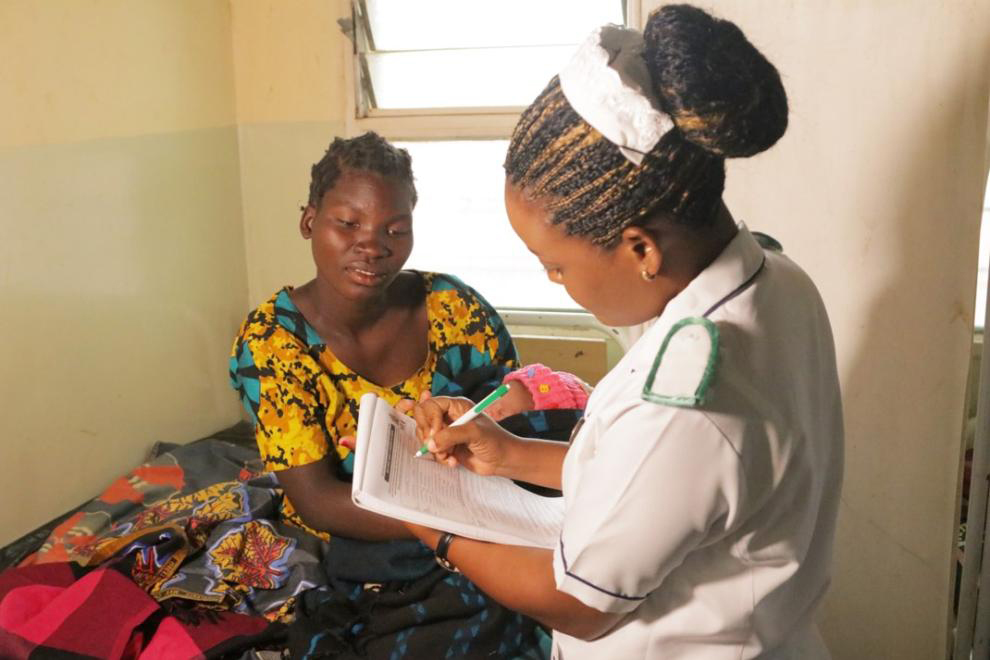
“When I asked my supervisor, she said I was going to be on my own if the police came.”
This compelled the nurse, who asked for anonymity for fear of reprisals, to send the girl away simply because she was afraid of the repercussions, as alluded to by her supervisor.
Lilian said she did not deny the girl the service just because she was cruel, but rather because of the absence of the guidelines.
“I became a nurse to protect and serve lives,” she said. “But that one day, I had to protect my job and my licence.”
Due to the absence of the guidelines, Lilian, just like other nurses, found herself in a situation where she could not provide a service that could have helped a girl who needed it most.
And it is in such scenarios that girls often turn to secret and unsafe abortions.
Such secret abortions result in complications, and girls return to the very same public health facilities where they seek post-abortion care.
In 2024, a report from Civil Society Organisations (CSOs) with interests in the health sector stated that the Malawi Government spends K326 million yearly on post-abortion care services.
The CSOs—Centre for Human Rights and Rehabilitation and Nyale Institute—further stated that one in every 29 girls and women die due to pregnancy-related complications, accounting for 18 percent of Malawi’s maternal deaths.
Section 19 of the Gender Equality Act entails the right to safe and legal termination of pregnancy, especially in situations involving sexual violence.
Besides, despite Malawi’s laws prohibiting safe abortion, Section 243 of the Penal Code makes an exemption that it can be procured when either the life or the health of a woman is in danger.
“A person is not criminally responsible for performing, in good faith and with reasonable care and skill, a surgical operation upon any person for his benefit, or upon an unborn child for the preservation of the mother’s life, if the performance of the operation is reasonable, having regard to the patient’s state at the time, and to all the circumstances of the case,” part of the section reads.
On October 28 2025, the High Court of Malawi delivered a landmark ruling that clarified that victims of sexual violence who are minors have the legal rights to safe abortion, and further directed a review of post-abortion care guidelines.
The ruling followed a case pursued by a 16-year-old minor, who was defiled by her 60-year-old neighbour when she was just 13 years old. Her defilement led to a pregnancy, but a clinician at Chileka Health Centre declined to assist terminating it.
The Blantyre-based minor, therefore, challenged the clinician’s decision in the High Court of Malawi, and further sued Blantyre City Council, Malawi Human Rights Commission and the Attorney General.
And in his ruling, High Court of Malawi Judge Michael Mtambo directed that the Attorney General works with the Ministry of Health in reviewing and amending the guidelines within 180 days from the date the judgment was delivered.
The 180 days elapsed on April 25 this year.
Attorney General Frank Farouk Mbeta on May 28 2026 said consultation processes were completed with draft guidelines in place and awaiting vetting and other formalities.
When asked about the current status, on July 1 2026, the Attorney General said he needed to check.
But Health and Rights Education Programme executive director Maziko Matemba says prolonged delays to implement the guidelines have severe health and human rights implications.
From a health rights perspective, Matemba says the bureaucratic delay transforms a landmark legal victory into a lingering systemic crisis.
“Clinicians cannot distinguish between a criminal act and a constitutionally protected health service without updated clinical guidance,” says Matemba.
Matemba says the continued absence of the guidelines has potential to drive maternal mortality and unsafe abortions at a time complications from unsafe abortions are accounting for up to 18 percent of maternal deaths.
He says: “When a girl is denied a safe, legal procedure at a public clinic, she does not stop seeking solutions; she is forced to turn to clandestine, unsafe methods.
“Delays in clarifying the guidelines directly map to predictable, preventable deaths and severe morbidity—such as uterine perforation, sepsis and permanent infertility.”
Matemba further says victims of rape and defilement are subjected to prolonged psychological torture and forced pregnancies, which violates their fundamental right to dignity and bodily autonomy under the Gender Equality Act.
According to Matemba, denying victims their legal right to seek safe abortion, therefore, actively perpetuates the trauma and prolonged psychological torture they face.
“A cornerstone of the court order was establishing mechanisms to penalise facilities or clinicians who unlawfully deny care, providing a remedy for victims” he says.
“The delays mean there remains zero accountability for health facilities that turn girls away. Victims have no administrative avenues for immediate redress, effectively meaning that their right to health exists only on paper, but cannot be claimed at the clinic doors.”
Currently, only two countries within the Southern Africa Development Community (Sadc) region broadly permit abortion without specifying medical or socioeconomic reasons.
The countries are South Africa and Mozambique.
The other 14 member-States prohibit abortion in their laws, only granting permissions within limited circumstances.
The 2019-2030 Sadc Strategy for Sexual and Reproductive Health and Rights states that unsafe abortions remain a silent health crisis and that member States continue to grapple with its impact, in particular, among adolescent girls and young women.
The strategy, therefore, advocates that countries should work hard in addressing the health crisis.
It reads in part: “It commits member States to reduce maternal mortality by promoting universal access to comprehensive abortion care where legally permitted, expanding post-abortion care and advancing regional legal harmonisation.”
According to the Guttmacher Institute, a research and policy organisation that aims at improving sexual health and expanding reproductive rights worldwide, it is estimated that 6.2 million unsafe abortions occur in sub-Saharan Africa yearly.
They account for 77 percent of all abortions in the region.
The Guttmacher Institute states that these procedures often result in severe complications, including infection, heamorrhage and even death, with young girls bearing the brunt.
In July 2025, the Sadc Parliamentary Forum convened a capacity building workshop in Windhoek, Namibia, which aimed at strengthening knowledge among legal drafters and sexual and reproductive health and rights researchers on safe abortion and the development of enabling laws across the region.
During the workshop, advocates rallied for the adoption of a Sadc Model Law on Safe Abortion on the premise that harmonised rights-based legal frameworks are urgently needed to stem preventable deaths, improve health outcomes and protect bodily autonomy.
The regional advocates argued that the Sadc Model Law on Safe Abortion might be a game-changing policy tool owing to the region’s successful history of using models to advance sexual and reproductive health and rights, citing policies pertaining to gender-based violence and child marriages.
Among others, the Model Law is grounded in intersectionality, taking into consideration factors such as poverty, rural residence, low education and exposure to gender-based violence as regards how they contribute to girls’ vulnerability to early pregnancies and unsafe abortions.
In 2012, a Special Law Recommendation on the Review of Abortion Laws, which was appointed by former president Joyce Banda, proposed new grounds for abortion.
Malawi is also a party to the African Union’s 2003 Maputo Protocol which guarantees comprehensive rights and protections as regards access to sexual and reproductive health and rights services.
“State parties shall take appropriate measures to protect the reproductive health rights of women by authorising medical abortion in cases of sexual assault, rape, incest, and where the continued pregnancy endangers the mental and physical health of the mother or the life of the mother or foetus,” reads Article 14 (2) (c) of the protocol.