Malawi has registered mixed fortunes in the fight against poverty with the poverty levels on the decline, but the number of people living in extreme poverty going up.
National Statistical Office (NSO) Sixth Integrated Household Survey (IHS6) findings released on Friday in Lilongwe show that the national poverty rate has declined from 50.7 percent to 47.3 percent while the proportion of ultra-poor Malawians—those living in extreme poverty—rose from 20 percent to 24.3 percent over the same period.
Commissioner of Statistics Shelton Kanyanda attributed the overall decline in poverty to lower costs of meeting minimum calorie requirements, enabling households to afford healthier diets at lower cost.
He said the rise in ultra-poverty presents a more complex picture.
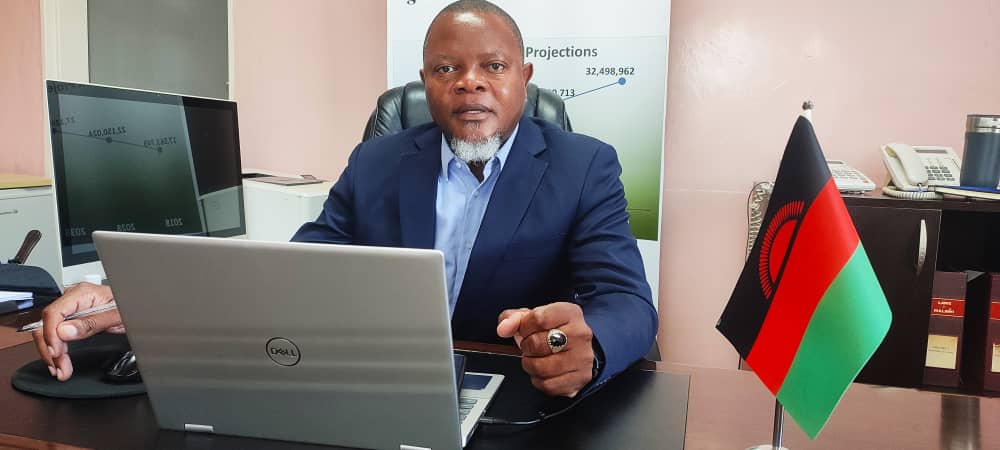
“Despite that decline, the people who are ultra-poor, that are very poor, have increased. The ultra-poor have increased, but the poverty rate overall has declined,” said Kanyanda.
Districts affected by cyclones recorded the highest poverty rates, with Phalombe topping the list at about 78 percent, followed by Mulanje, Thyolo and Chikwawa.
“We assume it’s the cyclones that affected their livelihoods, disrupting businesses and income generation,” said Kanyanda.
IHS6 also paints a grim picture of food security. The proportion of households experiencing food shortages rose from 48.4 percent in 2010 to 75.7 percent in 2024, meaning three in every four households now face food shortages.
The proportion of adults eating three or more meals a day fell from 53.7 percent in 2019 to 39.4 percent in 2024, while more than half now survive on two meals a day.
Drought and poor rainfall remain the leading causes of food shortages, cited by 48.4 percent of households, while 36.8 percent pointed to high food prices.
The survey further confirms that 61 percent of Malawi’s population is aged 24 years and below, making it one of the youngest populations in the world, although only a small proportion is employed.
Minister of Finance, Economic Planning and Development Joseph Mwanamvekha, who graced the unveiling of the report, acknowledged the challenge.
He said: “If you don’t employ these young people that are coming from the universities, from the colleges, I think it will be a challenge.”
Literacy has improved significantly, rising from 53.8 percent in 2010 to 71.6 percent in 2024. However, disparities persist between urban and rural areas, with literacy standing at 86 percent in urban areas compared to 68.7 percent in rural areas.
Net enrolment in primary education improved from 83.4 percent to 91.7 percent. Secondary school enrolment, however, remains low at 22.7 percent, down from 24.2 percent in 2019. The net enrolment rate for secondary education remained virtually unchanged at 15.7 percent, meaning fewer than one in six children of secondary school-going age are enrolled.
Financial inclusion remains limited, with only 18.8 percent of adults holding bank accounts. Access is particularly low in rural areas.
Consumption accounted for 53.2 percent of all borrowing, up from 34.8 percent in 2019, while borrowing to start businesses dropped sharply from 27.4 percent to 8.4 percent, suggesting households are increasingly borrowing for survival rather than investment.
In their responses, three in every four households described themselves as poor or very poor, while 63.5 percent said they were worse off than their neighbours.
The proportion of households experiencing more than five shocks nearly doubled, rising from 34.8 percent in 2019 to 62.4 percent in 2024.
Mwanamvekha said the findings show that while progress has been made, recurring shocks could undermine the country’s development aspirations under Malawi 2063, the country’s long-term development strategy that seeks to transform the economy to lower upper middle-income status by 2030 and upper middle-income by 2063.
The survey was conducted with financial and technical support from the World Bank through the StatCap Project, the Living Standards Measurement Study team and UNHCR.