Public primary schools in the country have started feeling the impact of the abolition of the School Development Fund with some schools in Mzuzu failing to administer printed end-of-term examinations.
Spot-checks yesterday established that learners at Zolozolo Primary School were scheduled to start sitting end-of-term examinations on Friday, but could not do so due to lack of funds to print examination papers.
Instead, the school has resorted to use chalkboards to administer the examinations, a task that is proving tedious and a gamble on grades and overall learners’ performance.
Zolozolo Primary School Parents Teachers Association chairperson Agnes Kachali said the abolished fund used to generate about K9 million per term.
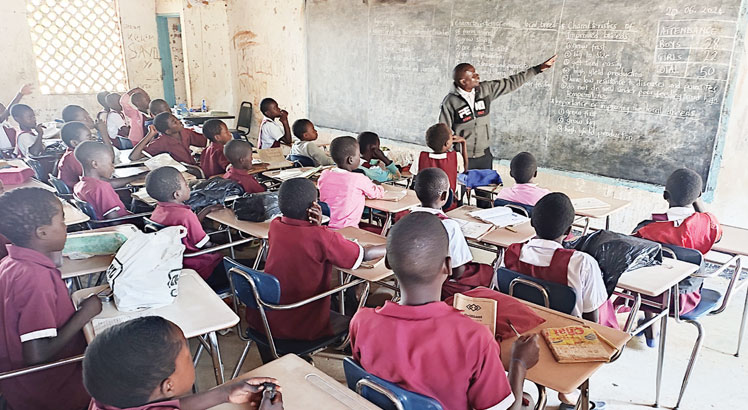
She said: “We are facing challenges because the fund was removed. The money used to help us in funding school projects and administering examinations. We are towards the end of the term and we are stranded. The enrolment is big, 1 949 learners.
“Even the learners are refusing to copy questions from the chalkboards, but assessment has to continue. The solution is that every learner should have hardcover notebooks which will still cost each guardian K13 500 per term,” she said.
Mzuzu City district education manager Boston Nkhoma said Mzuzu City Council was best placed to comment on the matter.
The council’s spokesperson McDonald Gondwe said they were aware of the need for schools to print examination papers, but could not explain where the funds would be drawn from.
He said they were doing their best to manage the situation by close of business yesterday in the city’s nine education zones, which represent 41 public schools.
On the other hand, Zomba City Council chief executive officer Archangel Bakolo said the council has adequate resources for printing examination papers. He said he was yet to hear of cases where schools are using chalkboards to administer examinations.
Blantyre City Council spokesperson Debora Luka and Lilongwe City Council acting chief executive officer Hillary Kamera asked for more time before commenting on the matter.
Ministry of Education, Science and Technology spokesperson Lily Kampani was yet to respond to our questionnaire by press time at 9pm yesterday.
But commenting on the development, Mzuzu University education expert Dr. Foster Lungu stressed on the need to fill the gaps created by the abolition of the fund.
He said the emerging situation is a sign that there are no funding alternatives.
Lungu said a policy passed down from Capital Hill must be followed to the letter and wondered if education authorities were consulting the Ministry of Education on how to manage the situation.
He said: “We are in the early days of implementing the policy. Sometimes it may be important to fill the gap with the old system while phasing it out. It seems we have abruptly shelved the old system and change management is becoming difficult.
“Perhaps there could be a green light from government that learners contribute maybe 25 percent of the funds. I’m sure after the budget is passed, there could be resources for this. The 2025/26 National Budget may not have had the adequate resources.”
The Nation established that pupils used to pay an average of K2 500 for the abolished fund per term, translating to K7 500 per year. Following the scrapping off, the taxpayer will have to provide K13 billion for all pupils.