United Nations Development Programme (UNDP) has urged local producers to adhere to quality standards to ensure that the Buy Malawi Strategy, launched 10 years ago, is a success.
UNDP resident represent Fenella Frost, whose organisation has been the main financier of the initiative, said this on Friday in Lilongwe during the commemoration of Buy Malawi Strategy.
She said buying locally produced products is not enough if the products are not of good quality to attract consumers.
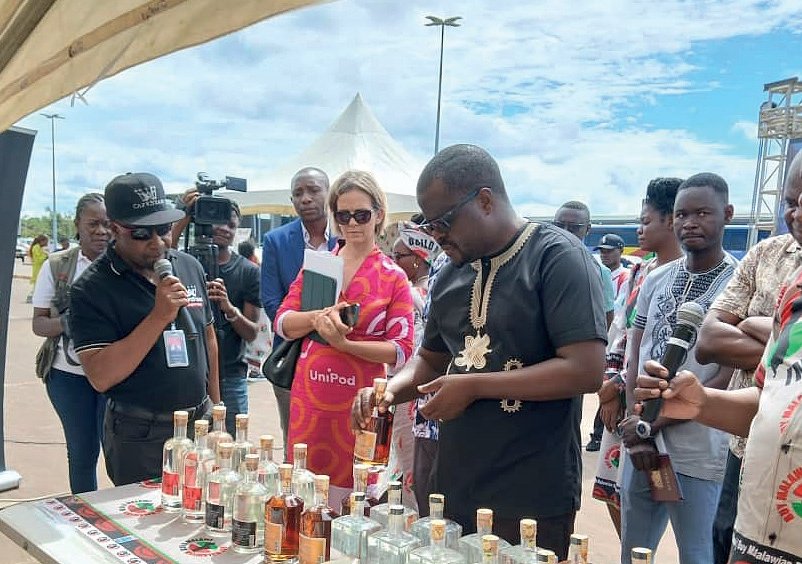
products. | Nation
Said Frost: “Another key message is that it should not necessarily be every single product on the market that you see to be Malawian made, it is how we make Malawian products to be of good quality.
“There is need for consistency, need for sufficient production because as UNDP, we know that Malawian market is quite small and for those businesses out there, we want to see their products not just being bought by Malawian consumers, but by the African continent and the global market as well.”
In his remarks, Minister of Trade and Industry Vitumbiko Mumba said to ensure consistency in production, the ministry is doing some interventions, including discussing with financial institutions on the possibility of special financing to promising enterprises.
He said: “It is basically an issue of resources because many people have ideas and others have graduated from ideas to products, but the issue is resources to maintain consistency.
“As a ministry, we looked at it and there are interventions that have been undertaken. We are helping some small and medium enterprises with finance.”
Mumba said they are planning to meet various financial institutions to discuss what they can do to help small businesses.
Kwithu Kitchen executive assistance Nthangwanika Kondowe, whose firm produces honey, said their initial objective is to narrow import substitution gap, especially now that government has banned some imports such as honey.
“We have been encouraged to get good packaging, get Malawi Bureau of Standards certification and also to get a good shelf space to become visible. We are not really interested in exporting, but import substitution.”
The Buy Malawi Day commemoration came weeks after Mumba announced a ban on imports that can be produced locally in a government Gazette dated March 13.
The banned products include honey, rice, fresh milk, maize flower, Irish potatoes, onions, some meat products and tooth picks among others.
Mumba said the ban on imports that can be produced locally, which is a temporary measure to run for two years, is meant to protect and uplift the local industry but could be revoked if local producers fail to utilize it.
However, international trade expert and Common Market for Eastern and Southern Africa Business Council president James Chimwaza earlier warned that shielding local industry from international competition shows lack of competency of the producers, which should be addressed by making them competitive.
National Working Group on Trade and Policy chairperson Frederick Changaya, who is also managing director of Applecore Grain and Milling Limited, said in an interview that nascent industries that can lift the industrial index of a country higher require tactical protectionism.
The Buy Malawi Strategy, which is under review, was introduced to enhance competitiveness of local firms, stimulate local production, promote industrialisation and boost import substitution.
In the short to medium-term, the strategy was envisioned to reduce the import bill and assist in narrowing Malawi’s trade deficit.
On average, Malawi imports goods worth $3 billion (about K5.2 trillion) in a year against exports worth $1 billion (about K1.7 trillion), according to the National Statistical Office.