Thirty-three years after Malawians went to the polls to decisively dismantle decades of one-party rule, the architects and eyewitnesses of that historic democratic transition have reached a sobering consensus: political freedom is meaningless if the citizenry remains trapped in grinding poverty.
As the nation today marks over three decades since the historic June 14 1993 referendum, prominent figures from across the political, judicial, and economic divides agree that while the battle for human rights was won, the war against economic deprivation has been profoundly lost. For a generation that voted for change, liberty has not translated into food on the table.
Retired Chief Justice Anastazia Msosa, who made history as the first chairperson of the then Electoral Commission (EC) during the referendum, reflects on the monumental task she oversaw with a mix of pride and contemporary anxiety. Born in 1950, Msosa became Malawi’s first female High Court Judge in 1992, before being thrust into the centre of the democratic storm that ousted Dr. Hastings Kamuzu Banda’s 31-year iron-fist rule.
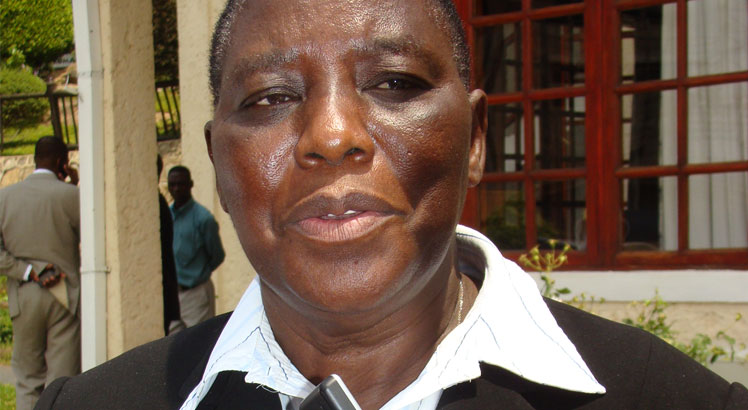
Msosa. I Nation
“We had tremendous cooperation from ordinary Malawians who were desperate for change,” Msosa recalled in an interview. “Of course, there were troublemakers who wanted to have things their own way, but we ignored them and focused on the willpower of the people.”
Msosa, who went on to manage the foundational 1994 general elections that ushered Bakili Muluzi into the presidency, as well as the 2009 polls, notes that while the institutional framework of democracy remains intact, the spirit of public service has been compromised.
“Democracy is necessary and it is for our collective benefit,” said Msosa, who retired as Chief Justice in 2015. “But looking at what is happening today, some bad elements have been infused into the system by the very people who are supposed to be responsible. You look at certain actions and wonder: is this really meant to help us?” she wondered.
Former President Bakili Muluzi, whose United Democratic Front (UDF) defeated the Malawi Congress Party (MCP) in 1994, echoed Msosa’s concerns about institutional capture. Reflecting on his decade in power, Muluzi admitted that the such individuals, who position themselves next to the presidency for personal enrichment, remains a persistent threat to governance.
“In my two tenures, those troublemakers were there. The key, as a leader, was to identify and isolate them,” Muluzi said.
While Muluzi’s administration established cornerstone governance institutions like the Anti-Corruption Bureau (ACB), the Office of the Ombudsman, and the Malawi Human Rights Commission, the former head of state harbours one deep, overriding regret: the failure to permanently lift Malawians out of poverty.
“When I took office, our primary driver was poverty alleviation, which birthed the Malawi Social Action Fund (Masaf) and free primary education,” Muluzi reflected. “But today, I look back and feel it was simply not enough. We needed to do much more to prevent our people from sinking into the deeper economic hardships they face today.”
Ken William Mhango, who was then chairperson of the Trade Union Congress, which organised general strikes against economic freedoms among others in 1992, said the labour movement was influential in the fight for multiparty democracy after Catholic Bishops issued a Lentern Pastoral letter that was read in Roman Catholic churches across the country against the one party hegemony.
“All of us are workers at the end of the day and we expect the best of the economy. I wish the labour movement today was left to fight for their rights,” said Mhango, who was arrested soon after Chakufwa Chihana was also arrested in 1992 after openly declaring opposition to Banda’s iron fist rule.
The transition from political liberation to economic stagnation is mapped out in stark terms by economists. Former Reserve Bank of Malawi Governor and current UTM Party President, Dalitso Kabambe, argued that the struggle for democracy failed to pivot into a struggle for economic independence.
According to Kabambe, the post-referendum era forced structural corrections that caused severe macroeconomic shocks, including structural adjustments that initially sent inflation soaring to a historic 95 percent.
In the decades since, Malawi’s industrial production hubs, Kanengo in Lilongwe, Makata in Blantyre, and Luwinga in Mzuzu, have steadily collapsed, turning the country into an import-dependent economy that exports vital jobs.
“Our economy today is far too volatile,” Kabambe observed.
“When my generation graduated from university, there were four or five job opportunities waiting for a single graduate. Today, young people graduate directly into joblessness. Even the currency has lost its anchor; when the formal market quotes the Kwacha at K1 700 to the dollar but the parallel market sits well over K3 000, you have to ask: what is the true value of our money?”
For human rights pioneers who risked their lives to secure the 1993 vote, the current state of the republic prompts deep introspection. Undule Mwakasungula, founder of the Centre for Human Rights and Rehabilitation (CHRR), noted that the ballot box was supposed to be a means to an end, not the destination.
He said democracy was not the only ends to a just society. “We fought to attain democracy and human rights but corruption is hampering our development. Democracy becomes meaningless if it brings human dignity but not food on the table. What is freedom with no food and proper clothing? What is democracy if our children walk 15 kilometres to schools that have no desks, not to mention hospitals with no medicine?” wondered Mwakasungula.