Vanessa Willes punched the air when she discovered she’d won a place at Our Lady of Namulenga Secondary School in Mulanje. But the 14-year-old’s victory cry died on her lips when her mother, 30-year-old Esnart Muga, reminded her that the family struggles to afford a single meal, let alone school fees, uniforms and boarding costs.
“I’ve worked so hard,” Vanessa whispers, tears in her eyes. “I want to be a nurse and care for people in my village. Now, I don’t know if I’ll ever get the chance.”
Muga’s voice trembles. “I’m proud of her, but some days there’s nothing on the table. Fees, books, uniforms—how can I cover any of it?”
Just a few kilometres away, 18-year-old Felix Tambala was celebrating his own success: a place at Loyola Jesuit Secondary School in Kasungu and a dream of becoming a doctor. His mother, 56-year-old Rhoda Stande, earns a meagre income through odd jobs.
“He has always wanted to help people. I see how hard he has worked, but I don’t know how I will even raise a uniform for him,” she says.
Felix adds quietly: “I just want to go to school and learn, so I can help my community. I don’t want poverty to stop me.”
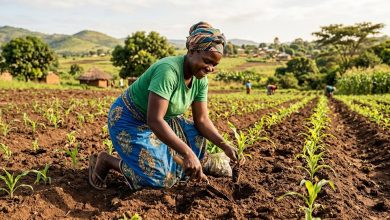
Meanwhile, Famouque Tiyesi, also 18, who secured a place at Mzuzu Government Secondary School, dreams of being a lawyer. His mother, Rose Frank, 40, ekes out a living through subsistence farming.
“I am proud of my son, but I do not know how to pay for books, transport, or uniforms. It is so frustrating,” she says.

Famouque nods and says, “I want to fight for the poor, like my mother. I hope I can go to school and make a difference, but I don’t know if I will have the chance.”
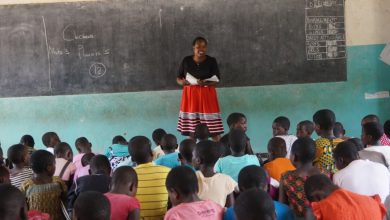
Vanessa, Felix and Famouque are just three of 44 recent graduates of Nampeya Primary in Machinga which made national headlines this year after all of its learners got selected to secondary school — a rare 100 percent transition rate. Yet beneath the celebration lies a painful irony: many of these children may never take up their places because poverty is standing in the way.
Head teacher Majawa Ndoya admits that while the achievement brought pride, the aftermath is painful.
“It is frustrating for us teachers. We invest so much effort to ensure our learners succeed, only to see bright students selected to prestigious boarding schools end up enrolling in nearby community day schools because of poverty. It is becoming a trend, and unless the government and NGOs step in, our learners will remain trapped here without the chance to expand their worldview beyond the Nampeya community.”
The area is so poor and isolated that earlier this year, when hunger struck, families survived on chitedze (buffalo beans), a wild legume that can cause stomach upset if not carefully prepared. In such households, scraping together money for education is near impossible.
Human Rights Defenders Coalition (HRDC) vice-chairperson Michael Kaiyatsa says the Nampeya story exposes a national crisis.
“What’s happening here shows that even when students and teachers work hard and do well, poverty can still block their future. Doing well in school is not enough if there’s no support to help students move forward,” he says.
Benedicto Kondowe, executive director of the Civil Society Education Coalition (CSEC), adds that equity is the missing link in Malawi’s education system.
“Academic excellence alone does not guarantee access. Even top-performing learners face dropout risks if poverty prevents them from continuing. Ensuring these bright learners stay in school protects talent and strengthens the nation’s human capital,” he explains.
The plight of Nampeya’s children comes as some political parties are flooding voters with pledges of free secondary education ahead of the September 16 elections. Yet education campaign promises have a chequered history in Malawi.
Most notable among the promise makers is the People’s Party (PP) whose leader, former President Joyce Banda, asserted during Thursday’s presidential debate in Lilongwe that she has international backers and experience to roll out and implement free secondary school education if elected next month.
However, Kaiyatsa urges voters to scrutinise such promises carefully.
“Voters should ask: How will the government pay for it? Is there a proper plan? Has the party done anything like this before and kept its promise? And remember, ‘free education’ should cover more than fees. What about uniforms, books, transport and hidden development fees? If a party is not addressing those, the promise may not be realistic,” he stresses.
For Kondowe, targeted interventions are urgent. Scholarships, bursaries and feeding programmes could cushion the poorest families, while Kaiyatsa proposes that NGOs and well-wishers step in with uniforms and supplies. At policy level, Kondowe suggests that secondary school selection should also consider proximity, so learners are not forced into costly boarding.
Economics consultant, Booker Matemvu, links the issue to Malawi’s wider economic challenge.
“An economy that wants to make a meaningful dent on poverty must invest in human capital. Although 20 percent of the budget goes to education, the sum is too small. Allocations must be seen as investments and ringfenced, not treated as consumption,” he argues.
He notes that too much of the education budget is swallowed by central administration rather than reaching schools.
“We are obsessed with consumption expenditure at the expense of productive investments. Without deliberate social protection and careful management of education funds, we risk remaining trapped in abject poverty,” Matemvu warns.
Limbani Nsapato of Link for Education Governance (LEG) agrees, saying financing must be predictable and protected from political cycles.
“Nampeya shows that leaving education at the mercy of campaign slogans is not sustainable,” he observes.
When asked, among other issues, whether the free secondary school promises by politicians is viable and sustainable, basic education spokesperson, Christopher Kapachika, asked for more time before he could respond comprehensively.
Meanwhile, education advocates warn that unless such measures are scaled up, poverty will continue to shadow learners’ futures. Vanessa, Felix and Famouque symbolise Malawi’s crossroads: a nation that could nurture tomorrow’s nurses, doctors and lawyers or lose them to the harsh realities of poverty if the gap between selection and actual enrolment remains unaddressed.
For the trio, however, the crisis is immediate. Unless timely support arrives, the nurse, doctor and lawyer these three young citizens dream of becoming may never materialise.
The Ministry of Gender, Community Development and Social Welfare highlights existing lifelines, such as the Social Cash Transfer Programme, which includes a modest school bonus.
But spokesperson Pauline Kaude acknowledges that transfers often fall short and calls for stronger linkages to bursaries and local grants.
Facing a tide of campaign rhetoric, education advocates warn that lofty slogans mean little without rapid, targeted action. Vanessa, Felix and Famouque embody Malawi’s crossroads: will the nation nurture its brightest, or watch them slip away under poverty’s shadow?
“Poverty must not betray brilliance,” Kaiyatsa insists. “Nampeya’s success should ignite interventions, not be allowed to flicker out.”