Electoral stakeholders have proposed establishment of a new homegrown financing model for civic and voter education amid declining donor support to improve voter participation and reduce void ballots in the 2030 General Election.
Responding to The Nation query on the best way forward to achieve sufficient voter and civic education for elections amid dwindling donor support, the stakeholders said the government, the private sector, faith communities, community leaders and individuals should play a greater role in funding and delivering voter education to avoid the gaps experienced during the 2025 General Election.
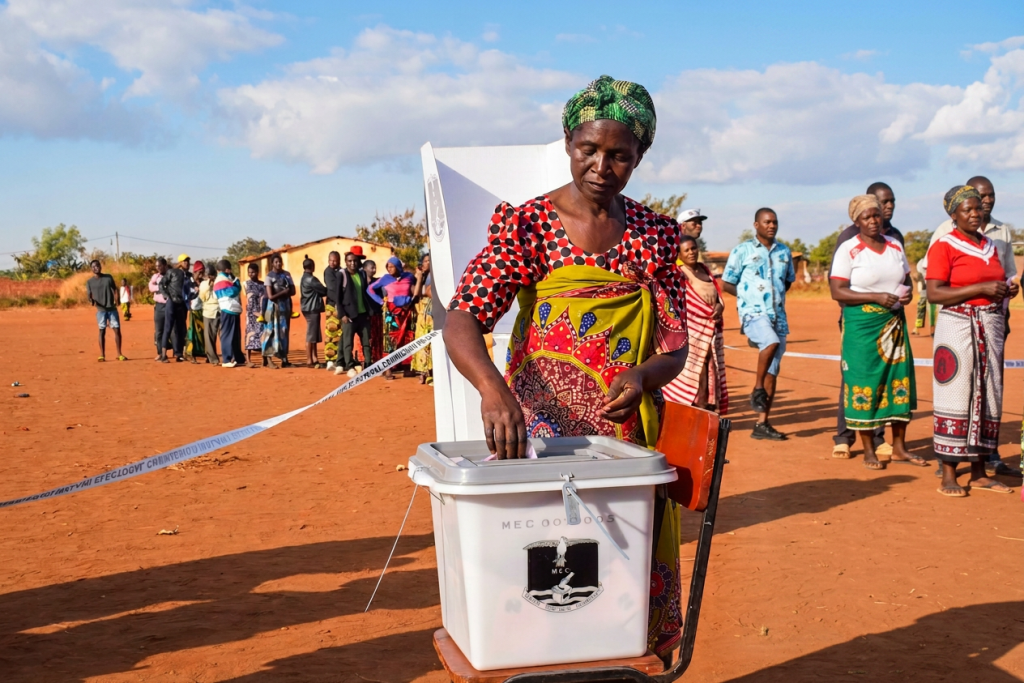
September 16 elections. | Nation
In an interview yesterday, Civil Society Elections Integrity Forum (CSEIF) chairperson Benedicto Kondowe said government should increase its investment in civic and voter education and support civil society organisations (CSOs) to sustain programmes throughout the electoral cycle.
He said CSOs would require between K25 billion and K30 billion annually, subject to inflation, from this year to 2030 to effectively provide continuous civic and voter education.
Kondowe said the funding gap can no longer be addressed by relying primarily on traditional donors, whose support is declining.
Chisankho Watch chairperson Bishop Gilford Matonga said the Malawi Electoral Commission (MEC) and National Initiative for Civic Education (Nice) Trust could help close the funding gap by using their existing resources to engage more CSOs.
He said expanding the number of organisations involved would increase the reach of civic and voter education without creating new structures.
MEC director of media and public relations Sangwani Mwafulirwa said addressing funding challenges faced by CSOs accredited to conduct civic and voter education requires a multi-stakeholder solution.
“This issue came up in the review report and will be considered in the broader reform process,” he said.
Meanwhile, political analyst George Chaima observed that inadequate funding particularly affects CSOs’ ability to reach rural communities, where civic and voter education is most needed.
The calls follow concerns raised in the post-September 16 2025 General Election review which highlighted that civic and voter education was insufficient, untimely and inadequately delivered.
The report noted that only a few accredited CSOs secured funding to undertake grassroots activities.
MEC data show that 155 225 votes, representing 2.8 percent of total votes cast, were declared null and void in 2025, more than double the 1.28 percent recorded in the 2020 Fresh Presidential Election. The null and void rate stood at 1.4 percent in 2019, one percent in 2014 and 0.1 percent in 2009.
In 2025, voter turnout was 76.4 percent, with 5 502 982 voters casting ballots, slightly below Malawi’s historical average of 78 percent. The first post-independence multiparty general election in 1994 recorded 80.56 percent turnout while the 1999 general election had a record 94 percent.
The numbers dwindled in 2004 when 62 percent turned up before rising to 78.27 percent in 2009 then a dip to 70.75 percent in 2014 and a rise to 74.44 percent in 2029.