Mozambican patients seeking care in Malawi expose gaps in cross-border data sharing, treatment continuity and resource allocation.
Bright Mpokwe Chimsosa (pseudonym) is one of many Mozambicans from Tete Province who regularly travel to Mitundu Rural Growth Centre in Malawi to conduct business.
An investigation by this reporter shows that many Mozambican men who frequently cross the border cohabit with rural Malawian women, either to reduce accommodation costs or avoid them altogether.
In Chimsosa’s case, despite having a wife in Mozambique, he spends weeks cohabiting with Nafuneya, a Malawian woman who sells beans in the suburbs of Mitundu.
Chimsosa is involved in the smoked-dried-fish cross-border trade. His business often keeps him in Mitundu for extended periods as he searches for and processes fish. The longest he stayed in the area was a month during the past winter, when fish was scarce due to the weather.
“I ventured into this business upon discovering that Bakayawo and Kalapawo types of fish commonly found in my country are salty compared with all types of fish from the fresh waters of Malawi,” said Chimsosa.
As fate would have it, Chimsosa fell ill while staying at Nafuneya’s grass-thatched house. His search for fish ended abruptly and, within weeks, he became bedridden.
One morning, Nafuneya arranged for his sputum to be collected and sent to the Malawi Community Health Sciences Unit (Chisu). The results came back positive.
This is how Chimsosa ended up being enrolled in Malawi’s tuberculosis (TB) treatment system in the Mitundu area for six months.
Mitundu Community Hospital clinical technician Neema Chisa, who is also the TB focal person in the area, said the problem of cross-border patients was escalating despite the already congested health system serving a catchment population of 550 000 people around Mitundu.
The community hospital itself serves more than 156 000 people through 11 healthcare facilities and six health posts.
“Some patients on TB treatment at Mitundu are Mozambicans. I don’t have specific data since some hide their identities for fear that they might be denied access to medical care. Others disclose that they operate from villages within the catchment area,” Chisa said.
She added that before the last World TB Day commemoration, the area had 34 TB patients on treatment and had registered 15 new cases.
Mitundu’s health catchment area has 60 volunteers recruited by traditional leaders. The volunteers help identify presumptive TB cases both in communities and at outpatient departments.
Chisa, however, said although traditional leaders play an important role in identifying the volunteers, health workers sometimes fail to find the people they are looking for when they visit areas identified by Mozambican patients.
When patients such as Chimsosa return to Tete Province, tracing them becomes nearly impossible due to several factors.
Lack of data-sharing agreements between the two countries is one of the biggest challenges. Currently, health surveillance assistants (HSAs) in Malawi cannot legally or operationally share patient information with their Mozambican counterparts.
Patients who cross back into Mozambique may also default on treatment because of a lack of specialised continuation services, potentially contributing to the development of drug-resistant TB (DR-TB).
Communication gaps, unreliable phone networks, incomplete addresses and the absence of cross-border physical tracing mechanisms make it difficult to follow up patients and their contacts, allowing some to slip through the cracks.
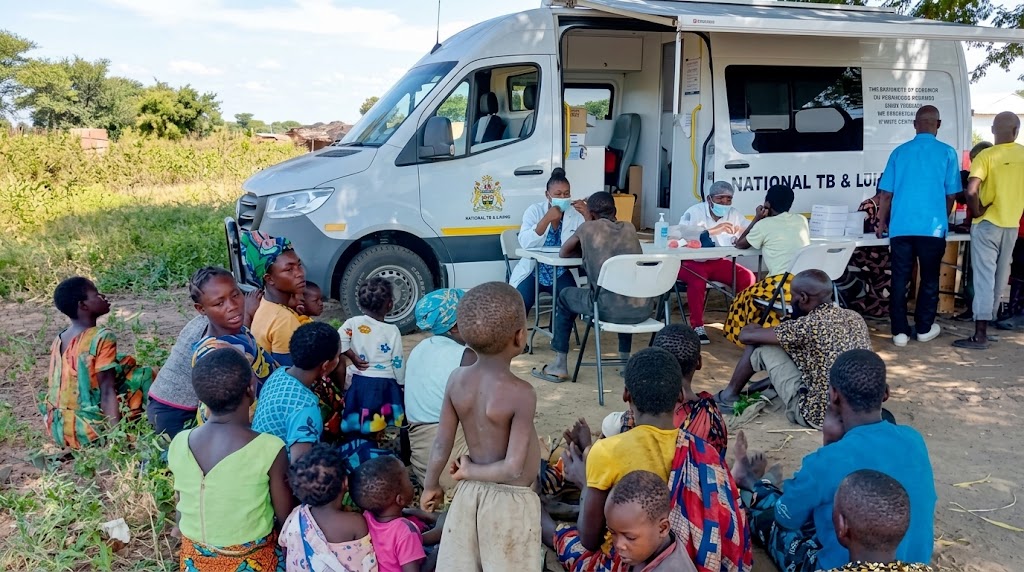
Last year’s World TB Day commemoration was held at Mitundu Primary School ground because of the high number of TB cases in the area.
Data obtained from a mobile screening van during the commemoration showed that 355 people were screened. Of these, 21 were classified as presumptive TB cases, while five were found to have TB—one through MTB detection and four through clinical diagnosis.
Chisa said presumptive cases were people suspected of having TB because they displayed symptoms such as coughing, fever, night sweats and weight loss.
“So, these 21 people were eligible to submit sputum so that we can test if they have TB or not,” she said.
As Malawi’s healthcare policy provides free treatment, including TB care, to anyone within its borders regardless of nationality, health advocates say the country’s public health policy recognises that communicable diseases are global threats that do not respect geopolitical borders.
Health and Rights Education Programme (Hrep Malawi) executive director Maziko Matemba said the Ministry of Health maintains a humanitarian and epidemiological policy of universal access to care for infectious diseases.
Under this open-door policy, Matemba said border health facilities such as Mitundu diagnose and treat cross-border patients from Mozambique without discrimination or billing.
Matemba said denying care to Mozambicans with active TB would allow the infection to remain in border communities, directly endangering Malawians because the disease is airborne.
“Foreign patients are enrolled in the standard National Tuberculosis Control Programme (NTCP) lines of treatment,” he said, adding that while the distribution of Global Fund resources could appear unfair at a local level, it operates on distinct nationwide metrics.
Matemba said, for example, Malawi’s current grant of more than $525 million was allocated based on the country’s internal disease burden and population data, while Mozambique’s grant of more than $771 million reflected its larger geographical area and higher TB burden.
“I am aware of the spillover effect of Mozambican patients using Malawian drugs [which] strains local stocks, causing artificial shortages in border districts. While both nations receive individualised national budgets based on separate disease burdens, the funding model lacks flexibility for cross-border migration spikes,” said Matemba.
He said this shifts an uneven operational burden onto Malawi’s frontline healthcare workers and supply chain.
Matemba said revamping active zonal cross-border communities and digitising patient tracking through a shared regional database were mandatory steps if the Southern African Development Community (Sadc) region was to eliminate TB.
He said Hrep Malawi recommends addressing the strain on border health facilities, while public health experts emphasise that Malawi and Mozambique must move towards regional health integration, including joint cross-border health financing.
“There is need to establish a specialised sub-regional emergency fund or pool of resources, backed by the World Bank or Global Fund, to subsidise border health facilities,” he said.
He also called for the alignment of drug procurement systems so that Mozambican patients could seamlessly use cross-border referrals without disrupting domestic supply chains.
On one-stop border health posts, Matemba said there was a need to integrate immigration checks with basic health screening points to capture, test and register mobile populations more efficiently.
Malawi’s National TB and Leprosy Elimination Programme (NTLEP) programme manager Dr Kuzani Mbendera said contact tracing remained a significant challenge, particularly for health facilities in border districts where patients from one country access TB diagnosis and treatment in a neighbouring country.
He said identifying, tracing and screening close contacts were often constrained by differences in administrative and health-system jurisdictions, long distances between border communities and health facilities, incompatible health information systems, and limited mechanisms for the timely exchange of patient information between countries.
“To address this challenge, selected border districts like Mchinji, Mwanza and Mulanje established district-level cross-border coordination mechanism committees that facilitate collaboration between neighbouring districts on patient referrals and contact tracing,” said Mbendera.
He said plans were underway to strengthen cross-border collaboration through harmonised referral and contact-investigation protocols, interoperable digital health information systems, formal data-sharing agreements and regular coordination between neighbouring districts to ensure timely follow-up of patients and their contacts.
Mbendera said sharing cross-border TB patient data was essential for ensuring continuity of care, strengthening regional TB surveillance and accelerating progress towards TB elimination.
He said such data-sharing enabled continuity of care, including information on treatment regimens and formulations, such as first- or second-line treatment and paediatric or adult formulations. It also facilitated follow-up tests for bacteriologically confirmed pulmonary TB cases, contact investigations and assessment of eligibility for tuberculosis preventive treatment (TPT).
In addition, Mbendera said sharing cross-border TB data improved surveillance by allowing countries to monitor referrals, treatment initiation and treatment outcomes among mobile populations.
“It also strengthens accountability, supports evidence-based planning and resource allocation, and facilitates coordinated responses between neighbouring National TB programmes,” he said.
Commenting on mismatched treatment regimens, Mbendera said incompatible TB treatment could undermine TB control by causing treatment interruptions, reducing adherence, increasing treatment failure and promoting the development of drug resistance.
He said treatment protocols across the region were being standardised or harmonised and, where this was not possible, individualised DR-TB treatment was provided, with the underlying principles for drug selection in light of resistant strains remaining the same across the region.
Malawi works with neighbouring countries through regional mechanisms such as Sadc and the East, Central and Southern Africa Health Community (ECSA-HC) to strengthen TB prevention, diagnosis, treatment and continuity of care for mobile populations.
These frameworks promote cross-border collaboration, harmonised TB policies, referral systems and information sharing among national TB programmes.
TB is a communicable disease caused by bacteria that can spread through the air when an infected person coughs, sneezes or talks. It does not recognise borders.
People living on either side of the border, such as Chimsosa, can breathe in the bacteria and become infected regardless of where they happen to be at the time.