Malawi continues to face structural constraints that limit economic transformation and competitiveness, new data from the United Nations Conference on Trade and Development (Unctad) show.
According to the data, Malawi has a productive capacity index (PCI) score of 25, signalling low capacity to sustain diversified and resilient growth, compared to stronger African performers such as South Africa, Tunisia and Morocco, which average 49.2.
The Unctad analysis notes that while growth may occur, weak productive capacities often translate into limited job creation and slow poverty reduction.
Reads the analysis in part: “In many of the world’s poorest economies, growth numbers can rise while people’s lives barely change. The missing link is not always investment or resources. It’s productive capacity.”
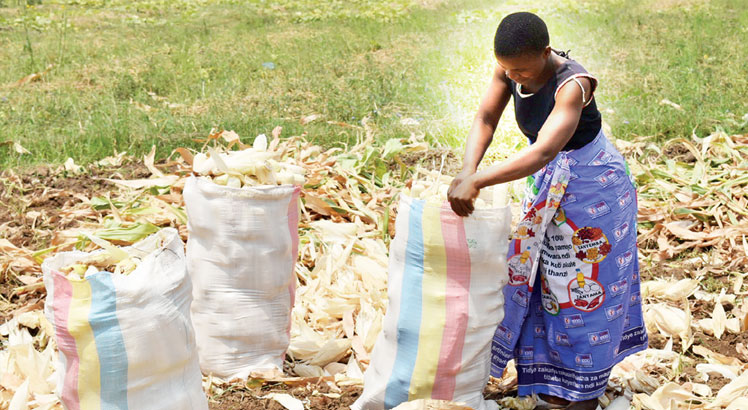
According to the UN, productive capacities are the combination of resources, skills and links between economic actors and sectors that enable the production of goods and services. They are the foundation of long-term growth, job creation and poverty reduction and are shaped by human capital, natural resources, energy, transport, information and communications technology, institutions, private sector development and structural change.
According to the Malawi Confederation of Chambers of Commerce and Industry Business Climate Survey, businesses were still failing to fully utilise their installed productive capacity largely due to continued foreign exchange scarcity, high inflation and rising costs of inputs, which left only 11.1 percent, operating with a utilisation rate of above 75 percent.
On his part, National Planning Commission (NPC) director general Fredrick Changaya observed that there is a need to go beyond gross domestic product (GDP) to determine productivity of sectors that can power the country’s national development plans.
“What we measure and what we choose after we measure matters most. Wrong choice of sectors and value chains could lead to fiscal indiscipline of capital proportions,” he said.
NPC estimates that for Malawi to meet the 2030 goals, the economy needs to grow by an average of 10.6 percent in the next five years.
However, review of official Malawi Government figures show that in recent years, real economic growth has hovered around two percent.
This growth rate is below the country’s population expansion pace of around 2.6 percent and falls short of the six percent benchmark that can enable the country to become a lower middle-income economy by 2030 and an upper middle income nation by 2063.
Ministry of Finance, Economic Planning and Decentralisation has since projected real GDP growth at 3.8 percent in 2026 and further strengthened to 4.9 percent in 2027 while the World Bank and African Development Bank estimate 2.3 percent and 2.9 percent, respectively.
A 2026/27 National Budget Report, jointly done by the Economics Association of Malawi and the National Planning Commission observed that the budget’s macroeconomic assumptions of 4.1 percent are ambitious, but achievable if planned investments materialise and structural reforms are sustained.