Uneasy path for women in first past the post environment

The September 16 General Election attracted 1 474 candidates. And while women constitute 51 percent of the population, they formed only 331 or 22.5 percent of the candidates.
Out of these 331 women, only 48 or 21 percent won.
Malawi uses first-past-the-post system. Research shows that this system does not favour the election of women due to stereotypes and sexist assumptions about the attributes of an ‘electable’ candidate.
Although the figure is higher than in previous elections, the number of constituencies in the 2025 elections increased from 193 to 229, with elections taking place in 224 constituencies.
The number for women has not been impressive since multiparty elections in 1994. In that year, 46 women contested out of 587 participants and 10 made it to the 177-member house, representing 5.6 percent.
In 1999, out of 668 aspirants, 62 were women, representing 9.3 percent. This time, only 18 were elected to Parliament, representing 9.3 percent. By then, the number of constituencies had increased from 177 to 193.
During the 2004 elections, 1 098 people contested and 154 were women, representing 14 per cent. Women scooped 27 seats, representing 14 percent.
The 2009 elections attracted 1 175 aspirants and 220 were women, representing 20 percent. The number of women legislators increased from 27 to 42 (22 percent increase), which excited 50-50 campaigners.
However, after the 2014 elections, the number of female lawmakers dropped to 32 although the number of female contestants increased to 260 or 16.7 per cent of 1 293 aspirants.
Come the 2019 elections, the number of women elected to Parliament rose to 45. In total, 1 331 contested of whom 310 or 23 percent were women.
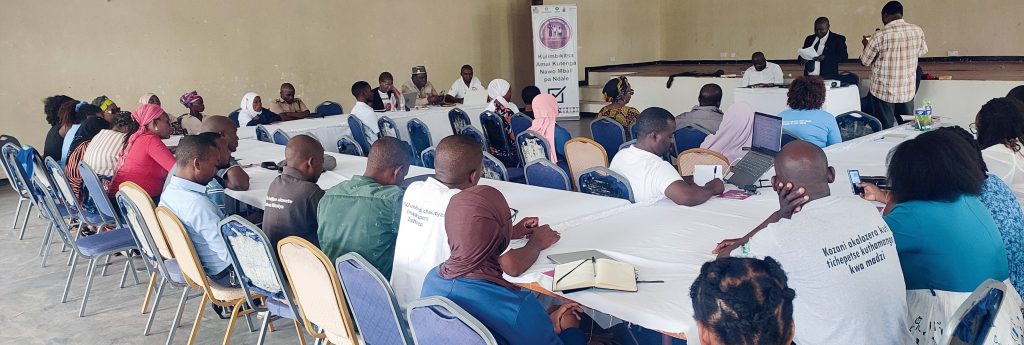
On November 4 2025, with funding from the Embassy of Iceland, Centre for Civil Society Strengthening (CCSS) and Oxfam Malawi organised a post-mortem meeting on women’s dismal performance in the 2025 General Election.
Ivy Faith Sande, who contested for Mangochi Malombe Constituency under People’s Party (PP) and lost, shared that one of her frustrations was handouts.
“Candidates were giving out money to people even on voting day. Of course, it is against the law, but I did not report because I thought it was a waste of time,” she said.
Sande, a former Democratic Progressive Party (DPP) councillor for Maiwa Ward in the constituency, also alleged that some people were hired to assassinate her.
She claimed that she had challenges booking venues for campaign.
She said: “When I wanted to book a venue for a rally, a traditional leader asked me to sleep with him first. And it was not only once, but many times.
“This was a setback for me because I wanted to serve my constituency. You cannot be forced to do something against your will to please someone.”
Senior Chief Chowe, who was at the meeting, said he was not aware of the incident.
He, however, said if there are traditional leaders who ask for sex to provide venues for campaigns, they should be reported.
“If what she said is true, then it is unfortunate. We are here to support women and any action to discourage them is unacceptable,” said Chowe.
Sande also admitted that people’s desire for change contributed to her loss. She said many predicted the DPP would win the election.
She said this gave a chance to the party’s candidates, resulting in people voting for a DPP presidential candidate, a legislator and a councillor.
Sande, however, said she has not given up, warning she will return stronger in 2030.
Another aspirant, Mbusye Grace Gonani who represented UTM Party in Mangochi North East, talked about the pressure she received from some people.
She said: “I was in DPP, but I was forced to quit and didn’t even take part in primaries because it was obvious there was bias against me.
“I also wondered why the main candidates were not campaigning until the last two days. Then I saw them giving out handouts.”
Gonani said she decided to contest as a parliamentarian because of the problems in her area such as the health service and telephone network.
Rhoda Banda, councillor for Msukamwere Ward in Mangochi Municipality Constituency appealed to women who lost the elections not to give up.
She said: “I was a councillor then, but in 2019, I lost to a United Democratic Front candidate. I did not give up, but learnt something from it.
“This year, I tried again and won. Perseverance is key.”
National Initiative for Civic Education (Nice) Trust executive director Grey Kalindekafe expressed concern that the number of elected women in both councils and Parliament is reducing.
“This is a wound on the conscience of our democracy. In this election, we did not leap forward; we staggered. This is not the evolution we envisioned,” he said.
Kalindekafe said much as the country is celebrating female candidate winners, there is a need to take stock to determine what went wrong.
He said: “We must confront the causes of poor performance among female candidates. Cultural norms still whisper that leadership is man’s domain. Religious interpretations are still weaponised to silence women. Political parties still lack enabling policies while economic challenges still choke ambition.
“We must also explore bold strategies to increase women’s numbers in elected positions. Let us talk about quotas [for women], not as charity, but justice and campaign financing, not as luxury, but necessity, mentorship programmes.”
Kalindekafe appealed to women who lost the elections to take it as a learning process: “You are not defined by the outcome of the election, but the courage you took to stand.”
For the winners, Kalindekafe appealed to them to look at it not as a burden, but as an aspiration for many people, especially girls.
CCSS executive director Viwemi Chavula described the meeting as successful.
He said: “We wanted to see what worked and why, what did not work and why and what needs to change in the future election. So this was the opportunity for the women candidates to air out what happened.
Said Chavula: “We thank the Embassy of Iceland for providing resources for the postmortem meeting. An increase in women’s political representation will not occur in Malawi without electoral reforms.
“Moving forward as a country, we need to embrace quotas. In 2025, Mangochi produced three female MPs from four in 2019 while Nkhotakota had two female MPs from zero in 2019. Mangochi now houses five female councillors while Nkhotakota managed to usher in two female councillors.”