Malawi National Commission for Unesco says the declaration of Mulanje Mountain as a World Heritage Site (WHS) will help elevate its ranking globally.
Mulanje Mountain has been listed as a WHS after a 25-year wait, making it the third site in Malawi to attain that status after Lake Malawi National Park in Mangochi and the Chongoni Rock Arts in Dedza.
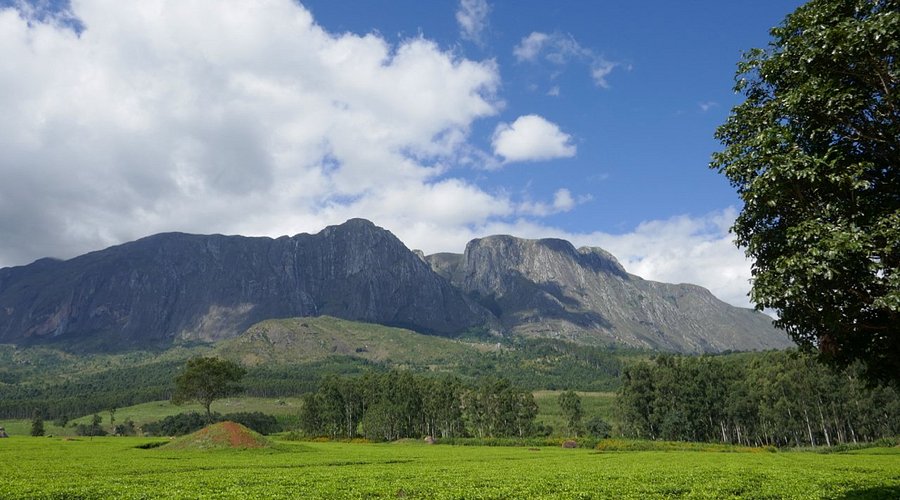
Speaking in an interview on Monday, Malawi National Commission for Unesco senior assistant secretary for culture Christopher Magomelo said the declaration will help Mulanje Mountain to attract more visitors.
He said: “Mulanje Mountain is one of the world’s largest inselbergs. It is a sacred place believed to be inhabited by gods, spirits and ancestors of the surrounding communities reflecting the spiritual and ecological harmony between people and nature.
“People will be attracted to visit the mountain to experience its outstanding cultural values, hence contributing significantly to tourism. It will also enhance the protection of the environment.”
Magomelo said the mountain was considered for the status because it is a testimony to Malawi’s cultural traditions and civilisation.
“It is also associated with living traditions, beliefs, artistic and literary works of outstanding universal significance,” he said.
Mulanje Mountain received Unesco’s approval at the third time of asking. Malawi still has other sites on the Unesco waiting list such as Nyika National Park, Khulubvi and Associated Mbona Sacred Rain Shrines, Malawi Slave Trade Routes, Vwaza Marsh and Dr David Livingstone Trail.
Magomelo acknowledged the process for consideration is long, but said he is hopeful that recognition for other sites such as Vwaza Wildlife Reserve and Nyika National Park will also follow.
Former Cabinet minister Ken Lipenga, revered as the Mulanje Mountain landlord following his chronicles of the mountain and surrounding landscapes like Mount Michesi in Phalombe, during the Porters Race on Saturday, was recognised for a path on the mountain he discovered and christened the Namasempwani Trail.
Namasempwani represents one of the mysteries of the Mulanje Mountain, a reference to the spirits that guard it. The mountain’s connection with the spirits is as old as the mountain itself.
In reaction to the Unesco declaration of Mount Mulanje as a WHS, Lipenga said this is ‘deus ex machina,’ the Latin reference in literature to a situation where an unexpected event provides a sudden solution to a seemingly unsolvable problem.
He said: “The way we, including myself, have responded to the Unesco decision is as if it’s an instance of a deus ex machina. But the tricky part is how to ensure that this perception is not an illusion. This development is without doubt massive.
“But ultimately, for it to make a difference, we ourselves, as the guardians of the mountain, must demonstrate our appreciation of this decision by changing the way we approach conservation. At the moment, as a country we have not yet succeeded in projecting a positive impression when it comes to conservation.”
Lipenga said that having been in the government machinery, he knows the system can frustrate those who seek a radical change in the way we do things.
“The fact is that all traditional approaches to conservation now have failed miserably, and the time has come for an approach that is out of the box. What warms my heart is that ordinary folk in the communities have signalled their readiness for a radical approach,” he added.