In a typical Malawian setting, it is not unusual to hear someone say they are working hard to afford soap or salt (ya sopo ndi mchere in the vernacular Chichewa).
For many, soap is not just a toiletry. It represents the hope that one day life will feel clean, stable and manageable.
This simple but powerful reality anchors Until I Afford Soap, premiered at Madsoc Theatre in Lilongwe over the weekend.
Written by Norwegian playwright Sunniva Roligheten, the play was inspired by a Ugandan story.
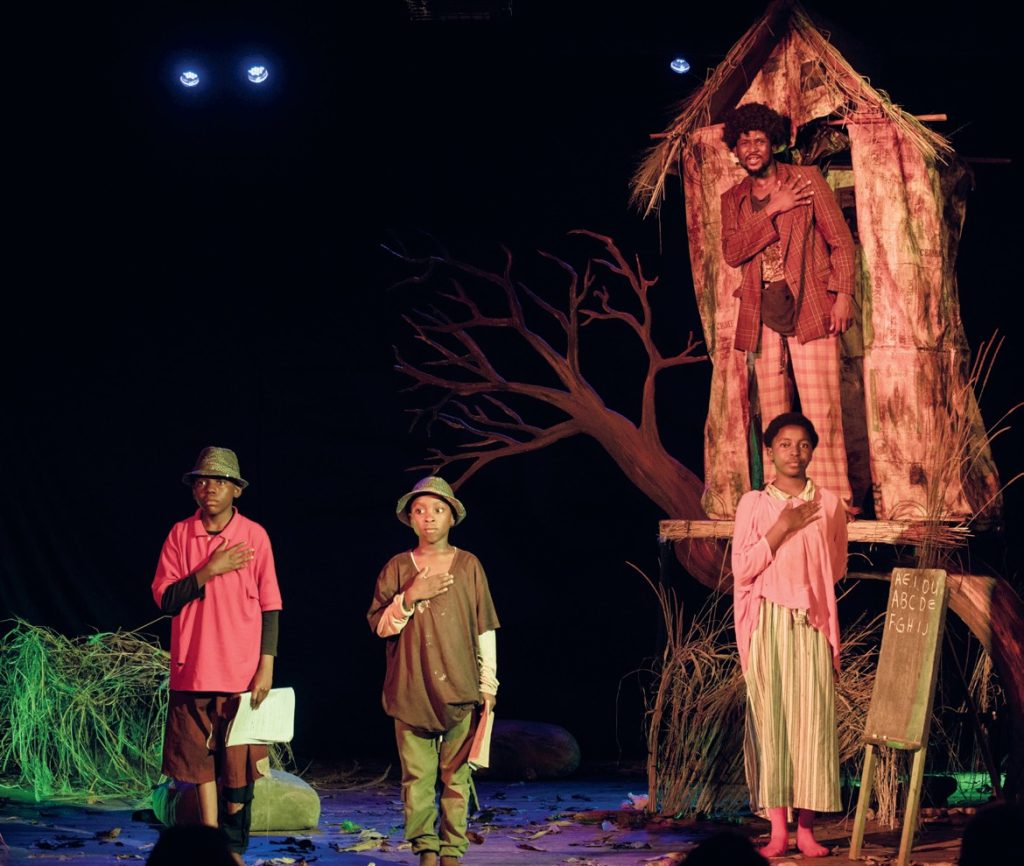
At the centre of it all is Amos, a mental patient living on the margins of society. Three children visit him near the swamps, undeterred by the smell or his unsettling presence.
The three insist that he tells them stories. He begins cautiously. One story ends. They demand another.
Laughter fills the stage at first as Amos repeatedly tells the children he was not there when it happened, yet after each story he insists that he knows it did.
But slowly, the tone shifts when Amos stops telling fictional tales and begins narrating his own life story.
He tells the children that his parents’ decision to celebrate a wedding was the “biggest mistake of their lives,” a celebration funded by a loan that haunted the family for years.
Poverty tightened its grip. There was only enough money to educate the last-born to secondary school.
Responsibility fell on him at a tender age. He sought help. He did not succeed.
He worked in the mines. He tried teaching. He never saw a payday.
Throughout, Amos complained about his body odour, a symbol of the shame and hardship he carried daily.
He made it to university where he battled politics, financial strain and isolation.
He met Anne and Rosa who became his close friends.
It was Anne, the girl he quietly admired. She strengthened his resolve to work hard until he could afford soap and wash away the smell. But even graduation did not guarantee salvation.
Employment did not come easily.
When it finally did, he described it as boring and easy. After receiving his first pay, he saved to visit Anne only to find she was pregnant by another man.
The 90-minute play, performed by four actors, concluded to continuous applause with the audience showing their appreciation throughout.
Amos’s story, however, is not about him alone. It reflects the lives of countless young Africans navigating poverty, ambition, heartbreak and systems that rarely reward effort.
In an interview after the performance, Roligheten said the story came from a friend she met while studying in Uganda two years ago.
“He used to tell me unbelievable stories about how he managed to get money for his computer and secure a scholarship,” she said.
“I found them so fascinating that I felt people needed to hear them. When I brought it to Malawi, people said it felt very relatable because of the similarities.”
One bold aspect of the play is its inclusion of abortion and sexual and reproductive health rights topics that remain sensitive across the world.
Roligheten said it was important to include that dimension because such rights are increasingly under pressure globally.
Beyond that she said she wanted to celebrate storytelling, especially the tradition of passing down stories from the old to the young.
“That oral tradition is central to both African and Norwegian literature, showing that literature does not only live in books but also in spoken narratives,” she said.
Stanley Mambo, who directed the play, said the team immediately recognised that the issues tackled in the play mirrored Malawian realities.
“We thought this is also happening in Malawi,” said the Mwezi Arts creative director.
Mambo said Until I Afford Soap has opened the 2026 season with a push for more serious productions and cross-cultural collaboration.
“What we are pushing for is stability and to ensure that the local audience knows that theatre still exists. I think collaboration is also crucial looking at how tonight turned out,” he said.
For lead actor Theodore Pleasant Banda, carrying the production was demanding.
“It was challenging, but I wanted something that would challenge me,” he said.
Banda described the research process of understanding Amos as crucial to delivering the performance.
He delivered the majority of the dialogue in the 90-minutes performance.
On her part, Roligheten said the script placed a heavy responsibility on Banda such that during auditions, they deliberated on whether it might be demanding, especially that the children also had to remember their cues, even if they had fewer lines.
“However, I am extremely pleased with the outcome. This performance was the best Banda has delivered throughout rehearsals and previews,” she said.
The inclusion of children on stage reinforced the tradition of oral storytelling, knowledge passed from one generation to another.
Beyond Lilongwe, Mambo said Until I Afford Soap goes to Blantyre and local festivals.
Part of the action. | Wantwa Mwamlima