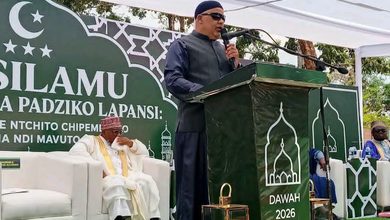
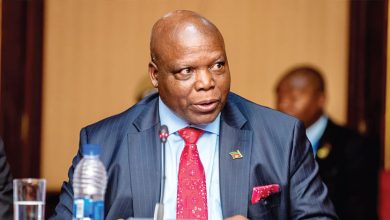
Vice-President Michael Usi has called for increased and strategic investment towards addressing issues that affect children at different levels.
Presiding over the 2025 Continental Commemoration of the Day of the African Child that Malawi hosted in Lilongwe yesterday, he called on African governments to share lessons and experiences on child budgeting and policy, saying collaboration is key to building an Africa that protects and empowers every child.

| Malawi Government Facebook Page
Usi said while Malawi has a long-term plan through Malawi 2063 (MW2063), which recognises the need for human capital development, there are fiscal constraints that continue to impact child-focused sectors.
He said: “The current status of planning and budgeting for children’s rights in Malawi reflects a challenging fiscal environment with implications on children rights. This calls for strategic investment and prioritisation to safeguard children’s rights and well-being.”
To address this, Usi said government has increased resource allocation to social sectors that directly benefit children from 29.3 percent in the 2023/24 National Budget to 31.1 percent in the 2024/25 financial year.
“We have intensified our efforts to devolve functions and resources in the children’s sector to the local councils. This means more children will be reached with interventions on the promotion of their rights and well-being,” he said.
Usi also urged African children to take an active role in shaping the future of Africa and voicing out critical issues that matter to them.
In an interview on the sidelines of the event, Minister of Gender, Community Development and Social Welfare Jean Sendeza said since 2010, Malawi has made progress regarding the promotion and safeguarding of children’s rights.
She said that collaboration and increasing resources is a priority in the wake of reduced donor aid for implementing projects.
Said the minister: “As government, we are increasing our own resources in regards to the protection and the rights of children and it is therefore important that as African states we leverage on collaboration and synergies to provide better services to children.”
African Committee of Experts on the Rights and Welfare of the Child chairperson Wilson de Almeida Adao said Malawi is one of the countries making notable strides and that the commemoration will be a starting point for continued efforts.
“With the cutting of aid, as African countries we have an opportunity to look for solutions and solve the problems that affect us while promoting children’s rights must unite to solve its problems,” he said.
The event was hosted under the theme ‘Planning and budgeting for children’s rights: Progress since 2010’ and brought together African Union member States from the Southern African Development Community.
The Day of the African Child was instituted in 1991 by the African Union, then known as the Organisation of African Unity, in memory of the June 16 1976 student uprising in Soweto, South Africa. During the uprising, students protested against the use of Afrikaan alongside English as a medium of instruction. Hundreds of school children were killed in the protest.