Madness is not just about abandoned persons seen carrying filthy bundles or sleeping in dumps in marketplaces, but also honourables who failure to do the right things to reduce problems that depress people to death. Our Staff Writer JAMES CHAVULA reports: Lawmaking is a serious business and your member of Parliament (MPs) gets a vehicle loan of up to K300 million to ease their travel during the five-year term.
Deservingly, most MPs love good rides that blitz past the potholes, neutralising the phu phu phu (bumps)that irked President Peter Mutharika the other day on his trip between Lilongwe and Blantyre.
However, a concern is rising that they are not fast enough to catch up with the country’s silent mental crisis.
One person succumbs to suicide every day your MP drives to Parliament in Lilongwe, figures show.
About 2100 Malawians tragically terminated their lives since 2022, a breakdown of police situational reports indicates.
The toll excludes 95 reported between January and March, up from 92 during the same period last year.
It represents about 10 funerals per week, a legal minimum for the Department of Disaster Management Affairs to urgently trigger a State-sponsored response during tragic rainstorms, floods, lightning and earthquakes.
Mental health doctor Chiwoza Bandawe says suicide constitutes a “bigger crisis” that remains underreported and neglected.
He terms it a sustained public health concern that “reflects how society reflects its people”.
“For every completed suicide, there are about 10 to 20 attempts, which reflects a bigger crisis and yet only one in 10 of those who need help do get it,” the clinical psychologist told The Nation.
Authorities seem aware of the unmet need, but strangely falter when asked to invest more in tackling the silent storms that wreck the way the human mind thinks and interacts with the world.
“There is a lack of political will as evidenced by government’s failure to provide adequate funds to fight against mental crisis as required by the national suicide prevention strategy,” says Charles Masulani, from St John of God Hospitaller Services in Mzuzu.
Caregivers and activists want policymakers to give mental health the status and resources it deserves.
Roughly, suicide takes 525 lives annually —more than the seating capacity of MV Ilala. The country’s largest ship, widely deemed a suicidal ride on Lake Malawi due to its longevity, was built to carry 450 passengers as it chugs from Monkey Bay in Mangochi to Chilumba Jetty in Karonga via Salima, Nkhotakota, Likoma, Nkhata Bay and Likoma.
‘We are all mad’
Recent police records show 567 people killed themselves last year, down from 594 in 2024 and higher than 527 in 2023 and 408 in 2022.
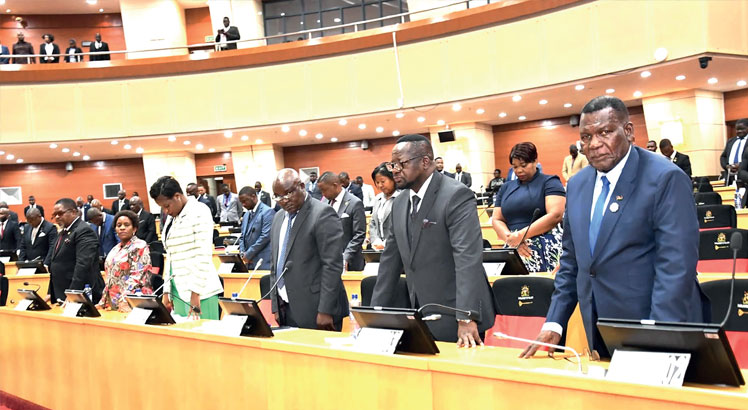
At this pace, the loss could wipe out all 229 MPs in five months or about 23 weeks if those who make laws, pass budgets and track public spending shared the pain that drives ordinary citizens to the brink.
It could leave all 509 wards vacant by the planting season in November if all councillors were as suicidal as the tragedy that left Karonga Uliwa councillorship in Karonga South up for grabs in the June 30 by-elections.
If?
Not any longer.
“We are all mad here” is not just the iconic line from Lewis Carroll’s 1865 novel, Alice’s Adventures in Wonderland.
Politics in Malawi offers ample lessons that titles do not insulate anyone from the chilling effects of mental crises that cost two MPs—both former Cabinet ministers—in seven years.
Former minister of Local Government Geoffrey Kamanya killed himself in May 2014 over alleged political disagreements as vote counting had all but confirmed a shock defeat for him and his People’s Party.
In September 2021, Clement Chiwaya, ex-minister of Disability Affairs and deputy speaker of the National Assembly, shot himself dead at Parliament over delayed benefits.
Parliament enacted the Mental Health Act on April 10 2025, repealing the outdated Mental Treatment Act of 1948, five years before the construction of Zomba Mental Hospital. At that time, healing of the mind was under an extension of the colonial-era prison system.
“The tragic suicides among MPs have underscored the urgency of our agenda to make mental health a part of essential healthcare package for all,” says Parliamentary Committee on Health chairperson Anthony Masamba.
Internally, he says, Parliament has strengthened wellness programmes, introduced confidential counselling and fostered “a culture where seeking help is seen as responsible leadership”.
“With the new Mental Health Act as our foundation, we are determined to turn the needle on mental health burdens and ensure every citizen enjoys the highest attainable standard of care,” says the Mchinji North East MP.
The then minister of Health Khumbize Kandodo-Chiponda activated the law on September 15 2025, a day before Malawians went to the polls to elect MPs like Masamba, councillors like the late Munthali and President Peter Mutharika.
“The law gives mental health facilities an obligation to treat and rehabilitate persons with mental conditions in an environment which safeguards the safety of the persons and society,” she said.
According to the World Health Organization, health is a state of complete physical, mental, and social well being.
“Mental health is as vital as physical well-being,” says Masamba. “Malawi has embraced this holistic view through the landmark law, which introduced a modern, rights based framework that guarantees dignity, prohibits inhuman treatment and establishes a Mental Health Board to oversee services and ensure accountability.”
Piling work
For him, quality care means accessing counselling, psychiatric services and support delivered with dignity and continuity.
However, mental health remains underfunded nearly a decade since 2017 when Ombudsman Martha Chizumila recommended that authorities should raise its funding from 1.1 percent of healthcare spending to five percent. The former public protector ordered the Ministry of Health and Sanitation to build a modern mental hospital at Kamuzu Central Hospital and ensure every district hospital has a 10-bed mental health wing.
Besides, Parliament has yet to review Section 229 of the Penal Code that prescribes up to two years’ imprisonment for attempted suicide instead of prioritising care and support for underlying mental disorders.
Bandawe says the review of penal laws remains slow.
Masamba concurs that policymakers have not done enough, but restates commitment to making mental health services part of the essential healthcare package for all.