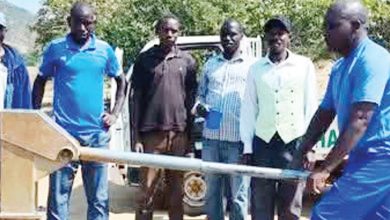
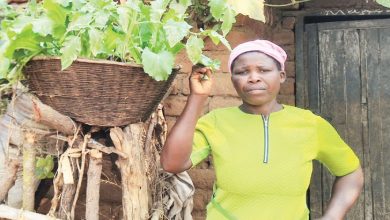
Women and youths in Balaka District have commended the Women Economic Empowerment in Cotton Value Chain Project for transforming their livelihoods.
Speaking on Saturday after touring Dambo Youth Club under Rivirivi Extension Planning Area (EPA) in Traditional Authority Chanthunya, the club’s chairperson Alan Banda said members have ventured into irrigation farming and joined village savings and loans groups.
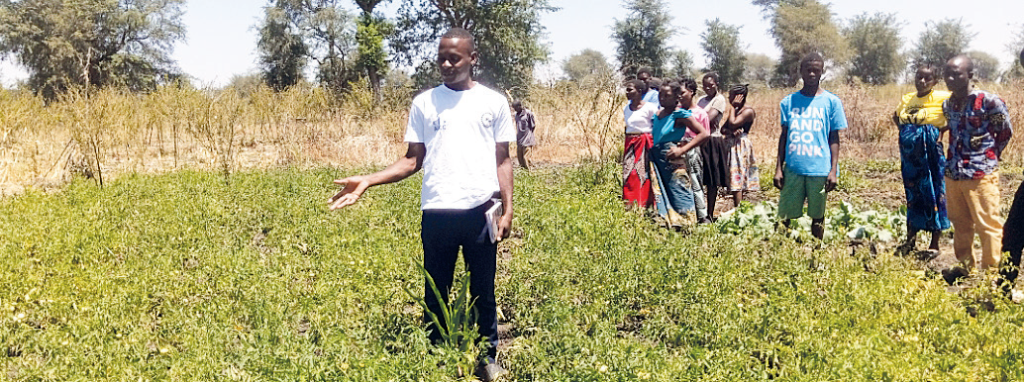
“We underwent entrepreneurship training to enable us invest our cotton proceeds into different income-generating activities,” he said.
Banda said the project is encouraging farmers to adopt biochar in their fields, a practice that helps conserve soil moisture to improve crop productivity.
“Due to climate change shocks, our land has been degraded and most farmers cannot afford fertiliser because prices have gone up. However, after adopting this method, we are able to harvest more,” he said.
Rivirivi Extension Planning Area Women Economic Empowerment in Cotton Value Chain Project gender champion Maria Mustafa said before the initiative, gender-based violence was rampant in the area as many women experienced abuse from their husbands.
“For now, gender-related violence cases have dropped because most men have understood the negative effects of such practices,” she said.
A cotton farmer, Nolesi Frank from Manjanja Village said the project empowered her family economically.
“I am able to support my husband with several responsibilities because I am financially independent,” she said.
African Institute for Corporate Citizenship communication officer Jimmy Kazembe, whose organisation is implementing the project, said they want to empower women and young cotton farmers to enhance their economic self-reliance.
“We encourage them to form groups to access loans. We also trained them in business management and irrigation farming,” he said.
The project is running in Salima, Balaka and Mangochi districts, targeting over 9 000 farmers with financial support from the Embassy of Sweden through We Effect.