The World Bank-funded Financial Inclusion and Entrepreneurship Scaling (Fines) Project has disbursed K75 billion ($66.4 million) in low-cost loans to 48 830 micro, small and medium enterprises (MSMEs) in Malawi, easing their access to capital, one of the sector’s biggest challenges.
The loans, offered at the rate of 14 percent, have been given to 32 396 women-owned businesses, 9 201 youth-led enterprises and 7 233 run by men.
Speaking after interacting with some project beneficiaries in Blantyre on Thursday, Fines project manager Ralph Tseka said the five-year project implemented by the Reserve Bank of Malawi, was designed to boost entrepreneurship by offering cheaper financing and business training to enterprises that traditionally struggle to secure loans from commercial institutions.

He said that initially, the project allocated $47 million (about K82 billion) specifically for lending to SMEs, all of which has now been channelled through 36 participating financial institutions nationwide.
Said Tseka: “Access to capital was a major gap. This project came in to bridge that gap by bringing in affordable financing. Many Malawians have benefitted.”
He described the impact as “beyond expectations,” noting that even after the original funds were exhausted, repayments continued to be recycled to support additional businesses.
The project has already collected K26.6 billion in repayments, representing a 95.7 percent repayment rate, close to its target of K27.8 billion.
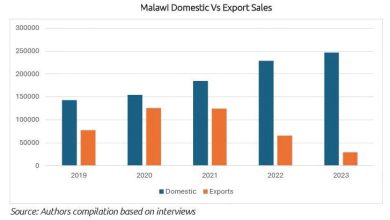
He highlighted that low-cost capital is enabling import substitution, with sectors such as apparel and shoemaking showing potential to reduce Malawi’s reliance on imported goods.
While wholesale and retail still dominate loan access at 40 percent, the share has slightly declined from 43 percent in the previous reporting period. Agriculture and value addition account for 21 percent, while manufacturing and production continue to lag at 10 percent.
One of the beneficiaries, House of Men Apparel Factory manager Arthur Chitanda said the K50 million loan from the project enabled the company to expand production capacity, growing employment from three to 15 permanent tailors and increasing its machines from about 10 to over 30.
He said this helped the venture to secure major contracts such as production of uniforms for Malawi Police Service, Mwaiwathu Private Hospital and Malawian Airlines.
“With the support we received, we have moved forward and we have big plans to grow even more,” he said.
Trend Setters owner Titus Kaliapa said with $100 000 (about K175 million) financing from the project acquired during the year, the company is acquiring eight shoe moulds and expects to begin full-scale production, ranging from school shoes to safety and combat boots, by February next year, boosting its capacity and workforce.
“Now that we have improved quality and increased production capacity, we can finally meet the huge demand for thousands of pairs that customers want,” he said.