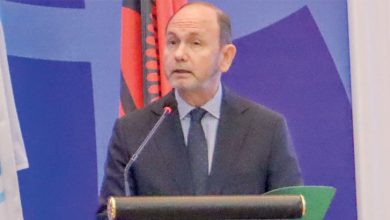
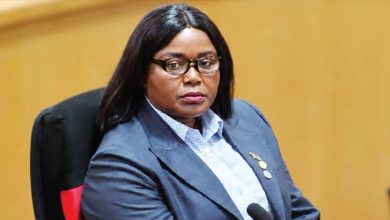
Malawi Economic Justice Network (Mejn) has renewed calls for deeper fiscal reforms, warning that rising public debt, persistent fiscal deficits and widening inequalities in the tax system threaten to undermine economic recovery.
Mejn executive director Bertha Phiri raised the concerns on Friday in Lilongwe during a budget analysis engagement dinner it hosted jointly with the Evangelical Association of Malawi (EAM) with support from Norad through Norwegian Church Aid-Danish Church Aid.
She said Malawi’s economic slowdown has now stretched into a fourth year, marked by high inflation, currently at 29.1 percent and weak growth at less than two percent that continue to erode the welfare of ordinary households.

effort. | Eric Mtemang’ombe
Said Phiri: “World Bank estimates show that inflation could hover around 30 percent. This undermines any meaningful effort to lift people out of poverty.
“But I am optimistic that the economic recovery plan will help restore stability if we implement it with discipline.”
She argued that fiscal reforms should begin with stronger scrutiny of domestic borrowing, warning that current provisions grant the Minister of Finance, Economic Planning and Decentralisaton wide discretion to borrow locally without sufficient oversight from Parliament.
“There must be proper scrutiny of what can be borrowed locally. Our Medium-Term Debt Strategy must become a practical tool, not a procedural formality. We must rebalance the tax burden because much of it falls on already exploited Malawians while big companies enjoy avoidance opportunities,” said Phiri.
Mzuzu University economics lecturer Christopher Mbukwa said the country’s debt trajectory reflects structural weaknesses in fiscal planning, noting that domestic borrowing has grown “far beyond sustainable thresholds”.
“Government is relying too heavily on domestic markets to plug deficits. This tightens liquidity, raises interest rates and crowds out private investment. If we continue passing budgets with large deficits, we are essentially legislating future debt crises,” he said.
Mbukwa recommended that the Treasury should adopt realistic budgeting, strengthen the Medium-Term Debt Strategy and improve revenue mobilisation among high-income earners and large corporations.
“We need disciplined fiscal anchors. Corporate taxation and enforcement have significant untapped potential. The burden should not fall disproportionately on low-income Malawians,” he said.
Evangelical Association of Malawi vice-chairperson the Reverend Davidson Chifungo said the tax system must become more equitable and transparent.
“The poor cannot evade taxes; the rich can. If we want tax compliance, we must expose corruption where it exists and ensure that the burden is shared fairly,” he said.
In his contribution, Budget and Finance Committee of Parliament chairperson Sosten Gwengwe warned that Malawi’s rising domestic debt and interest obligations, projected at K2.7 trillion, are now the biggest threat to fiscal stability.
“If we can find a win-win solution that frees fiscal space without destabilising banks, that would be a good starting point,” he said, cautioning that political incentives continue to overshadow sound economic decision-making.
“The cohort that favours political interests over sound economic policy is in the majority. We must reach out and explain the implications of political decisions,” he said.
Stakeholders agreed on several priorities: improving debt oversight, broadening taxation of high-income earners and corporations, enhancing equity in tax administration, and strengthening accountability for public resources.
Minister of Finance, Economic Planning and Decentralisation Joseph Mwanamvekha told the Mid-Year Budget Review Meeting in Parliament that closed on Friday that public debt is now at K28 trillion.