young innovator is transforming flood debris into a lifeline for Malawian farmers, writes DUMASE ZGAMBO-MAPEMBA for Unicef Malawi.
In a country where erratic rainfall, depleted soils and soaring fertiliser prices are pushing smallholder farmers to the brink, one young innovator is digging deep for solutions.
Jimmy Matewere, 23, first saw the potential of waste during the devastation caused by Tropical Cyclone Freddy in Mach 2023.
The storm, the longest-lasting tropical cyclone ever recorded, left a trail of destruction across the Southern Region where it affected over 2.3 million people and claimed more than 600 lives.
But amid the chaos, Matewere noticed something others overlooked: The mounds of organic and plastic waste clogging streams and streets.
“Whenever we have floods, there’s a lot of waste, especially organic matter that could be turned into something useful,” he says.
Matewere studied meteorology and climate science at the Malawi University of Science and Technology (Must) in Thyolo District.
Through the Chinese-built university’s Climate Incubation Programme, which supports frugal, locally driven climate innovations, the youthful innovator teamed up with secondary school learner Blessings Banda and 26-year-old smallholder farmer Albert Makuluni, from Mulanje.
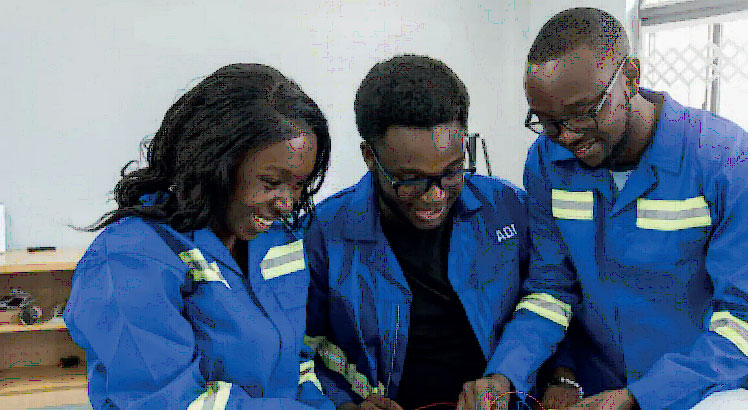
Together, they developed a prototype called Smarter Compotech—a smart bin that separates organic waste from plastics and metals, transforming the former into nutrient-rich compost.
“What we are doing is simple but powerful,” Matewere explains. “We’re collecting waste from flood-prone areas like Ndirande in Blantyre, where trash blocks streams and worsens flooding. By removing and repurposing that waste, we’re not only reducing flood risks but also producing compost to help farmers grow food.”
The project is still in its early stages, but the team has already begun testing the prototype around the Must campus. Jimmy, who led the coding and data science aspects, cre the team’s diverse strengths for their progress.
“Blessings brought creativity in design, and Albert’s farming experience grounded our work in real community needs.”
Rachel Sibale, project Lead at Must, says the Climate Incubation Programme was launched in 2024 to empower the youth, especially from marginalised communities, with climate knowledge and practical innovation skills.
“We have supported ten projects so far, including Smarter Compotech. The idea is to equip young people to create solutions that are affordable, scalable and relevant to their communities.”
So far, 120 youth innovators have graduated from the programme, 58 percent of them young women.
Must continues to track their progress and is actively seeking funding to help promising prototypes like Jimmy’s reach full implementation.
“We want these young people to not only solve problems, but also build livelihoods from their innovations,” says Sibale. “Matewere’s project has real potential to improve soil fertility, reduce waste and support food security.”
Unicef Malawi supported the initiative through its social innovation work. The public university provides mentorship, tools and platforms for young innovators to test and refine their ideas.
For Matewere, the journey is just beginning.
He plans to pilot the smart bin in Blantyre between February and March, focusing on areas where flooding and waste accumulation are most severe.
“I want to keep working with my team and expand this project,” he says. “We’re not just cleaning up streams—we’re giving farmers a way to grow food without relying on expensive fertilizers. It’s about turning a problem into a solution.”
In a country where climate shocks are becoming more frequent and severe, Matewere’s composting innovation offers a glimmer of hope—proof that with the right support, young minds can turn disaster into opportunity, and waste into nourishment.