Malawi’s economy is at a critical juncture as official development assistance (ODA), touted to improve economic development and welfare for millions of people are declining while concessional loans are rising.
This, according to Economics Association of Malawi (Ecama), is because globally, almost all countries, including those which provide development assistance to countries such as Malawi, are facing macroeconomic challenges.
In a written response, Ecama acting president Bertha Bangara Chikadza observed that the dwindling ODA has a number of implications on Malawi.
This, she said, is because grants, non-repayable funds provided by donor countries or international organisations to support development projects, have played a vital role in addressing Malawi’s socio-economic challenges such as health, education, and infrastructure.

Said Chikadza: “This means a decrease in ODA grants impact the delivery of essential services and hinder poverty reduction efforts.Although concessional loans have favourable terms [lower interest rates, longer repayment periods] compared to commercial loans, they still need to be repaid.
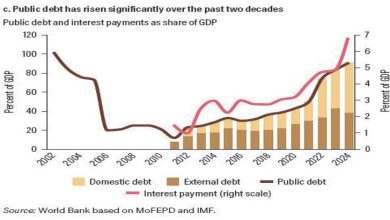
“Therefore, with the current debt sustainability problem, the country must manage its debt burden carefully. Thus rising concessional loans could add to the existing strain on the country’s debt-to-gross domestic product [GDP] ratio.”
She observed that although it is important that the country strikes a balance between grants and loans, long term solutions should be sought.
Said Chikadza: “We should continue to explore alternative funding sources such as private investment or domestic revenue mobilisation which are sustainable.
“This just shows that we cannot rely on aid forever and there is need for serious policy reforms, especially in governance, improving tax collection, and enhancing public financial management.”
She urged authorities to“closely monitor the shift” from grants to loans, ensuring prudent debt management and maximising development impact.
“A strategic approach is necessary to navigate this transition effectively,” said Chikadza.
Least developed countries (LDCs) are experiencing declines in aid flows, with data from United Nations Conference on Trade and Development (Unctad) showing that aid inflows to LDCs such as Malawi declined by four percent in 2022, falling to $62 billion (K109 trillion).This followed an eight percent decrease the previous year.
As a result, LDCs share of global ODA decreased to 22 percent in 2022, the lowest in over a decade.
At the same time, aid is also being increasingly provided through concessional loans rather than grants, increasing developing countries debt burdens at a time of growing debt distress, according to UN.
For instance, between 2021 and 2022, while ODA grants to developing regions fell by eight percent to $109 billion, loans increased by 11 percent to $61 billion.
The shift to loans is seen in every developing region.
According to Unctad, over the past decade, the share of loans in total ODA more than doubled for Latin America and the Caribbean, to 49 percent in 2022. It also increased to 40 percent for Asia and Oceania and to 29 percent for Africa.
Mzuzu University economics lecturer Christopher Mbukwa observes that Malawi has economically struggled inspite of steady flow of ODA and low interest loans for years.
He said these, have, however, helped to stabilise some short-term economic imbalances such as bridging the forex shortages.
Said Mbukwa: “We may not worry much because these have had little effect in catalysing our economic growth. On the other hand, these have been essential in improving our import cover.
“We have economically struggled as a country inspite of growing inflows of ODA. So perhaps, it is high time we started to concentrate on raising our domestic revenue generation efforts.”
He said Malawi Revenue Authority’s (MRA)ability to beat its targets in two years running speaks of our capacity to raise more.
Meanwhile, Malawi’s overarching vision is about self-sustenance and reliance as outlined in its Malawi 2063, the country’s long term development strategy.
Treasury Secretary Betchani Tchereni concedes that following Covid-19 and other global exogenous factors, aid has been falling.
He says: “But the steps taken by Malawi through the budget, for example, are in the right direction where 30 percent of the budget looks at production.
“It is because we realise that the future is not in aid, it is in diversifying the economy.”
Malawi’s debt service payments, which include principal and interest, has risen from $54 million (about K95 billion) in 2018 to $101 million (K175 billion) in 2022, according to World Bank data