For years, Neno District stood out for an unfortunate reason of not having a single female lawmaker or councillor.
But following the recent General Election, the district has stunned the nation by emerging as Malawi’s top performer in women’s political representation, achieving an impressive 67 percent.
This historic shift is largely attributed to a project called “Nthawi Yawo”, a targeted women’s political empowerment initiative implemented by the National Initiative for Civic Education (Nice) Trust in partnership with the Centre for Civil Society Strengthening (CCSS). The initiative is funded by the United Nations Development Programme (UNDP).
‘Nthawi Yawo’ project rolled out ahead of the September 16 2025 elections, aimed at breaking down long-standing barriers that have hindered women from participating in politics—barriers rooted in culture, religion, gender stereotypes, financial constraints, and even online abuse.
But results of the elections have spoken for themselves.
Three women—Mary Maulidi Khembo and Mutani Tambala won parliamentary seats under the Democratic Progressive Party (DPP) in Neno East and Neno South constituencies, respectively, while Martha Chapendeka was elected councillor for Chikonde Ward in Neno North Constituency.
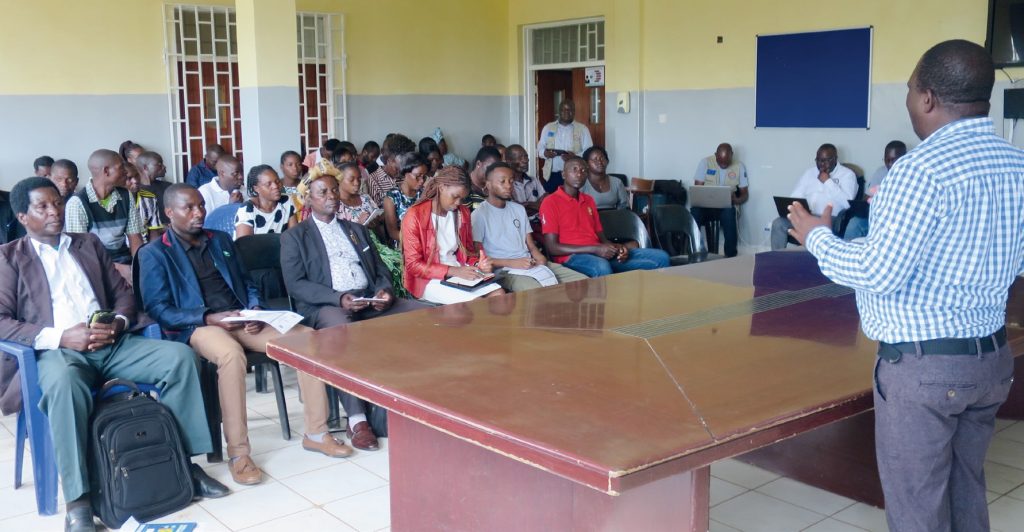
Nice Trust executive director Gray Kalindekafe, speaking during a stakeholders’ review meeting on Monday said the results matched expectations of his organisation and those of the project.
“We embarked on this project to remove barriers that prevent women from participating in elections.
“We wanted to capacitate women and young women so they could meaningfully participate in the 2025 general election and influence political and decision-making processes.
“I am happy that what we advocated for has borne fruit as the district is now number one at 67 percent female representation. This calls for celebration,” he said.
Kalindekafe added that the results will inspire further efforts towards achieving 50-50 representation in Neno and in other districts that still lag behind.
He, therefore, stressed the need for ongoing support to sustain the district’s gains and to make Neno a model for women’s leadership nationwide.
On his part, CCSS executive director Viwemi Chavula said the project’s impact exceeded expectations.
“We are all smiles with the election results. Neno emerged number one, with 67 percent female representation, followed by Mwanza, with 50 percent.
“This has invigorated us to do more interventions to put more women in political leadership positions,” he said.
Chavula reaffirmed CCSS’s commitment to working with stakeholders to sustain the gains and ensure more women rise through the political ladder.
The district’s director of planning and development Charles Lomoni hailed Nice for the project and emphasised the broader implications of women’s leadership.
“The election of female leaders will not only improve representation but also contribute significantly to the district’s development,” said Lomoni.
He added: “It is now time to work. Let us be tolerant of one another and work together for the development of this district.”
His remarks reinforced a central message of the meeting: that unity—across gender, political affiliation, and community leadership—is essential for sustainable progress.
For councilor Chapendeka, the project’s capacity-building sessions were instrumental to her victory.
“The training in public speaking, developing campaign manifestos, and other skills helped me to excel,” asserted the visibly excited councillor.
She encouraged women who flopped in the elections not to give up.
“I will work as a role model to ensure that those who lost still have the confidence to return, and to encourage new aspiring young women to step forward despite the perception that these positions belong to men,” she said.
One of the unsuccessful aspirants, Agnes Sohaya from Chilim’bondo Ward in Neno North Constituency, shared a raw and emotional account of her journey.
“I encountered a barrage of mockery, ridicule, and even repulsion from leaders I expected to help me,” she told the gathering in the Neno District Health Office hall.
“At some point, I thought of quitting. But this meeting has encouraged me. I will not quit—I will contest again,” she declared.
Her testimony reflected the resilience of many women who braved hostility and discrimination to step into the political arena.
Traditional leaders also offered insight. Senior Chief Dambe encouraged women to refine their engagement strategies as they prepare for future elections.
“My observation during the September 16 elections was that some women behaved as though they were chiefs themselves.
“Going forward, let these women revisit their behaviour as they engage communities,” said the senior chief amid nods from fellow chiefs in the room.
His comments underscored the importance of cultural sensitivity and strategic communication in political mobilisation.
Nthawi Yawo Project was also being run in Salima and Karonga, with all interventions scheduled to conclude this month.
However, the transformation seen in Neno has already created a blueprint for how targeted empowerment initiatives can dismantle entrenched barriers and pave the way for inclusive governance.
By enhancing women’s political participation, the project contributes directly to national goals and global commitments such as Malawi 2063’s Enabler Number 2: Effective Governance; SDG 5: Gender Equality; SDG 10: Reduced Inequality and SDG 16: Peace, Justice, and Strong Institutions.
As Malawi pushes towards a future anchored in inclusivity, accountability and citizen-driven development, the story of Neno stands as a powerful reminder of what is possible when women are given space, skills and support to lead.
And as the September 16 2025 elections fade into history, one thing remains clear: the women of Neno have not just broken barriers, they have redrawn the political map.