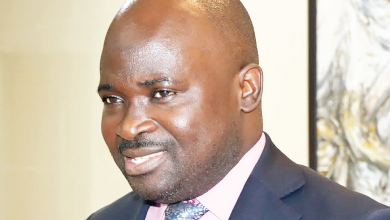
UTM Party legislator Penjani Kalua is mooting a private member’s Bill to formalise electoral alliances. The Blantyre Soche Zingwangwa Constituency member argues that the absence of legal backing fuels mistrust and instability. Our News Analyst WYCLIFFE NJIRAGOMA engages the lawmaker on how such a law would work, its implications for governance and whether it could bring accountability to Malawi’s fragile alliance politics in view of a constitutional requirement for the President to win over half of the valid votes. Excerpts:

Q: What specific gaps in the current legal framework do you want the proposed law to address?
A: The 50-percent-plus-one system means a candidate must secure an outright majority, which in many cases will require cooperation between parties. The gap we have now is that while alliances are formed to meet that constitutionally prescribed threshold, there is no legal framework to guide how they operate beyond elections. Once the election is over, those alliances and party agreements have no legal backing. That creates room for mistrust, instability and abuse because parties can walk away without any structured consequences or recourse.
Q: Last September, President Peter Mutharika won a comeback with about 57 percent, beating the 50%+1 threshold often used to amplify calls for electoral alliances. In Parliament, you described the 2025 election as an “outlier” and referred to Peter Mutharika as a “rare breed.” What does that mean for future electoral dynamics?
A: We cannot assume future elections will produce a candidate who will easily cross the 50-percent-plus-one-vote threshold. The political landscape may shift and we could see more fragmented results where no single candidate reaches that mark outright. That is why we must prepare for scenarios where alliances are not optional but necessary. The law I am proposing is about anticipating that future and putting order into how alliances function.
Q: How do you visualise your proposed law enforcing the desired shift from electoral alliances to what you call “coalitions of ideas and governing”?
A: The intention is to move alliances from being temporary electoral arrangements to structured partnerships that carry into governance. A legal framework would require parties to define how they will work together, not just during campaigns but also once they get into government. That includes aligning on policies, manifestos and decision-making processes. The law would not dictate ideology, but it would ensure that commitments made are formalised and respected.
Q: Your party, UTM, was part of the Tonse Alliance, which you cite as an example of good faith that ultimately broke down. What exactly would your proposed law have done differently in that situation?
A: The Tonse Alliance was entered into in good faith. Under normal circumstances, it should have lasted. However, there was no legal mechanism to uphold the agreement when challenges arose. If such a law existed, there would have been a structured way to address disputes and ensure that commitments were honoured or renegotiated within a formal system. The absence of that framework made it easier for the alliance to collapse.
Q: Critics may argue that laws cannot fix political mistrust or internal fractures. Why do you believe legislation would succeed where political goodwill has failed?
A: I am not saying the law will eliminate disagreements. Even in Parliament, we have differences, but the law provides structure and compels us to operate within certain rules, respect leadership and established processes. In the same way, a law on alliances would not remove political differences, but it would guide how those differences are managed and resolved.
Q: What enforcement mechanisms do you envision, particularly when one party feels aggrieved? Would this be a legal or political process?
A: The idea is not necessarily to rush to the courts. What I am proposing is a system that allows for mediation. If parties agree on certain terms and one side feels those terms are not being honoured, there should be a formal process to seek redress. This could involve structured mediation where grievances are addressed within an agreed framework, rather than leaving everything to informal negotiations.
Q: Do you you believe both government and opposition parties would back the proposed law?
A: Political parties on both sides have experienced the uncertainty that comes with informal alliances. Whether in government or opposition, there is a shared interest in having assurance that agreements will be respected. This is not about benefitting one side; it is about creating predictability and trust across the political spectrum. That is why I believe it could attract majority support.
Q: What are the next concrete steps and how soon could this idea translate into a private member’s bill?
A: The next step is to engage with the Speaker of Parliament and other stakeholders in the House. This is something that needs to be discussed and refined. I believe the Speaker is open to reforms, so there is a positive environment for such proposals. From there, the process of developing it into a private member’s Bill can begin. The intention is to move as soon as possible, but it must follow the proper procedures.