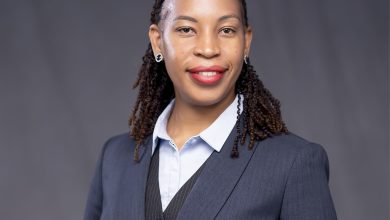
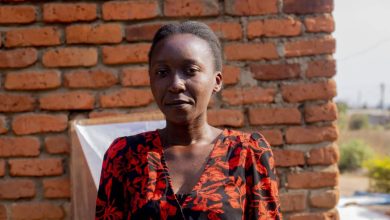
When Moneko Zoto tested HIV positive in 2019 while pregnant with her only child, she thought her life had come to an abrupt end.
Despite being a trained nurse and matron who had spent years helping patients understand illnesses and treatment, nothing prepared her for the emotional shock of her own HIV status.

“My mind became crowded with questions about my future, family, career and how society would perceive me,” she recalls.
What troubled her even more was that she could not understand how she became HIV positive.
“To be honest, I still do not understand,” she says.
“I only discovered my status during the pregnancy and after I had already broken up with my husband.”
Today, Zoto works as a unit matron at Bwaila Hospital, where she oversees the operating theatre, high dependency unit and central sterile services department.
But behind the professional title is a woman who once battled fear, shame and emotional isolation after learning about her status.
Like many people living with HIV in the country, Zoto says the biggest battle was stigma.
Ironically, even her professional background in healthcare did not make acceptance easier.
“In society, nurses are expected to be strong. People think because you are a health worker you cannot be vulnerable,” she says.
“But inside, I was breaking.”
The fear of judgment became overwhelming.
One of Zoto’s greatest challenges was simply accessing medication.
She says every visit to collect ARVs became emotionally exhausting because of whispers and gossip from people around her.
“At first, I thought of sending my maid to collect the drugs for me. But then I asked myself, for how long was I going to keep hiding?”
The pressure and shame eventually pushed her to stop taking ARVs altogether.
Instead, she turned to herbal products, hoping they would help maintain her health while avoiding public scrutiny.
For almost a year, she stayed away from treatment.
“I was lucky HIV never progressed to Aids,” she says.
During that difficult period, she constantly questioned how ordinary people without medical knowledge managed emotionally after testing positive.
But while she struggled privately, her body slowly began to weaken.
In 2021, she collapsed three times and was referred to Ethel Mutharika Maternity Wing for medical attention.
That moment became a turning point in her life. She resumed treatment and slowly began rebuilding herself emotionally, mentally and physically.
Zoto explains that many people living with HIV experience stigma through gossip, jokes, mockery and social media comments rather than direct confrontation.
According to her, words such as thupi lomaliza are commonly used mockingly against people suspected to be HIV positive.
Zoto says she has seen politicians and public figures being ridiculed online over suspected HIV status.
“Some of them are not even HIV positive, but if you scroll to the comment section you find descriptions that someone living with HIV would really feel bad reading,” she says.
“One common phrase people use is ‘awa mankhwala akuwazunguza mutu[loosely suggesting ARVs make people mentally unstable.
“I am yet to learn how medicine should make someone mentally unstable. There is no direct connection that someone taking ARVs has mental health problems,” she says.
She says despite laws such as the HIV and Aids Management Act prohibiting discrimination against people living with HIV, many continue suffering in silence.
Zoto attended New Era School before studying at Kamuzu University of Health Sciences, where she obtained a Bachelor of Science in Nursing.
She started working for government in December 2010 and steadily rose within the healthcare profession.
Her most traumatic experience of stigma came after she was selected for a Master’s programme at Central South University Xiangya School of Nursing in China on a full scholarship in 2022.
The opportunity represented hope, growth and another major academic achievement in her career.
As part of university requirements in China, students underwent health screening tests.
Unlike many people who hide their status, Zoto openly disclosed and explained she was adhering to treatment.
But what followed left her devastated.
According to Zoto, students who tested HIV positive were isolated and informed they did not qualify for visas.
“We were told the school could not keep us,” she recalls. “We were told to leave the next day.”
The experience shattered her emotionally.
“That was the worst scenario of my status to ever come into my life,” she says.
“I cried in the corridors.”
She says she feared her dreams had collapsed completely.
Zoto remembers questioning whether HIV would permanently block opportunities in her life.
“I had many questions. Does this mean I will never travel? Does this mean I will fail to attain my education?”
But instead of surrendering, she chose to fight.
In desperation, Zoto drafted a long emotional email to the Malawian embassy explaining everything that had happened at the institution.
Eventually, after a struggle, she was allowed to continue with her studies.
However, the discrimination did not entirely stop.
Zoto says once her status became known on campus, stigma followed her socially and academically.
“At one point, people started spreading misinformation that people living with HIV do not qualify to study in China,” she says.
“They were using me as an example.”
The misinformation spread widely among Malawians and intensified the stigma she was already facing.
To correct the false claims, she worked with social commentator Bright Mhango monickered Morton Baghaya on social media to produce a video clarifying the situation.
She also started engaging the National Aids Commission and UNAIDS-linked organisations in China to advocate for support and acceptance for people living with HIV.
Zoto says her painful experiences eventually pushed her to publicly disclose her HIV status for the benefit of others facing similar challenges.
It was from that vision that the Zoto Foundation was born.
She says the foundation was established to create a safe and supportive space for people living with HIV, especially young people and women struggling with stigma, denial and mental health challenges.
Currently, the organisation does not have a physical office and most of its work is being done through social media engagement, counselling sessions and direct support to individuals seeking help.
Zoto says the foundation also plans to establish recreation facilities and at least 10 support clubs aimed at helping young people deal with life challenges, relationships, self-acceptance and treatment adherence.
“We are advocating for integrated support systems and ways of reducing stigma,” she says.
Zoto says she has so far helped people from Malawi, Zambia, Ghana, Cameroon, Lesotho and Mali, particularly students living with HIV who face difficulties accessing education opportunities in China because of stigma and misinformation surrounding their status.
She says after her own painful experience in China, she decided to use the connections she built with UNAIDS-linked organisations and support networks there to help other African students navigate similar challenges.
According to Zoto, some students contact her after being denied opportunities, while others simply need guidance on health requirements, treatment continuation and how to handle disclosure while studying abroad.
She says part of her mission is ensuring that HIV does not become a barrier to education and personal growth for young Africans.
“I want people living with HIV to understand that they can still study, travel and achieve their dreams,” she says.