The Economics Association of Malawi (Ecama) has urged patience over Malawi’s discussions with the International Monetary Fund (IMF), saying the absence of a staff-level agreement after the recent mission does not indicate failure.
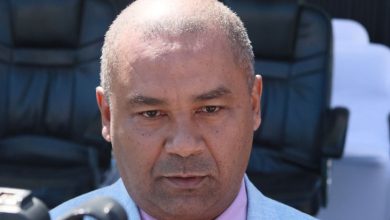
Ecama president Bertha Bangara-Chikadza said the just-ended IMF mission was a scoping exercise aimed at assessing Malawi’s economic conditions and policy direction before designing a proposed Extended Credit Facility (ECF) programme for negotiations with government.
“The mission was not to agree on the programme,” she said. “The focus should be on the quality and sustainability of whatever is agreed rather than the speed of reaching an agreement.”

Her remarks follow the conclusion of a 10-day IMF mission last week, which ended without announcing a new lending arrangement but indicated that discussions on policies and reforms under a possible ECF programme would continue.
Bangara-Chikadza, an economics lecturer at the University of Malawi, said negotiations on programme targets would only begin after the IMF develops a framework aligned to Malawi’s National Economic Recovery Plan while incorporating its own assessment of economic trends and risks.
She said reaching an agreement could take time due to high inflation, public debt estimated at around 90 percent of gross domestic product and persistent foreign exchange shortages.
Bangara-Chikadza also noted Malawi’s poor record under IMF programmes, observing that although the country has entered eight ECF arrangements since 1988, only two have been completed in the past two decades. The latest programme, approved in 2023, lapsed before its first review.
She said negotiations were likely to centre on fiscal consolidation, stronger expenditure controls, improved public financial management, better coordination between fiscal and monetary policy, exchange rate management and governance reforms.
Bangara-Chikadza said a successfully implemented ECF would signal policy credibility, helping unlock donor support, improve investor confidence and increase access to trade credit.
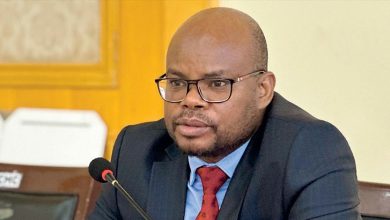
In a separate interview, Scotland-based economist Velli Nyirongo said prospects for securing an ECF remained positive if Malawi maintained reforms focused on fiscal discipline, exchange rate management and debt sustainability.
He acknowledged that reforms could bring short-term costs such as tighter public spending and inflationary pressures but said the long-term gains would include stronger macroeconomic stability, improved investor confidence and better foreign exchange availability.