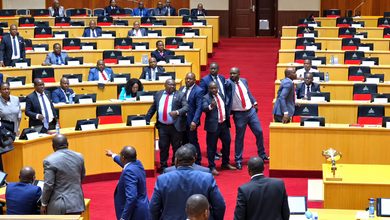
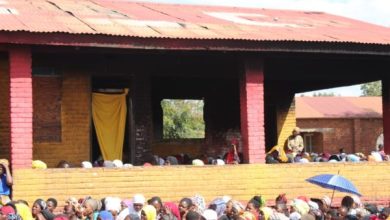
In 2018, Parliament outlawed the gifts politicians dish out to buy votes.
The lawmakers wanted those with hidden agendas to stop chipping at the root of democracy and national progress.
The Political Parties Act makes handouts a criminal offence, requiring those who allege wrongdoing to prove it beyond a doubt.
This binned 172 complaints from the September 16 2025 General Election, the test ground for regulations crafted to make the law work.
In a post-election interview, Registrar of Political Parties Kizito Tenthani told The Nation: “We are dealing with a deep-seated culture, so it is not realistic to expect that the culture of giving handouts would end overnight.
“Upon conviction, one is liable to a fine or imprisonment. So, the person complaining and the registrar have to produce evidence in court. The accused has a right to enter defence.”
However, making handouts a politician’s crime sidesteps a corrupt culture that hurt democracy and catapult elected officials beyond reproach.
In their murmurs, politicians say they would ditch give-and-take antics if voters rejected the freebies.
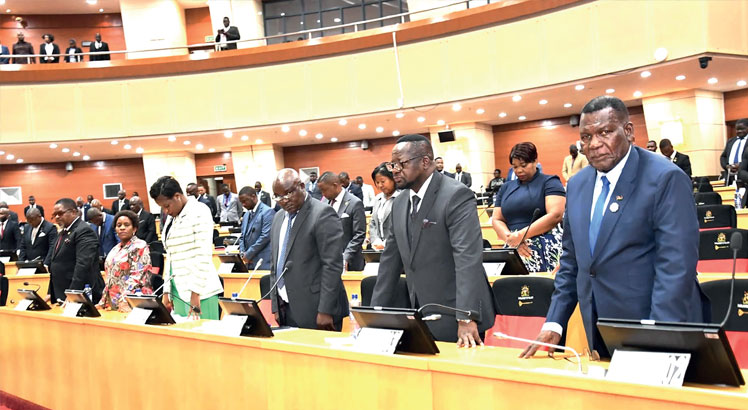
However, both rural and urban Malawians not only queue for handouts, but also prompt and blackmail politicians to pay up or forget votes.
“Every campaign period is a time to cash in. Many politicians disappear once they win,” says Mercy Makwinja, a 35-year-old resident of the populous Ndirande Township in Blantyre.
Lilongwe resident Andrew Phiri says every election “is season to get our share of democracy”.
“Who eats good promises?” he asks. “After the elections, losers lick their wounds and winners become richer and slippery while we get poorer.”
Transactional politics signals deepening frustration as democracy has not delivered desired economic dividends.
According to the World Bank, 80 percent of Malawians now live below the global poverty line of $3 per day—up from 60 percent during the fall of one-party rule 33 years ago.
An opinion poll by Afrobarometer and the University of Malawi’s Centre for Social Research just before last year’s election shows public support for democracy had declined from 76 percent to 53 percent since 2012.
Lead investigator Joseph Chunga blamed the steep decline on “failure by different governments to deliver public goods to citizens’.
Among the losers, faces on ballots pay a huge price to lure voters.
National Initiative for Civic Education (Nice) Public Trust executive directorGray Kalindekafe says “the politics of empty stomachs has become one of the most corrosive habits in public life”.
He states: “The handouts are illegal, morally troubling and deeply unfair, yet they continue to attract crowds and even a sense of entitlement. Poverty makes them look like opportunity, turning political corruption into an acceptable exchange.
“However, this culture reflects weak trust in institutions and the belief that elections are marketplaces of favours rather than contests of ideas. The poverty and exclusion that force citizens to negotiate dignity through proximity to politicians is not simply moral failure—but the collapse of trust, accountability and service delivery.”
In random interviews, seven of 10 members of Parliament (MP) said handouts would remain the political currency as long as the electorate bid for it.
“It’s easy to blame a politician, but ordinary Malawians even threaten to deny you votes if you play clean politics,” said a lawmaker cautious not to provoke constituents’ wrath.
Recently, Nkhotakota Central MP Silverster Ayuba James (Independent) stirred a social media storm when he rebuked the burden parliamentarians and aspirants bear due to uncurbed public expectation, even from chiefs.
Lilongwe Nyanja Constituency two-timer Steven Malondera (Malawi Congress Party) swiftly advised him: “Consider going to your constituency to conduct a farewell party.
“Five years is too short a period to nurture your thinking among the people and retain the constituency.”
However, lawyer James, still in his first five year-term, said he did not join politics “to remain” for eternity.
“I joined to start a conversation about changing the way people think and try to lay a foundation for a new way of doing things,” said the lawyer.
Public expectation makes the debate over handouts suicidal for politicians seeking re-election.
Over three decades of democracy, voting, a game of numbers, has become a fierce money game.
The giveaways have turned some constituencies into no-go zones for poor candidates with transformative ideas.
As citizens queue for a share of the political spoils, approval ratings of MPs are falling with a disempowered citizenry to demand accountability.
“Only three of 10 Malawians approve of the way their MPs perform their duties. A majority—60 percent—feels that MPs never listen to what ordinary people say,” Afrobarometer reports.
But Makwinja knows give-and-take makes elected public servants unquestionable, with Malawians mislabelling an MP as phungu (advisors), not nthumwi (envoys).