The Economics Association of Malawi (Ecama) says exchange rate adjustments alone cannot resolve Malawi’s persistent foreign exchange shortages unless they are accompanied by reforms that expand production and diversify exports.
In a written response to a questionnaire, Ecama president Bertha Bangara-Chikadza observed that repeated devaluations have failed to improve the trade balance because Malawi lacks the productive capacity to increase exports while remaining dependent on essential imports.
She said: “Without addressing the structural export challenge, the country risks remaining in a perpetual cycle of devaluations that delivers little economic benefit.”
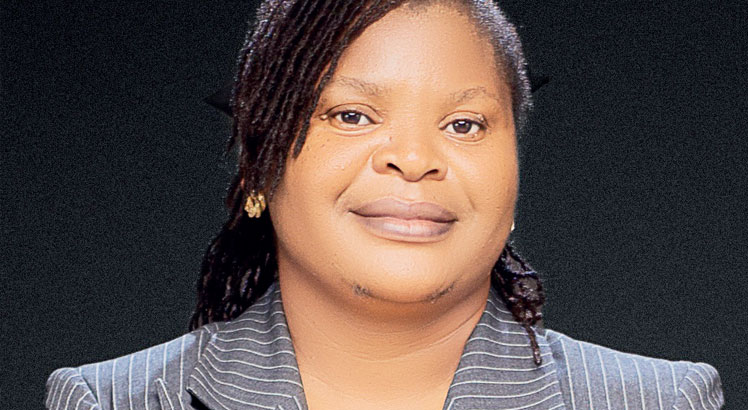
supply-side reform: Phiri . | Nation
Bangara-Chikadza said the country’s export strategies have consistently missed their targets, with the first National Export Strategy targeting $2.7 billion in new exports by 2018, but export earnings instead falling from $1.2 billion to $879 million, while exports accounted for just 10.6 percent of gross domestic product in 2025 against the National Export Strategy II target of 20 percent.
Recently, Malawi Economic Justice Network also noted that devaluation without adequate foreign exchange supply and measures to boost production only intensifies inflationary pressures, citing Reserve Bank of Malawi and International Monetary Fund studies estimating that a 10 percent depreciation of the kwacha raises non-food inflation by between three and five percent within 12 months.
Mejn executive director Bertha Phiri said devaluation without supply-side reform just becomes an inflation shock.
However, Malawi Confederation of Chambers of Commerce and Industry has been advocating for a phased exchange rate realignment, arguing the widening gap between official and parallel market rates has worsened forex shortages.
According to the chamber, the widening gap between official and parallel market rates has distorted the forex market, with 88.2 percent of businesses citing foreign exchange scarcity as their biggest challenge in the first half of 2026.
Prior to securing the previous Extended Credit Facility (ECF) with the International Monetary Fund (IMF) in November 2023, Malawi devalued the kwacha twice. Firstly, by 25 percent in May 2022 and, secondly, in November 2023, by 44 percent.
Malawi is currently discussing a new ECF with the IMF amid assurance from Minister of Finance, Economic Planning and Decentralisation Joseph Mwanamvekha that the government will prioritise conditions that will not hurt the masses already reeling under a burden of high cost of living.