In Malawi, indigenous crops are taking the spotlight as rainfall grows less reliable with climate change. The FOOD AND AGRICULTURE ORGANIZATION of the United Nations shares an experience from Chikwawa: On a sunny November morning in Chikwawa District, 75 farmers displayed their produce at a seed fair.
The star attraction were biscuits made from sorghum and cowpeas flour, crops that Malawian farmers had grown for generations before agricultural markets favoured other staples such us maize.
The diversity seed fair drew over 200 people, including government researchers, private sector representatives and community leaders to marvel at the versatility of forgotten crops and their products.
Currently, farmers in the disaster-prone Shire Valley are beginning to rediscover sorghum and cowpea, which help them to adapt to climate change.
The Food and Agriculture Organization ( FAD) held the fair to revive indigenous, drought-resistant varieties naturally adapted to dry environments and rich in nutrients, yet attracting little research, investment or policy attention.
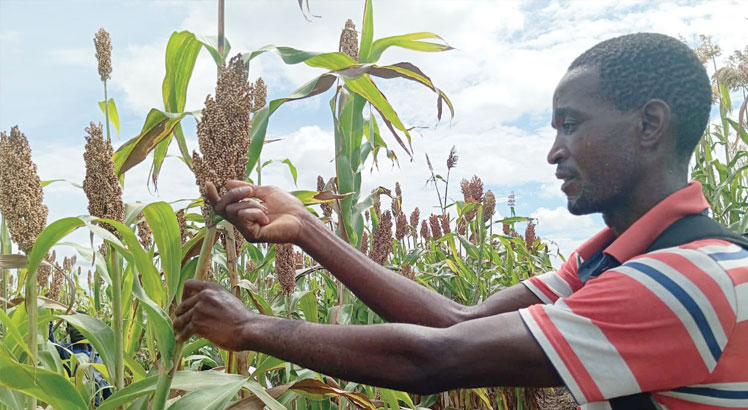
The gradual dominance of a handful of global staples such as maize, wheat and rice has left these “opportunity crops” marginalised by limited policy support, fragmented supply chains and short supply of traditional seed stocks.
Both sorghum and cowpeas were widely cultivated in Malawi along the Shire River and Lake Malawi.
In the 1960s, sorghum was a staple in low-rainfall years and cowpea intercropped with cereals for household nutrition and soil fertility.
Their decline accelerated after independence as agricultural extension services, research investment and marketing systems increasingly switched to maize.
The shift accelerated in the mid-2000s by farm inputs subsidy programmes that improved smallholder farmers’ access to hybrid maize seed and fertiliser.
Sorghum and cowpea became marginalised as farmers dedicated land to the grain most supported by national policy and markets.
As water scarcity threatens agricultural productivity across the region, traditional varieties built to survive without reliable rainfall are now taking on new global significance.
FAO together with the Ministry of Agriculture, Irrigation and Water Development are promoting indigenous drought-resilient and nutritious crops that improve biodiversity while creating jobs and income opportunities.
The Addressing Water Scarcity in Agriculture and the Environment (Awsame) initiative trained 20 government researchers and extension officers.
The training strengthened their skills on how to collect and analyse quality agricultural data alongside field water management techniques for drought screening.
Malawi Government experts evaluated 24 cowpea varieties and 30 sorghum varieties under both irrigated and dry conditions, drawing seeds from rural communities and the national gene bank to understand which perform best under drought.
Researchers first characterised and assessed the varieties under both irrigated and dry conditions.
At the maturity stage, farmers joined for a participatory selection, prioritising varieties based on practical criteria: cooking time, taste, quality and early maturity.
The varieties farmers preferred were then carried forward into drought screening experiments.
Says Elda Saliva, a farmer from Thimba Village in Makanda: “In the past, we used to plant many maize seeds in one planting station, but now we have been trained in conservation agriculture.
“With these new methods, our yields have increased, allowing us not only to feed our families, but also to earn income from the surplus.”
FAO also organised cooking demonstrations and training sessions for farmers to learn how to prepare various recipes of nutritious meals using sorghum and cowpea, while exploring opportunities for value addition and establishment of small businesses.
The cooking demonstrations produced the biscuits on display at the November fair.
“These lessons will help me teach my family and my community and they will also help us improve our nutrition. We have also learned business skills,” says Lameck Mofati, a farmer from nearby Matchangani Village.
The project is part of FAO’s Global Framework on Water Scarcity in Agriculture (Wasag), which include at least 80 partners, including government agencies, international organisations, research institutions, advocacy groups and professional organisations to tackle the collective challenge of using water better in agriculture.
FAO Wasag team leader Ruhiza Jean Boroto sees scaling potential in the initiative’s design.
“The beauty of such an initiative is when the community sees the benefits, they become the first ambassadors. They will, by themselves, actively look for these crops and their seeds to ensure that they enjoy the benefits these crops offer. This, in itself, will accelerate their adoption.”