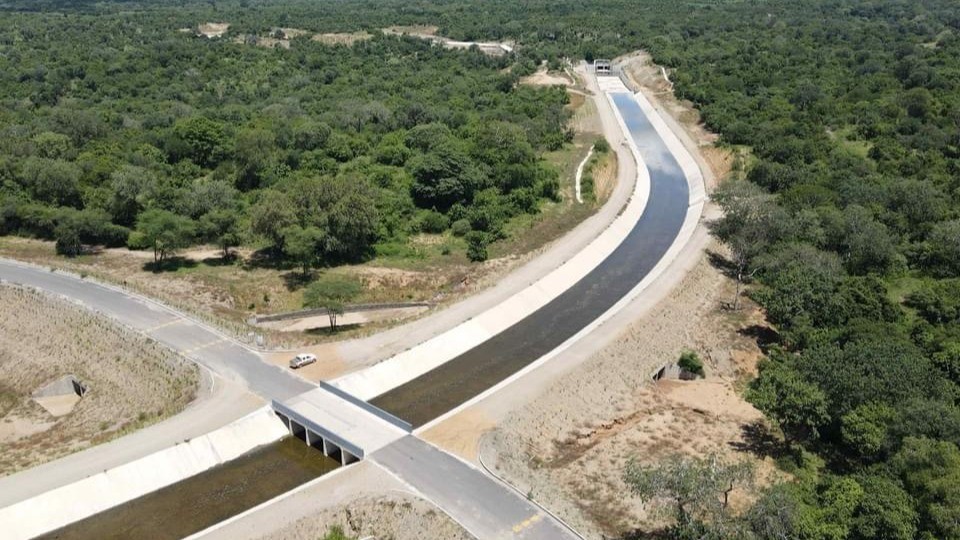
Concrete canals constructed to channel water from the Shire River to fertile crop fields across a vast valley at the southern tip of Malawi excite Levisoni Mozalande, a farmer in Chikwawa District.
He is delighted that the long-awaited irrigation, conceived by Malawi’s colonial masters in the early 1940s, is finally taking shape after postponement and repeated assurances.
“The programme lifted our spirits because frequent disasters fuel hunger and poverty in the Shire Valley,” says Mozalande, 34.
The construction of the country’s flagship irrigation programme aims to improve commercial farming and livelihoods beyond the twin Lower Shire Valley districts of Chikwawa and Nsanje.
The multibillion-kwacha initiative, running from 2018–2031, is designed to irrigate
43 370 hectares with water from Kapichira Dam on the Shire River.
Among others, policymakers expect 48 400 households to benefit from increased agricultural productivity and commercialisation, one of the enablers of the long-term vision to transform Malawi into an inclusive, self-reliant, industrialised upper-middle-income economy by 2063.
The Government of Malawi, through the Ministry of Agriculture, Irrigation and Water Development, is implementing the project with support from the World Bank, African Development Bank and the Opec Fund for International Development.
Shire Valley Transfornation Project (SVTP) is consolidating farmers’ land parcels into commercial farms covering 600 to 1 600 hectares that will be converted into shares, with landowners receiving dividends according to their land size.
The programme also includes a shift from traditional hand tools to mechanised agriculture, with the farms operating as cooperatives and agribusiness companies.
So far, 13 cooperatives have registered for the first phase, but the number is expected to reach 30 by 2031.
Delays persist
Since 2020, the Covid-19 pandemic, Cyclone Ana and changes to the intake design has slowed progress.
Devastating floods caused by Cyclone Ana destroyed the dam intake that was under construction, forcing engineers to redesign the works. A temporary structure is under construction.
The slowdown has left some farmers increasingly impatient and sceptical about whether the programme would be completed by 2031.
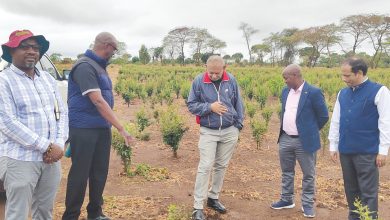
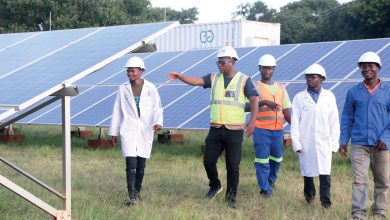
Recently, SVTP took 13 cooperatives’ leaders on a three-day tour to the temporary intake and conveyance structure at Kapichira Dam, main canal and the domestic water treatment plant.
Among others, engineers told farmers that the temporary intake would last for years and remain useful even after the main intake is completed.
Seeing progress first-hand eased the growing uncertainties among target cooperatives.
“Some farmers have started doubting the irrigation farming, but we are now convinced things are moving,” said Mozalande, who leads Chimphanga Cooperative in Traditional Authority Ndakwera in Chikwawa.
In a separate interview, Kuwala Cooperative treasurer Joyce Jekete, 37, said the delays had reduced leaders to a laughing stock.
“Many think nothing is happening, yet we have seen that the temporary intake, the main canal and other works are progressing well. The progress has renewed our hope that construction would be completed soon,” she said.
Kambadwe and Mwanaalirenji cooperatives, among the first to be established, are expected to start receiving water from the country’s largest river by May 2027.
“We are going back home happy because what we have seen is encouraging,” said Mwanaalirenji Cooperative treasurer Godfrey Banda.
SVTP community development specialist Felix Tukula, who leads the land tenure and consolidation efforts, says the project has trained targeted farmers on how to run their cooperatives.
“They had not visited various construction sites to see the progress, so some farmers had doubts about the programme. They asked us to tour the project, and we agreed,” Tukula said.
President Peter Mutharika launched the project on March 11 2020, at Kapichira, where its dam is under construction.