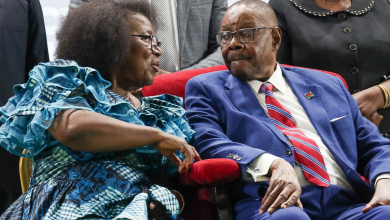
President Peter Mutharika stood before Malawians during his inauguration last year, and he delivered a blunt warning to those folks accustomed to feasting on public resources.
“We all wanted change,” he told Malawians who had voted for a break from the corruption, arrogance, abuse of public office, economic mismanagement and governance failures that characterised the MCP administration. “We voted for change. We expect change. I promise you real change. Zinthu zisintha! But real change must begin with us, each one of us.”
Then came the declaration that captured the mood of the moment.
“The honeymoon of looting the government is over. You are looking at a different President. I will not allow anyone to destroy this country under my watch, and I mean ANYONE!”
Well, folks, the controversy surrounding the purchase of Amaryllis Hotel and now the unfolding Electricity Generation Company (Egenco) scandal present precisely the kind of tests against which Mutharika’s promise must be measured.
At the heart of the latest controversy is K2.62 billion in legal fees allegedly paid to Blantyre-based M&M Global Law Consultants for facilitating the recovery of electricity trading arrears owed to the company by its sister utility, Electricity Supply Corporation of Malawi (Escom).
Recently, Egenco disclosed that Escom owed it about K30 billion and that M&M Global Law Consultants was entitled to a 15 percent collection commission plus value-added tax (VAT) for facilitating recovery. But here is the thing—how does a law firm engaged under an agreement that reportedly fixed its fees at K75 000 an hour for a partner and K40 000 for an associate suddenly demand K2.23 billion in collection fees, plus approximately K390 million in VAT, barely two months after the contract was signed in August?
And what happened to the hourly rates, and who sanctioned this rather extraordinary leap in legal fees?
Understandably, this transaction has attracted government scrutiny and an investigative audit has been instituted. Accounts linked to the payment have also been frozen, with Egenco chief executive officer William Liabunya and director of corporate services Videlia Mluwira suspended pending investigations. I must state here that none of this establishes guilt, of course. But the questions are too serious to be wished away.
What makes the whole affair particularly galling, however, is the condition of Malawi’s energy sector itself. Malawians are enduring persistent blackouts daily, with rising demand, ageing generating equipment, dilapidated machinery, maintenance challenges and inadequate generation capacity continuing to undermine electricity supply.
Businesses are equally losing productive hours, students are struggling to study and households have become accustomed to planning their lives around the unpredictable return of electricity. Against this backdrop, one cannot help wondering what K2.62 billion could have done if directed towards strengthening the country’s electricity generation capacity.
Could it have helped procure critical spare parts, repair faulty generating units, undertake overdue maintenance or rehabilitate ageing machinery? Could it have accelerated the restoration of generating capacity and eased the pressure on an already struggling national grid? These are valid questions because electricity has increasingly become unreliable in this country.
Ultimately, the Egenco issue is bigger than two suspended officials or one law firm. It speaks to the way we manage public institutions and whether those entrusted with national resources understand that government is a public trust.
And perhaps this is where Mutharika must pause and take stock. The honeymoon of looting the government may be over as he boldly declared on October 4 2025, but the honeymoon of political goodwill is not indefinite either. Malawians did not vote for a change of faces at the dining table. They voted for a change in the way the country is governed. They want functioning hospitals, reliable electricity, decent roads, jobs and public institutions that serve citizens rather than private interests.
The President must, therefore, get back to work, tighten the screws on public accountability and ensure that those entrusted with national resources understand that public office is a responsibility, not an invitation to feast.
More importantly, the patience of Malawians is equally finite, and the expectations that accompanied his return to the State House will eventually give way to harder questions about delivery.