Transporters Association of Malawi (TAM) expects approximately 287 fuel tankers to arrive this week, a deployment that could ease the country’s crippling petrol and diesel shortages.
The massive influx of fuel follows a direct appeal by TAM to President Peter Mutharika last Thursday to break a multi-week logistical deadlock at regional ports, according to the association.
Asked in an interview yesterday how TAM held discussions with the President who is in South Africa on a private trip and whether the engagement was directly with Mutharika or his officials, TAM spokesperson Frank Banda said he cannot “disclose that”. He also did not detail the specifics of the presidential intervention.
In an interview yesterday, Banda stated that 100 Malawian tankers and 152 vehicles belonging to Tanzania’s Asas Limited have finished loading at the port of Dar es Salaam in Tanzania, while an additional 35 tankers are loading at Beira in Mozambique.
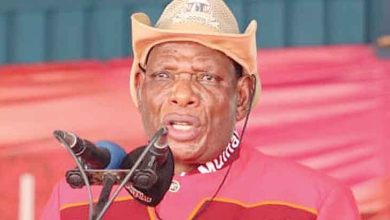
Banda credited President Mutharika’s intervention for the restart of the supply flow.

transporters’
appeal:
Mutharika. | Nation
Said Banda: “We had sent 100 tankers to Dar es Salaam over two weeks ago and nothing was happening. However, on Thursday we reached out to President Mutharika on the situation and immediately after we reached out, loading started Friday morning.
“So, loading of 100 trucks from Dar es Salaam started on Friday, and 152 Tanzanian trucks for both diesel and petrol belonging to ASAS limited are loaded.”
He added that the loading of the 35 trucks in Beira was scheduled to resume this morning, with the domestic fuel situation expected to improve later this week.
The breakthrough arrives as long fuel queues become a daily occurrence across Malawi, disrupting daily life and driving up public transport fares for commuters.
Consumer rights advocate Wazamazama Katatu said yesterday the breakthrough is a relief to consumers, who expect complete stabilisation.
He said: “The government must, therefore, build on this consignment in transit to stabilise fuel supply. It should not be a once-off arrangement.
“Consumers expect government, through its agencies such as Mera and police, to have a joint operation to crack down on black market vending and the malpractice of withholding the product so that the consignment should have meaningful impact.”
Recently, Malawi Energy Regulatory Authority (Mera) spokesperson Fitina Khonje admitted that the acute stock-outs are directly tied to the country’s broader foreign exchange constraints, even though fuel procurement remains a priority.
“The forex constraint is a national issue. We appreciate that forex allocation for fuel procurement is prioritised. However, financing gaps sometimes occur and their effects become evident over time,” she said.
Khonje said that the fuel industry is making every effort to replenish depleted stocks within the limits of available foreign currency.
“The industry makes every effort to ensure continued imports and replenish supplies according to resources allocated,” she said, assuring the public that the current shortages will be resolved.
However, Khonje emphasised that immediate supply gaps should not obscure the country’s main structural challenge, which is to generate sustainable foreign currency to fund essential imports.
The current strains persist despite massive procurement targets. Last December, National Oil Company of Malawi announced plans to import roughly 412 000 metric tonnes (about 549 million litres) of fuel for the 2026/27 financial year to meet 60 percent of national demand.
Concurrently, Petroleum Importers Limited—a consortium of private-sector oil marketing firms—issued a tender for an additional 176 300 metric tonnes (roughly 200 million litres).
On average, Malawi consumes one million litres of petrol and one million litres of diesel every single day. This translates to a national requirement of 60 million litres per month, or 720 million litres annually.
Persistent foreign exchange shortages have reached crisis levels, with national reserves languishing well below the recommended three-month safety net.
In response, the Reserve Bank of Malawi (RBM) recently tightened regulatory controls on the possession and cross-border movement of foreign currency. Official RBM data from July 2026 shows that total foreign exchange reserves fell to $600.6 million, equivalent to just 2.4 months of import cover.