The Human Rights Defenders Coalition faces credibility questions following a power dispute between a handpicked leadership and self-crowned advocates of integrity.
The coalition born in defiance gained popularity in 2019 when it spearheaded serial mass protests against President Peter Mutharika’s narrow re-election in a flawed poll nullified by courts nine months later.

The demonstrations transitioned to fresh elections in which Lazarus Chakwera became the first opposition leader to defeat a sitting President in a court-ordered poll.,
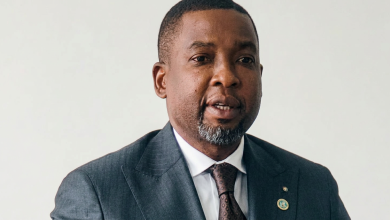
However, the power shift left the HRDC disintegrated as its poster faces, from one-time firebrand Timothy Mtambo to regional lieutenants, accepted political appointments, leaving the coalition under the leadership of Gift Trapence alongside Michael Kaiyatsa.
Trapence’s resignation has left the group that stood steadfast in the streets when institutions faltered and rallied citizens to keep the State in check confronting its own excesses.
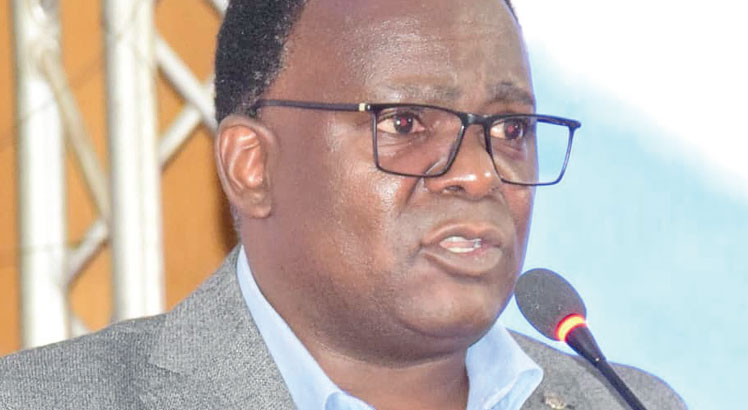
The battle for what Mtambo and Trapence marketed as “a movement built to outlive any personality” is the ascendency of Kaiyatsa as heir apparent and a group demanding elected leadership.
Credibility test
The unfolding power dispute in HRDC represents a test of its identity, legitimacy and the very principles the watchdog once projected with conviction.
Amid the simmering spat, onlookers ask: What constitutes legitimate authority within HRDC and who gets to define it?
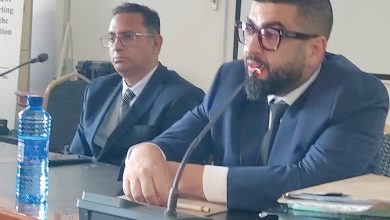
The self-styled HRDC Ad hoc Committee against Kaiyatsa’s rise to the helm has convened journalists in Lilongwe, demanding “legitimate leadership” elected at inclusive annual general meetings in compliance with the coalition’s constitution.
On the other hand, Kaiyatsa and his backers speak of continuity, precedent and internal consultative frameworks that have historically guided the civil society block.
Just like that, deepening tension is tearing a movement that thrived on urgency and moral clarity, leaving critics wondering: When transition is contested, which framework prevails: written rules or lived practice?
The crisis within HRDC is therefore not just about who leads. It is about how power is constituted, exercised and held accountable within one of Malawi’s most influential civil society bodies.
The clash has spilt from internal whispers to courtrooms.
“Since the establishment of HRDC we have never conducted or held any annual general meeting. These issues are very serious as far as governance is concerned,” Adhoc Committee vice-chairperson Sammy Aaron told the press in the capital city.
The committee has admittedly engaged various offices, including the Non-Governmental Organisations’ Regulatory Authority and the presidential advisor on NGOs, but the discussions have not borne anything positive,”
For them, the AGM that never happened is a structural failure that waters down HRDC legitimacy.
To them, rights defenders cannot demand accountability from everybody, except themselves. Those who seek equity must do so with clean hands, they say.
“Mr Kaiyatsa was not elected by any HRDC entity. He was just handpicked, so he has no mandate to run the coalition or issue statements unilaterally,” Aaron argues.
The accusation challenges not just Kaiyatsa’s position, but the process that catapulted him to the top the same way as the rise of his vocal predecessors, Mtambo and Trapence.
Paradoxically, the organisation that uncompromisingly demands accountability from government and political elites faces damning questions over its fidelity to rule of law, accountability and legitimate leadership.
“If we are failing to exercise leadership qualities within our institution, how can we hold government to account?” Aaron asks.
The question strikes at the soul and credibility of civil society itself.
However, Kaiyatsa says the committee opposed to his leadership has never approached him to discuss the issue.
“I have never met any one of them in person. To the best of my knowledge, there has been no meaningful engagement. The only interaction I recall was a single phone call, which I initiated,” he says.
Kaiyatsa sounds unmoved.
He states: “They are fully within their rights to seek legal redress. Ultimately, the courts will determine the matter and we have confidence in the independence and professionalism of our Judiciary.
“As HRDC leadership, we are clear and confident that our actions are fully within the bounds of the law. We are guided by the Constitution at all times.”
The opposition faction has sought a court order restraining Kaiyatsa from transacting HRDC business.
However, some activists within and outside HRDC perceive this as a new strategy to weaken the civil society.
Previous regimes have used divide-and-rule tactics, kickbacks, mercenary activists, government contracts and public appointments to muzzle or capture human rights defenders.
Internal issue on trial
When asked about the internal governance dispute, activist-turned-lawyer Benedicto Kondowe calls for restraint as the matter is still in court.
“It would be sub-judice to comment at this stage,” he said. “But in the spirit of collective commitment to HRDC, I would urge both sides to engage constructively through the established internal processes, not addressing the matter through public platforms, which risk undermining the institution.”
HRDC became a formidable force under founding chairperson Timothy Mtambo, who later defected to form Citizen for Transformation which partnered the Chakwera-led Tonse Alliance before being appointed Minister of National Unity. He is now Alliance for Democracy vice-president, but has gone into hibernation since Mutharika’s comeback in the September 16 2025 General Election.
Mtambo handed over to Trapence, who bowed out last November after six years at the helm.
His resignation came amid intimidating rhetoric from the comeback President who told his supporters in Mangochi that he would not tolerate another wave of protests and disturbance from HRDC, who he described as a terrorist group.
The leadership wrangle rages amid questions about HRDC relevance in the wake of its leaders’ rush for government jobs, both in diplomatic missions and government agencies.
The courts may resolve the legal dispute, but the deeper accountability question persists: Can HRDC regain its identity as a movement and watchdog with moral authority that once made it a defining force in Malawi’s democracy?