This weekend, the world observes the International Women’s Day on March 8.
Malawi commemorates the day under the theme Rights, Justice and Action for All Women and Girls. Globally, the call is Give to Gain, a reminder that investing in girls through knowledge, opportunity and inclusion is the surest path to economic growth and empowerment.
These themes are not competing, they are complementary. One demands justice and decisive action. The other explains why that action matters; when women and girls are equipped to thrive, nations prosper.
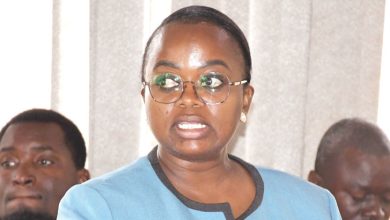
Speaking ahead of the commemoration in Lilongwe, Deputy Minister of Gender, Children, Disability and Social Welfare Martha Ngwira acknowledged that despite progress in legal and policy reforms, Malawi’s women and girls continue to face gender-based violence (GBV) and remain underrepresented in leadership and decision-making.
Her remarks were sobering.
On paper, Malawi’s commitment to gender equality is clear. Yet, as UN Women Deputy Country Representative Fatima Muhammad observed, underfunding and entrenched cultural norms continue to stall meaningful change.
That is where the real work lies.
Laws alone cannot protect a girl silenced by fear. Policies cannot empower a woman who lacks access to resources or whose leadership is dismissed before she speaks. Commemorations cannot transform communities without sustained, deliberate action.
Rights, Justice and Action demands that we confront GBV not only with statements of concern, but with fully funded prevention programmes, responsive policing and accessible support services for survivors. It requires justice that is swift and visible, and women’s voices amplified in councils, boardrooms and Parliament.
Give to Gain, meanwhile, reminds us that these measures are not acts of charity, but investments.
In Malawi, financial inclusion gaps remain a major barrier. Many women run small businesses yet lack access to credit because they do not own land or other collateral. Land ownership itself remains uneven, despite laws protecting women’s rights. Without secure tenure, economic independence is fragile.
Expanding women’s access to land, credit and financial literacy is not only about fairness; it is about unlocking productivity. With capital, women grow businesses, create jobs and support households.
When girls remain in school and transition to higher education or vocational training, they strengthen the country’s skilled workforce. When leadership spaces include women, decision-making becomes more representative and responsive to community needs.
The reverse is equally true. GBV drains families emotionally and economically. A woman living in fear cannot participate fully in public life or economic activity. A girl forced out of school by early marriage or abuse represents lost potential for herself and for the nation.
International Women’s Day must therefore be more than a symbolic date. It should be an accountability moment, compelling us to assess both progress and gaps.
GBV remains one of the clearest reminders that equality is not yet a lived reality. Every statistic represents a daughter, sister or colleague. Every unreported case reflects a system that still feels unsafe to those it is meant to protect.
Underrepresentation in leadership is another persistent challenge. When women are absent from decision-making tables, be it in politics, business, traditional leadership and civil society, the nation loses vital perspective. Sustainable development cannot be achieved while half the population is sidelined.
This is not solely a government issue, nor is it a women’s issue. It is a national issue.
Communities must challenge norms that limit girls’ education or silence survivors. Families must raise boys who see equality as a foundation for shared prosperity. Institutions must match gender commitments with real budgets, not symbolic allocations. Political parties must move beyond listing women candidates to actively mentoring and supporting them into leadership.
Private sector leaders must ensure equal pay and safe workplaces. Religious and traditional leaders must use their influence to shift mindsets that perpetuate inequality. The media must continue exposing injustice while highlighting resilience.
Government, too, must align policy with sustained funding. Justice requires action, and action requires investment.
The convergence of this year’s themes offers Malawi a clear roadmap to protect rights, pursue justice and invest boldly in women and girls as central drivers of national development.
As commemorations conclude and banners are folded away, the real test begins. Commitment should be measured not by speeches, but by budgets allocated, laws enforced and opportunities expanded.
From where I stand, if we truly believe women and girls are central to sustainable development, then closing financial inclusion gaps, ending GBV and expanding access to education and land must become urgent and sustained priorities.
This year, let Malawi embrace both calls: to act for rights and justice, and to give so that we may gain. Because when women rise, Malawi rises with them.