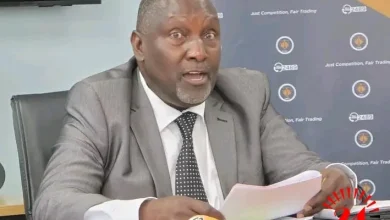
Parliament risks losing oversight of the K10.98 trillion national budget following the postponement of its Mid-Year Budget Review meeting, Budget and Finance Committee chairperson Sosten Gwengwe has warned.
Gwengwe said the decision could leave lawmakers unable to assess government expenditure, funding disbursements and progress towards achieving the objectives outlined in the 2026/27 National Budget.
“Failure to hold the review leaves parliament blind of how the budget is being implemented,” he said.
His concerns follow a statement issued on Wednesday by Speaker of Parliament Sameer Suleman confirming the postponement of the Fourth Meeting of the National Assembly in the 52nd Session of Parliament.
the Mid-Year Budget Review meeting . | Nation
The meeting, scheduled to run from November 9 to December 11 at Parliament Building in Lilongwe, was expected to provide an opportunity for lawmakers to scrutinise mid-year budget performance.
The postponement follows President Peter Mutharika’s October 23 directive to defer the sitting until the next Budget Meeting, citing the need to redirect financial resources towards the El Niño and fuel-related challenges.
Gwengwe, who served as Finance Minister under the previous Tonse administration, said the Mid-Year Budget Review was essential for correcting weaknesses in budget planning and ensuring that public expenditure remained consistent with parliamentary approvals.
“The mid-term review is a chance for the Minister of Finance to recast his budget correcting some planning errors they did not envisage at the passing of the main budget. He can regularise expenditures that are not aligning with the budget,” he said.
Gwengwe said parliamentary scrutiny went beyond examining whether government had spent money within approved allocations.
He argued that lawmakers also needed to establish whether funds had been released as planned and whether expenditure was producing the intended development outcomes.
“Most importantly, Parliament won’t be able to determine if the budget is achieving the objectives or outputs as outlined in the budget document,” he said.
The 2026/27 National Budget provides for K10.98 trillion in expenditure against projected revenue and grants of K8.13 trillion, leaving a deficit of K2.85 trillion.
Gwengwe warned that delaying scrutiny until the next budget cycle could allow implementation weaknesses to persist without timely corrective action.
Although the President’s directive allows parliamentary committees to continue working during the postponement, it remains unclear whether alternative arrangements have been made for the Budget and Finance Committee to examine mid-year fiscal performance.
The Speaker’s statement confirmed the postponement but did not provide a revised meeting date or explain how parliamentary scrutiny of the budget would proceed.
The postponement has also raised questions about the constitutional procedures governing parliamentary sittings, particularly the respective roles of the President, Speaker and National Assembly under Section 59 of the Constitution.
However, the postponement of the sitting does not necessarily mean the mid-year fiscal performance report itself has been cancelled or that all committee-level oversight has ceased.