A national budget is only as good as the assumptions on which it is built.
When Finance Minister Joseph Mwanamvekha presented the K11 trillion 2026/27 National Budget in February, Treasury projected the economy would grow by 4.1 percent, inflation would ease to 15 percent by year-end and the Reserve Bank of Malawi would reduce the policy rate to 18 percent. Those assumptions underpinned government’s revenue projections, spending plans and deficit targets.
Barely three months later, almost every one of those assumptions has shifted.
The World Bank now expects Malawi’s economy to grow by just 2.3 percent this year. Inflation is projected to average 21.9 percent, well above the Budget target, while public debt is expected to climb to 92.3 percent of gross domestic product (GDP).
Instead of easing, financing conditions remain tight as government continues borrowing from the domestic market. Granted, the DPP administration is not borrowing as much as the previous Tonse Alliance-led administration but it still makes an 18 percent policy rate increasingly difficult to achieve.
The Budget has not suddenly become a bad document. It has simply been overtaken by events. Recognising that reality is not an admission of failure. It is the essence of sound fiscal management.
The greatest risk is pretending nothing has changed.
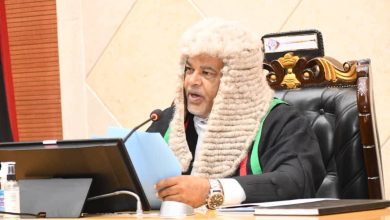
This is why the recent call by Parliament’s Budget and Finance Committee chairperson Sosten Gwengwe deserves serious consideration. Waiting until the Mid-Year Budget Review to adjust expenditure may no longer be prudent.
Economic conditions do not wait for parliamentary calendars.
If economic growth slows from 4.1 percent to 2.3 percent, businesses generate less income, imports weaken and tax collections inevitably come under pressure.
At the same time, inflation remaining near 22 percent instead of falling to 15 percent increases the cost of delivering government programmes, from wages and procurement to social protection.
With debt approaching 92 percent of GDP, there is little room to borrow more without worsening an already difficult fiscal position.
It, therefore, follows that the government’s implementation and execution of the 2026/27 fiscal plan should reflect the current economic realities, not the assumptions it was based on in February.
This does not mean abandoning the Budget. It means recalibrating it.
Fortunately, government has already demonstrated one important strength. Malawi Revenue Authority exceeded its first-quarter revenue target, showing that stronger tax administration can partially cushion the impact of slower economic growth.
But stronger revenue collection alone will not solve the problem. The harder decisions lie on the expenditure side.
If spending has to be restrained, government must distinguish between expenditure that supports future growth and expenditure that merely sustains consumption.
Malawi cannot reduce its way into prosperity. Fiscal discipline creates stability, but stability alone does not generate exports, foreign exchange or jobs.
The first priority should therefore be protecting productive sectors.
Irrigation stands at the top of that list. Climate shocks have repeatedly exposed the country’s dependence on rain-fed agriculture. In an agrarian economy like Malawi’s, every drought depresses production, fuels inflation and weakens economic growth.
Investing in irrigation is therefore not simply agricultural policy. It is macroeconomic policy.
Mining deserves similar protection. The sector offers one of Malawi’s best opportunities to diversify exports and rebuild foreign exchange reserves. These investments should not become casualties of expenditure cuts.
Instead, Treasury should scrutinise lower-priority recurrent spending—travel, workshops, administrative costs and other non-essential consumption that delivers little long-term economic return.
The Budget remains an important roadmap for recovery. But a roadmap is useful only if it reflects the road ahead.
Today, the road has changed.
Good governments are not judged by whether every forecast proves accurate. They are judged by how quickly they adjust when circumstances change. That adjustment should begin now, not at the Mid-Year Budget Review.