Minister of Finance, Economic Planning and Decentralisation Joseph Mwanamvekha says the government has turned its attention to raising more revenue from strategic border posts to strengthen domestic tax mobilisation and reduce reliance on borrowing.
In his remarks after a tour of Malawi Revenue Authority (MRA) Dedza One-Stop-Border Post on Wednesday, the minister challenged officials to exploit the revenue potential at the border.

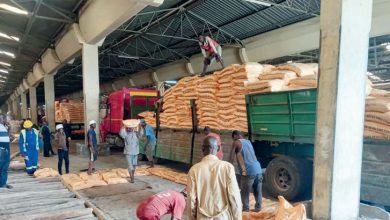
“Dedza is one of our strategic border posts,” he said, citing imports destined for Lilongwe, the Northern Region, Zambia and other markets as well as agricultural exports such as tobacco, soya beans and groundnuts.
Mwanamvekha said the station continues to perform well, but noted that there is still room for growth in terms of revenue.
“We expect more from Dedza compared to other border posts because of the volume of business that passes through it,” he said, but could not provide figures in terms of revenue target and actual collections.
MRA Dedza Domestic Taxes station manager Joseph Mkandawire said cited network problems, inadequate computers, low taxpayer compliance and a gap in tax knowledge among the taxpayers as some of the challenges.
Data based on the Reserve Bank of Malawi’s June 2026 Monthly Economic Review show the government recorded deficits of K254 billion in April and K106 billion in May before posting a K349.9 billion surplus in June.
Domestic revenue jumped by 84 percent from K480.5 billion in May to K884.4 billion in June driven by increases in tax and non-tax collections, while expenditure declined by 8.9 percent to K534.5 billion.
The Malawi Government’s broader domestic revenue mobilisation strategy seeks to improve tax compliance and collection efficiency as part of efforts to reduce dependence on borrowing.