Almost four years after government identified a contractor, the Ministry of Health’s K50 billion renal dialysis project remains stalled.
The delay has affected more than 8 000 patients who would have benefited from life-saving kidney treatment annually, Weekend Nation has learnt. The non-implementation also prolongs Malawi’s chronic dialysis shortage.
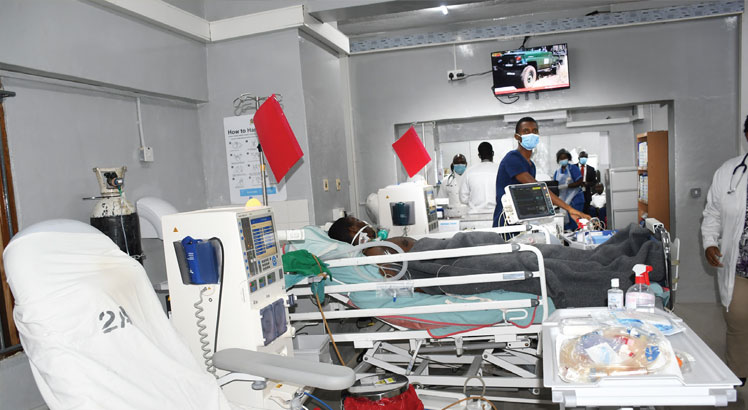
According to the project’s concept note, once operational the initiative was expected to transform renal care by bringing dialysis services closer to patients, easing pressure on existing facilities and saving government up to K3 billion a year through reduced foreign referrals.
It was also expected to improve survival rates for patients with chronic kidney disease and acute kidney injury while reducing out-of-pocket treatment costs.
Instead, the ambitious initiative has made little visible progress, raising fresh questions over its implementation.
Government launched the multibillion-kwacha project in 2022 to establish fully equipped modern dialysis centres at Mzuzu Central, Kamuzu Central, Zomba Central and Queen Elizabeth Central Hospital (QECH) through a Public-Private Partnership (PPP) arrangement.
Under the proposed arrangement, government will hold a 51 percent stake and oversee policy, regulation and clinical supervision, while a private partner will own 49 percent and finance equipment, operations and technical support.
The concept note shows government would contribute K15 billion, alongside a K20 billion development loan, K19 billion in private equity and K5 billion in donor grants.
However, Weekend Nation investigations at the four hospitals, a review of official documents and interviews with key stakeholders found no visible signs of progress despite implementation having been expected to commence.
In 2022, the Public Private Partnership Commission (PPPC) appointed Crisil Limited, in association with AMPC International Health Consultants, A-N Consulting Engineers and Sycamore Consult of India, to provide PPP transaction advisory services for the project.
According to a public notice under reference number PPPC/CNS/65/01-2022, issued in line with Clause 48 of the Public Procurement and Disposal of Assets Act No. 27 of 2017, the advisory contract was valued at US$243 925.88 (about K427 million).
Government is expected to provide land, utilities and healthcare workers, while the private investor finances, establishes and operates the facilities.
In an interview this week, PPPC chief executive officer Arthur Nanthuru said the project remains active, with the transaction advisory assignment having reached the draft feasibility study stage.
“The contract [with Crisil Limited in association with AMPC International Health Consultants, A-N Consulting Engineers and Sycamore Consult] remains active and is ongoing.
“The assignment progressed to the draft feasibility study stage but experienced delays arising from foreign exchange remittance challenges, which affected the timely processing of fees to the transaction advisor,” explained Nanthuru.
He said the delays slowed the turnaround time for addressing comments and finalising key deliverables.
“Despite these challenges, the work undertaken under the contract remains relevant. Government remains committed to delivering the renal dialysis project through the PPP framework to improve access to life-saving renal care across the country,” he said.
The project envisages each central hospital receiving 15 dialysis machines, dedicated water treatment systems, reliable electricity supply, solar-integrated backup power and specialist personnel, including nephrologists, trained dialysis nurses and equipment technicians.
Mzuzu Central Hospital director general Dr Doris Kayambo said procurement was being handled centrally, although the hospital unsuccessfully attempted to procure dialysis services using its own budget during the previous financial year.
“There is a pooled procurement process happening for all the central hospitals so that it will be easy to maintain the equipment once the process has completed,” said Kayambo.
She said the hospital had already renovated space for the dialysis unit, but the initiative stalled because of procurement challenges.
Earlier this year, President Peter Mutharika announced in his State of the Nation Address that Mzuzu Central Hospital would begin offering dialysis services during the 2026/27 financial year.
Two weeks ago, Minister of Health and Sanitation Madalitso Baloyi also told Parliament procurement for the Mzuzu facility was underway.
She said infrastructure for the dialysis centre had already been completed, with rooms, furniture and other essential facilities in place, leaving only the installation of machines.
Queen Elizabeth Central Hospital director general Prof Patrick Kamalo said the hospital already operates a government-funded dialysis unit and was not currently implementing the proposed PPP project.
“QECH already offers dialysis services since 2017. We have five machines, four are currently working, one has a minor fault. The services currently at QECH are fully supported by government… As of now we are not working on any PPP arrangement,” he said.
Kamuzu Central Hospital director general Dr Amos Msekandiana also said the project was being coordinated centrally and referred Weekend Nation to Secretary for Health and Sanitation Dr Dan Namarika.
However, Namarika had not responded to questions by press time despite messages and several phone calls since Tuesday.
Zomba Central Hospital director general Dr Saulos Nyirenda also indicated little progress had been made.
“The minister just announced the project. It’s still in the early stages. People are still planning,” he said.
The apparent lack of progress contrasts with information contained in the Reserve Bank of Malawi’s 2025 Projects Compendium, published in July last year, which stated implementation would run from October 2025 to December 2028 and that feasibility studies had already been completed.
The compendium further stated that land had been secured at all four central hospitals, detailed designs had been prepared and that “there are no encumbrances”.
However, the Public Sector Investment Programme (PSIP) 2026, published by the Ministry of Finance, Economic Planning and Decentralisation in April this year, lists the dialysis centres among PPP projects that are still undergoing feasibility studies.
The initiative seeks to address Malawi’s chronic shortage of dialysis services, with existing facilities meeting less than 10 percent of annual demand.
An estimated 8 000 patients require dialysis treatment every year, but access remains severely limited.
Currently, only Kamuzu Central Hospital and Queen Elizabeth Central Hospital provide public dialysis services, forcing many patients to travel long distances, pay for costly treatment elsewhere or remain on waiting lists while their conditions deteriorate.