The collapse of equipment, drug stockouts and cancelled surgeries are not accidents. They are the result of 25 years of underfunding health.
Malawi signed the 2001 Abuja Declaration, committing to allocate at least 15 per cent of its national budget to health. Yet in the current 2025/26 fiscal year, health received just 9.2 percent—K1.02 trillion—well below the target.
Our analysis shows that by failing to meet Abuja over the last five years, Malawi has denied its health sector K646 billion. That shortfall is visible in broken CT scanners, idle ambulances and patients sleeping on floors while waiting for surgery.
In the current 2025/26 fiscal year, health received K1.02 trillion—9.2 percent of the national budget and 3.2 percent of gross domestic product (GDP). It is one of the highest allocation on record, yet 5.8 percentage points below Abuja.
A five-year-trend shows the scale of the funding commitment problem while government spending on health has grown in nominal terms over the last five years, its weight in the national budget and economy remains well below regional benchmarks and Malawi’s own MW2030 commitments.
In the 2024/25 financial year, the health allocation rose to K396 billion. That represents 12.2 percent of the total national budget and an estimated two to three percent of GDP. It is the largest health vote on record in kwacha terms, and the highest share of the budget since 2020/21.
The increase continues an upward trend, albeit an uneven one. In 2023/24, government spent K330 billion on health, equivalent to 8.5 percent of the budget and two percent of GDP.
The previous year, 2022/23, the allocation was K283.57 billion or 10 percent of the budget and 2.5 percent of GDP.
Going further back, the health vote stood at K187.2 billion in 2021/22, representing 9.7 percent of the budget and 1.8 percent of GDP.
In 2020/21, at the height of the Covid-19 pandemic, government allocated K101 billion, which was 9.5 percent of the budget, but a relatively higher 2.4 percent of GDP due to a smaller overall economy that year.
The figures show two things.
First, nominal spending has nearly quadrupled in five years, reflecting both inflation and government’s stated priority to expand health infrastructure and services.
Second, as a share of GDP, spending has largely stagnated between 1.8 percent and three percent, far below the Abuja Declaration target of 15 percent of the national budget and the five percent of GDP that the World Health Organisation (WHO) recommends for low-income countries to deliver universal health coverage.
By failing to meet the 15 percent Abuja Declaration target over the last five fiscal years, our illustrative calculations show that Malawi has denied its health sector K646 billion during the period.
Our calculations show that if government had allocated 15 percent of the national budget to health each year from 2020/21 to 2024/25, an additional K58.5 billion would have been available in 2020/21, rising to a peak shortfall of K252.3 billion in 2023/24.
The gap narrowed slightly to K90.9 billion in 2024/25, but the five-year average annual loss stands at K129.2 billion.
The scale of the shortfall is stark.
The K646 billion lost over five years is nearly 65 percent of the entire health allocation of K1.02 trillion in the current 2025/26 budget. At World Health Organisation (WHO)’s recommended minimum of $86 per capita, that money could have provided basic health services for about 7.5 million Malawians for a year.
Instead, it represents theatres that were never built, CT scanners that were never repaired, and drug budgets eroded by inflation. This is where policy failure becomes a ward-level crisis. The missing billions show up in the Other Recurrent Transactions vote, which has hovered between 7 and 9 percent of the total national budget and left hospitals without money for maintenance, fuel and consumables.
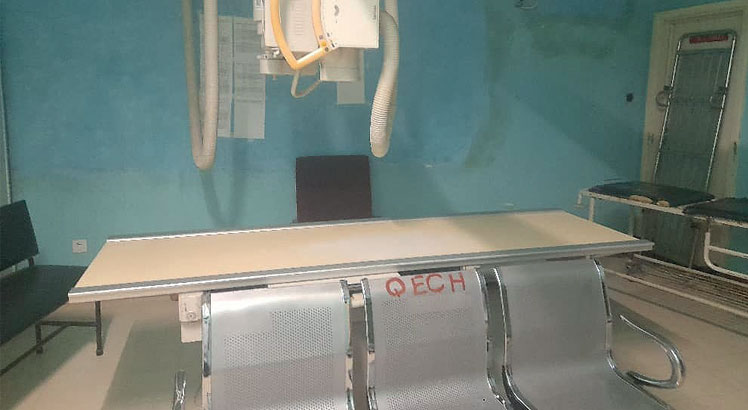
It shows up in forex shortages that Dr Patrick Kamalo says have caused scarcity of essential medicines. In short, the Abuja gap is not an abstract target. It is the broken X-ray at Qech, the idle ambulances in Blantyre, and the patients sleeping on floors while waiting for surgery.
Malawi is not alone in missing Abuja, but the regional picture shows the country is among the worst performers.
According to a 2021 Southern Africa Development Community (Sadc) policy brief, only Seychelles and South Africa have come close to the 15 percent mark in some years. Most Sadc states fluctuate between seven percent and 13 percent.
Countries like Botswana, Namibia, Zambia and Zimbabwe have consistently budgeted 10-12 percent. Tanzania and Mozambique hover around 8-10 percent. South Africa spends over 13 percent and supplements it with a large private health sector.
Malawi’s average of 9-10 percent over the last five years puts it in the bottom third of Sadc on budget share, despite having one of the highest disease burdens in the region.
The Sadc brief warned: “Although there has been public support for more funding to healthcare, governments need innovative sources of funds in the face of a declining regional economy.” It proposed regional funds, better tax compliance and civil society oversight.
Where the gap shows: infrastructure and drugs
That missing 5-6 percent of the budget every year in Malawi has a face. It is the broken CT scanner at Mzuzu that has not worked since last year. It is the analogue X-ray at Qech down since 2022. It is the eight ambulances parked at Blantyre District Health Office with no forex to fix them.
Qech Director Dr Patrick Kamalo told us directly: “forex shortages have led to scarcity of some essential medicines and consumables.”
Budget documents show why. The share of Other Recurrent Transactions—the money for repairs, maintenance, fuel, and running costs—has hovered between seven percent and nine percent in the last five years.
Hospitals cannot maintain what they have. The Malawi Health Forum said it plainly in July 2026: “Government should allocate adequate resources for routine maintenance of hospitals, health centres, staff houses and medical equipment, including ambulances. Preventive maintenance should become integral to health planning and budgeting.”
“When maintenance money is not there, equipment dies. When drug budgets are squeezed by debt and inflation, pharmacies run dry. When there is no capital budget, new theatres and ICU beds are not built,” warned rights activist Gift Trapence.
Health and Rights Education Programme Director Maziko Matemba said the result is “artificial scarcity” that “tempts patients to bribe for faster access” and pushes people to expensive private clinics.
Malawi Health Equity Network Director George Jobe added: “Non-functional diagnostic equipment, inadequate ambulances and drug shortages result in delayed diagnosis, prolonged waiting times and avoidable suffering. The poor suffer most because they cannot afford private care.”
Debt and the Fiscal Squeeze
A Unicef budget brief notes another pressure: public debt servicing. It rose from 14 percent to 24.3 percent of the total budget in 2024/25 as total public debt stands at just over 90 percent of GDP.
“As recognised by the IMF [International Monetary Fund], rising debt servicing costs are limiting fiscal space for social sectors,” states Unicef.
That means less money for medicines, equipment and staff—even as demand grows.