Keeping Africa’s vaccines cool
From a distance, Lilongwe Technical College (LTC) is a modest affair located along the M1 opposite Biwi, the southern gateway to Lilongwe Old Town.
The single-storey blocks, concealed in a brick fence, give little indication of the crucial role it plays in Africa’s public health response.
Opened in 1963 to train artisans in automotive and general technical skills, the college has evolved into a regional hub of excellence in vaccine cold-chain management.
Currently, it equips technicians from across various countries to maintain and repair refrigeration equipment that keep vaccines effective in the fight against preventable diseases.
In its interiors, Tiyese Kalua and other tutors are giving trainees important tips in vaccine logistics, including cold-chain management and maintenance, basic principles of electrical installation and solar-powered refrigeration.
The school of excellence also teaches remote temperature monitoring for vaccine cold chains using phones or computers.
Kalua, who coordinate the course, said knowledge gaps, especially on how to operate and repair cooling facilities, are among the reasons Africa experiences ‘fridge sickness’.
“When you read our course outline, it looks simple and not worth much until you see reports on the amount of vaccines that are damaged and money wasted due to gaps in cooling systems,” he says.
The skilled hands proved vital at the height of the Covid-19 pandemic when Malawi’s healthcare system incinerated thousands of expired vaccine doses.
They have proved essential in keeping vaccines in a life-saving state during routine immunisation for children below five and emergency vaccination, including cholera and polio shots.
“Vaccines don’t come cheap, but they go to waste when cooling equipment fails or is poorly maintained,” Kalua says.
The World Health Organisation (WHO) estimates that a quarter of global vaccine supplies are lost annually due to cold-chain failures, including broken fridges, poor maintenance and power blackouts.

The losses are higher on the continent where underfinanced rural clinics mostly rely on solar-powered or aging equipment.
In Malawi and neighbouring Mozambique, damaged vaccines slow the fight against deadly preventable diseases.
Cholera, measles, and polio outbreaks have been linked to interrupted cold chains, showing how a faulty refrigerator can disrupt public health systems.
“Cold chain is the backbone of immunisation programmes. Without it, even the best vaccines cannot protect children,” Kalua says.
Lilongwe Technical College trains technicians from within and abroad.
The trainees spend hours troubleshooting broken equipment, diagnosing electrical faults, repairing compressors and testing temperature sensors.
For many, it is their first experience putting theory into practice, saving thousands of lives.
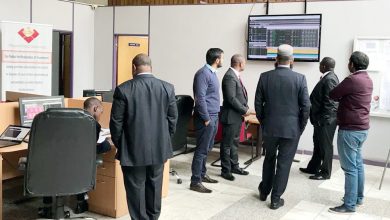
Recently, eight Mozambican technicians completed the training in vaccine storage, refrigerator repair and remote temperature monitoring.
For practical lessons, the college collects abandoned fridges from hospitals for learners to repair.
“Every time vaccine refrigerators broke down, we used to wait weeks for specialists from Maputo, the capital city of Mozambique. Now, we are the specialists saving time and protecting children’s lives,” says Erlinda Jeronimo, a technician based in Tete Province along the border with Malawi.
Engineer Bandeira Pira, from Zambezia Province now tracks vaccine temperatures digitally and respond before vaccines spoil.
“Ensuring vaccines remain potent is a practical skill that protects entire communities,” he says.
Mozambique’s Expanded Programme on Immunisation (EPI) manager Sousa Ribe says it is challenging to maintain 2 800 refrigerators in various health centres.
“We used to face frequent vaccine wastage due to poor cold-chain maintenance. Building local capacity is essential to reversing this trend. Training technicians locally reduces delays, cuts costs, and saves lives.”
Unicef, through the Government of Malawi, supported the college to train technicians from Eritrea and Lesotho, making the initiative a model for sustainable vaccine storage solutions across the continent.
Malawi’s EPI manager Mike Chisema, says every vaccine dose that reaches a child represents hope.
“Lilongwe Technical College ensures that hope isn’t lost due to a broken fridge. This programme demonstrates that building local expertise can transform public health outcomes, “he says.
The Lilongwe-based centre of excellence in cold-chain management has trained over 100 local technicians since 2021.
It has expanded its impact beyond Malawi.
College principal Suzgika Mvalo says the programme, now expanded the borders, has evolved from observing local challenges in vaccine storage and logistics.
“We became agile after seeing the gaps in vaccine management. This isn’t just technical training, but it’s about saving lives. Every fridge fixed is a child protected.
“We aim at creating a network of cold-chain experts across Africa who can train others. That is how we scale impact—not just fixing fridges, but ensuring knowledge spreads.”
Mvalo said the institution plans to establish more centres of excellence for agriculture mechanisation, fabrication and welding.