Delegates from 196 countries have gathered in Ulaanbaatar, Mongolia, to discuss how to turn land restoration resolutions into money and action.
Land degradation wipes nearly $900 billion every year, says the United Nations.
Malawi has a seat at the 17th conference of the parties to the UN Convention to Combat Desertification (UNCCD), adopted in 1992 in Rio de Jeneiro, Brazil.
Scientific reports show that degradation and drought already affect up to 40 percent of the world’s land and 3.2 billion people.
Since Monday, policymakers, financers, businesses, scientists and activists are debating practical solutions, partnerships and financing for land restoration and drought resilience.
They are not only negotiating decisions on drought and land health, but also private-sector participation and the convention’s future strategic direction.
Participants in the two-week talks expect emerging resolutions, partnerships and initiatives to strengthen international cooperation on sustainable land management, land restoration and drought resilience, UN News reports.
Land restoration and sustainable environmental management are central to Malawi’s development goals to become an upper-middle-income economy by 2063.
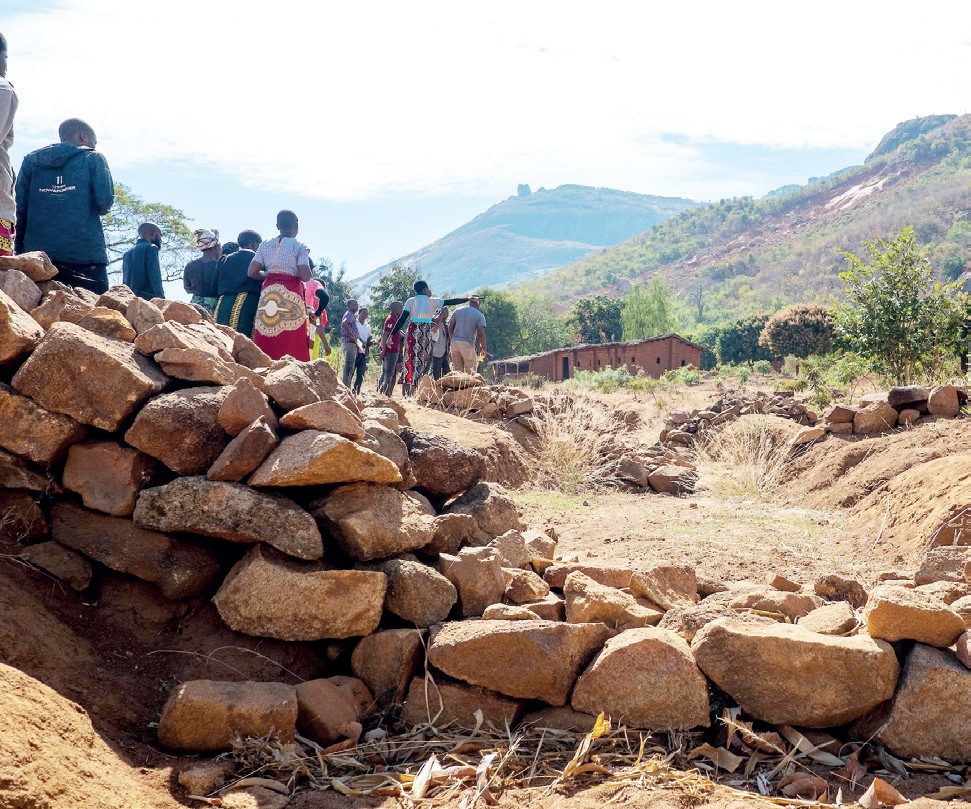
In 2016, the country pledged to restore 4.5 million hectares of degraded and deforested land by 2030 under the African Forest Landscape Restoration Initiative. However, the State of the Environment and Outlook Report, unveiled by the Malawi Environment Protection Authority two months ago, reveals that over 80 percent of the country’s land is degraded.
The finding show that the loss worsens food crises, water stress and poverty as the country is losing about 250 000 hectares of forest annually, increasing its vulnerability to floods, droughts, heatwaves and cyclones.
Globally, droughts have increased by almost one-third since 2000 and now wipe out at least $300 billion annually.
Malawi is preparing for one of the warmest El Niño cycle forecast to induce droughts across Southern Africa and the Sahel region. Weather experts expect hot weather and low rainfall to disrupt crop and livestock production.
CoP17 provides an opportunity to accelerate practical action to combat land degradation, food insecurity, water stress and climate change.
Mongolia Prime Minister Uchral Nyam-Osoryn Mongolia called for tangible progress at this conference.
He said: “The greatest change we want to see from CoP17 is a shift from talk to action, from targets to implementation and from commitments to measurable results.
“First, let us address land, climate and biodiversity not as separate issues, but as interconnected challenges. Second, let us increase investment in land restoration and take cooperation between governments, international financial institutions and the private sector to a new level.”
At least three quarters of the host country’s land is degraded and the 2023/24 drought killed more than seven million livestock, exposing the urgent need to strengthen resilience.
CoP17 will continue to re-examine the global policy framework adopted two years ago in Riyadh, Saudi Arabia.
Parties will also discuss measures to strengthen preparedness, early warning systems, vulnerability assessments, international cooperation and financing to help countries turn drought plans into action.
More than 70 countries have now developed national plans, a growing recognition that drought must be managed proactively instead of waiting for humanitarian crises.
The UN reports that every kwacha invested in drought resilience can generate returns of up to K10 while some nature-based solutions save up to K27.
However, policymakers estimate the return at three kwacha for every kwacha invested in restoring degraded land in Malawi.
The world needs about $355 billion every year to combat land degradation and drought, yet current investment hangs at only around $77 billion.
Closing the $278 billion gap for land restoration and drought resilience is one of the CoP17 defining priorities.
However, the private sector provides only around six tambala for every one kwacha injected in the global land restoration and drought resilience finance.
Negotiators at CoP17 will explore how to unlock new funding, strengthen incentives for sustainable land management, reduce investment risks and better align public and private investment.
The Business4Land Forum, slated for next Monday, will strengthen private sector engagement and partnerships for land restoration and drought resilience. Partners have already committed more than $9 billion across over 210 million hectares.