October 2026 marked the 150th anniversary of Blantyre City, where rivers stink under pressure from its rapidly growing population.
A mix of weak law enforcement, unsanitary culture and constrained city council have left the banks’ of the city’s rivers Mudi, Nasolo and Naperi choked with waste from homes and industries.
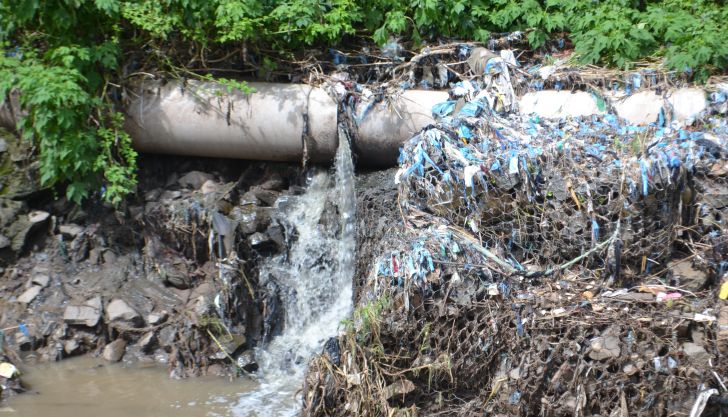
Water pollution has become a byword of the oldest city’s rise from a nineteenth-century Presbyterian mission station to Malawi’s commercial capital.
Today, garbage, sewage, industrial waste and plastics choke streams and drainage, while poor waste disposal adds pressure to stinking rivers.
The city has no purpose-built waste management systems and a majority of Malawians do not seem to care where they dump waste.

Some say they offload bins in rivers for convenience while others blame the practice on the lack of reliable waste collection services from the council.
“It’s easy to dump leftovers in the nearest river. I know it’s not good, but what can we do?” says Harriet Mbewe, who runs a restaurant at Limbe Market.
When the rainy season kicks in, run-offs wash neglected waste from open spaces and drainage channels into rivers. Damaged sewer pipes and poor wastewater management create further risks.
The rivers are paying a price for a city of about one million people where built-up areas expand faster than access to essential services.
Blantyre began as a Scottish missionaries’ settlement in the Shire Highlands in the late 1890s. Its postcard terrain and relatively cool climate helped attract the British settlers, while trade and industry later drove its growth.
As more Malawians moved into the city in search of work, residential areas spread, putting greater pressure on sanitation, drainage and waste management.
A 2011 United Nations Human Settlements Programme profile of Blantyre identified rapid population growth, weak physical planning and inadequate urban services among the factors behind the city’s environmental challenges.
Who is responsible?
“Careless disposal begins at household level, where some residents fail to manage their waste properly. The major challenge is the issue of attitude,” says Centre for Environmental Policy and Advocacy executive director Herbert Mwalukomo.
However, he says the city council lacks facilities and tools to collect and manage waste generated by its growing population.
Among others, some settlements, especially those emerging without proper urban planning, are almost inaccessible for waste collection trucks.
Besides, piling rubbish in marketplaces and other open spaces remain uncollected for weeks and months.
“We have a general problem,” says Mwalukomo. “We generate a lot of waste even though some of it is not supposed to be waste. Unfortunately, we do not have a proper waste management system, starting at household level all the way to disposal.”
The activist urges Malawians to start sorting and manage waste responsibly, while the city council invests in improving garbage collection and disposal.
“If we do not manage waste responsibly from household level, it will remain a challenge no matter how much resources we have,” he says.
Recently, Blantyre City mayor Isaac Jomo Osman has intensified campaigns and meetings to tackle the waste crisis that he blames on population pressure and unsanitary habits.
“To overcome all these challenges, there is a need for collective responsibility,” he says.
In February, President Peter Mutharika ordered all public institutions in the country to improve sanitation and hygiene standards by providing the necessary tools in public spaces, including markets, schools and health facilities.
However, the Executive order, which did not spell out any sanctions for non-compliance, has given rise to high-level meetings where authorities pocket allowance while waste increasingly flow into waterways.
Murmurs are already rising among public servants, activists and ordinary citizens that Mutharika’s order may fizzle and vanish like the monthly community clean-up campaign launched by his predecessor, Lazarus Chakwera.
As Blantyre celebrates its 150 anniversary with polluted rivers, the rivers that flow around the legendary mission station provide a disturbing stink that calls for urgent action.