In September 1953, thousands of Africans gathered at Ntcheu Boma for what was presented as a day of prayer.
But it was far more than a religious event.
Traditional leaders, members of the Nyasaland African Congress and ordinary Africans had assembled to oppose the proposed Federation of Rhodesia and Nyasaland, fearing it would entrench colonial rule and deny Africans the right to determine their own future.
Among them was British Anglican priest and anti-colonial campaigner Rev. Michael Scott, who had travelled to Nyasaland at the invitation of Congress.
The atmosphere was already tense. Chief Gomani of Ntcheu had openly defied the colonial administration by encouraging civil disobedience and urging Africans to refuse paying taxes. He was arrested alongside his two sons, imprisoned and deported to Mulanje, where he died in 1954 before witnessing the independence he had fought for.
The Ntcheu gathering ended in bloodshed when colonial security forces opened fire, killing 11 people. Scott was later deported after being accused of inciting political unrest.
Yet neither the killings nor the deportations extinguished the independence struggle. Congress leaders intensified mobilisation at home and abroad, fighting not merely for the lowering of the Union Jack but for a nation where Africans would enjoy dignity, shape their own future and build an economy capable of improving their lives.
On July 6 1964, that dream appeared to have been realised when Malawi attained independence.
Sixty-two years later, however, a difficult question remains: Is this the Malawi that Chief Gomani, Rev. Scott, the Nyasaland African Congress and thousands of ordinary Malawians envisioned when they sacrificed their freedom—and, for some, their lives?
The question has gained fresh relevance after government cancelled this year’s Independence Day celebrations, citing austerity measures.

This year, Malawi marked Independence without official festivities, a decision that reflected the country’s economic difficulties. The irony was unmistakable: a nation born from a struggle for freedom found itself unable to celebrate that freedom because of economic hardship.
Today, Malawi continues to grapple with widespread poverty, unemployment, food insecurity, unreliable electricity, inadequate access to clean water, fragile healthcare, underfunded education, limited industrialisation, mounting public debt and continued dependence on development assistance.
Successive governments have relied on grants, concessional loans and budget support from development partners to finance development programmes, infrastructure and balance-of-payments needs. International diplomacy is frequently accompanied by appeals for investment, debt relief and humanitarian assistance.
To many observers, these are symptoms of a deeper structural problem: an economy that has struggled to generate enough domestic resources to finance its own development.
How did the country arrive here?
Writing in the 2004 paper Drivers of Change, legal scholar Edge Kanyongolo and his co-authors argue that Malawi’s post-independence development can broadly be divided into three phases.
The first, under President Hastings Kamuzu Banda, delivered relatively rapid economic growth through a state-led development model, although its dualistic structure proved difficult to sustain. The second embraced economic liberalisation but failed to resolve structural weaknesses, while the third has been marked by slowing growth, recurring crises and worsening development indicators.
According to Kanyongolo and his colleagues, Malawi’s deeper challenge has been its failure to build a developmental state. Instead, political power increasingly revolved around what they describe as the “big bwana” syndrome, where patronage networks and political favours often took precedence over effective institutions.
In such a system, long-term national development becomes subordinate to short-term political interests, weakening state capacity and limiting prospects for sustained economic transformation.
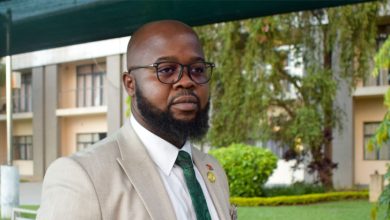
Economist and UTM Party president Dalitso Kabambe agrees that Malawi has depended on external support throughout much of its post-independence history, but argues that aid alone does not explain today’s economic challenges.
The former Reserve Bank of Malawi Governor notes that the Kamuzu administration also borrowed and received grants, but utilised them within a consistent economic framework that prioritised production, agriculture, infrastructure and fiscal discipline.
“At that time, foreign policy was that we should be getting support from the West. We received grants and loans, but there were consistent economic policies guiding how those resources were utilised,” says Kabambe.
He argues that Malawi’s biggest weakness has been the absence of a clear and consistent economic model.
“At one point we appear to be following a classical economic framework, then it shifts towards a neoclassical approach, and at other times it resembles a new institutional economic framework. Over the past 30 years, there has been no clear and consistent economic model guiding the country’s development,” he says.
Economist and politician Milward Tobias also believes Malawi’s economic difficulties are rooted in governance.
“We are heading towards the abyss if there is no sustained transformative political leadership,” he says.
According to Tobias, mounting debt, aid dependence, unemployment, foreign exchange shortages and slow industrialisation are all symptoms of a deeper leadership deficit.
“Malawi has one single most important problem. The rest are merely effects. The problem is the lack of sustained transformative political leadership,” he says.
He argues that successive governments have often prioritised short-term political interests over long-term national transformation, resulting in policy inconsistency, weak institutions and missed opportunities for structural reform. Without leadership capable of consistently implementing reforms, he warns, even ambitious plans such as Malawi 2063 risk remaining aspirations on paper rather than becoming a pathway to prosperity.
Sixty-two years after independence, the dream that inspired the sacrifices at Ntcheu remains unfinished. Political freedom was won, but the struggle for economic self-reliance continues. The challenge facing today’s leaders is not simply to commemorate independence, but to fulfil its promise by building an economy capable of delivering opportunity, dignity and shared prosperity for all Malawians.